
Holiday Marketing for Small Businesses: How to Prepare for the 2026 Season
Holiday Marketing for Small Businesses: How to Prepare for the 2026 Season

Holiday marketing has changed. Black Friday is no longer the true start of the season.
Many people plan gifts weeks before the big sale days. They compare prices. They watch creator posts. They send DMs. Some also use AI tools before they choose what to buy.
For a small business, that can sound like a lot to manage. It does not have to be.
The best advantage is simple: prepare early. Get your offer, product details, content, replies, and tracking ready before the rush. Then your team can spend less time fixing problems during the busiest weeks.
Meta’s 2026 Holiday Insights Center shows how social media, DMs, creators, AI, and shopping now connect. Many of its figures refer to people who use Meta platforms. Keep that in mind when reading the numbers.
Start Early and Build an Offer Worth Noticing
Holiday marketing for small businesses should start before the busiest sales days. Early planning gives you time to shape the offer and prepare your content. You can also test the buying process before feeds, inboxes, and ad space get crowded.
Attentive’s 2026 Consumer Pulse research found that 83% of consumers start planning holiday purchases before Black Friday. It also found that 71% expect to shop before Black Friday.
Basis found a similar pattern. Its 2026 Holiday Shopping and Advertising Trends report says 68% of consumers shop early to avoid delays. It also found that 57% look for deals throughout the year.
This does not mean you need Christmas posts in August. It means the plan should be ready early.
Start with one clear offer. What do customers get? Why does it matter? How long does it last? What should they do next?
You also do not need a huge discount. Small businesses can compete through ease and value. Try gift bundles, free local delivery, gift wrapping, seasonal packages, early booking perks, or simple pickup options.
Then test the message. Could a new customer understand the offer in a few seconds? If not, make it simpler.
Turn Social Media and DMs Into Your Holiday Storefront

Facebook, Instagram, and DMs can shape what customers do next. The final sale may still happen somewhere else. Keep your profiles current, make products easy to find, and plan for fast replies so shoppers can move forward with less effort.
Meta reports that 85% of shoppers who use its platforms have bought something in a physical store after seeing it on social media.
That means your profile is part of the shopping trip. It is not just a place to post.
Before the rush, check the basics. Are your holiday hours right? Does the bio link work? Can people find your address, products, booking page, or current offer quickly?
Your posts also need different jobs. A clear social media strategy can help you mix tips, product details, proof, reminders, and sales posts. This keeps the feed useful without making every post feel like an ad.
DMs matter too. Meta says 59% of shoppers who use its platforms message businesses during the holidays. It also says 33% use messages to find products. Another 26% use them to make payments.
A DM may come from someone who is already close to buying.
Prepare simple answers for common questions. Cover stock, sizing, shipping, pickup, hours, booking slots, payment methods, and return rules.
Meta Business Agent can answer some business questions and suggest products from a catalog. It may help with the first reply. Still, give customers a clear way to reach a person when they need more help.
Use Creators and AI to Help Shoppers Decide
Holiday shopping does not follow one straight path. A shopper may see a creator post, ask AI for ideas, compare options on social media, and visit your site before buying. Clear product details help your business stay useful at each step.
Meta says 94% of shoppers who use its platforms look to creators for holiday shopping ideas. For a small business, that does not mean hiring a famous influencer.
A smaller creator may be a better fit. A local food creator can suit a nearby restaurant. A fitness creator may fit a wellness brand. A loyal customer with a trusted voice can also be useful.
AI is now part of gift research too. Meta says almost one in four global shoppers used AI during the last holiday season.
Google’s 2026 holiday shopping research adds more context. It found that shoppers who use AI notice more steps and sources during the buying process than shoppers who do not use AI.
The lesson is simple. Your product details need to be clear wherever people find them.
Use exact product names. Keep prices and stock up to date. Write plain descriptions. Add strong photos. Make shipping, booking, and return details easy to see.
AI may help a shopper find your business. Clear details can help them trust it.
Make Every Click Easier to Convert

Holiday marketing does not end when someone clicks a post or ad. Your website, mobile pages, checkout, booking flow, and tracking still need to work. Fixing small problems can be more useful than paying for more traffic.
Salesforce’s 2026 holiday retail outlook shows why. In Q2 2026, mobile made up about three-quarters of global online traffic. Social also sent more visits to online stores. Yet many shoppers still left without buying.
More traffic does not always mean more sales.
Test the full path on your own phone. Start with a social post. Open the link. Find the item. Add it to the cart or try to book. Check if delivery, pickup, fees, and deadlines are easy to understand.
Each unclear step gives the shopper one more reason to leave.
Paid ads need the same care. Meta’s holiday materials cite an average return of more than $4 for every $1 spent by advertisers. That is a broad platform average. It is not a promise for every business.
If your budget is small, good tracking matters even more. Check Meta Pixel and Conversions API before you raise spend. Decide which actions matter. Then make sure those actions can be tracked.
Once the campaign is live, use social media analytics to connect attention with results. Look at site visits, enquiries, bookings, and sales. The goal is not to spend more because it is the holidays. The goal is to see what is worth more budget.
Connect the Campaign, Measure What Matters, and Stay Flexible
Your holiday campaign should feel connected across social media, email, your website, ads, DMs, and the store. Keep the offer and key dates the same. Then use customer actions to adjust the plan while there is still time.
Each channel has a different job. Social media can introduce the offer. Creator content can build trust. DMs can answer questions. Your website can give full details. Email can bring people back before a deadline.
This is why social media and email marketing can work well together. One helps people find you. The other helps you stay in touch after they show interest.
September: Set the main goal. Choose the offer, key products, dates, stock limits, and what your team can handle.
October: Prepare the main creative, landing pages, emails, product details, auto replies, creator briefs, and tracking. Test them before demand rises.
November: Increase visibility. Watch the data. See which posts, products, emails, and ads lead to useful actions.
December: Make key details easy to find. Show shipping cutoffs, pickup options, stock, booking deadlines, and last-minute choices.
January: Review the campaign while it is still fresh. Save the best creative, common questions, sales patterns, and channel results for next year.
Do not track every number just because it is there. Focus on the numbers that help you make a choice.
If reach is high but profile visits are low, the content may not give people a reason to learn more. If product views are high but sales are weak, check price, shipping, trust, and checkout. If the same question keeps coming through DMs, add that answer to your public content.
The goal is not to be everywhere at once. It is to make the places where customers already find you work better together.
If you need help linking content, messages, ads, and tracking, BSD’s social media marketing can help turn those parts into one clear plan.
Start before the rush. Keep the message simple. Watch what customers do. Then improve the campaign while there is still time.


Social Media Analytics Made Easy
Ever wonder what all those likes, shares, and comments really mean? Social media analytics helps you understand how people respond to your content.
It turns everyday platform data into useful clues for your next marketing move!
Social media analytics plays a key role in modern marketing.
It can show how your audience behaves, what content gets a response, and whether campaigns support your goals. These insights can help brands improve both organic content and paid campaigns.
The key is context. Do not treat every increase as a win on its own.
Look at reach, interactions, profile activity, follows, views, traffic, and conversions together. This is an important part of learning to do digital marketing like a pro.

Social Media Analytics Unwrapped!
Social media analytics shows how people find, view, and respond to your content. It helps you see what works, what does not, and where your strategy may need to change.
It goes beyond likes and comments. You can use the data to understand your audience, spot patterns, and make better marketing choices.
Here are five types of social media analytics worth knowing:
- Performance Tracking: Shows how your posts and campaigns perform.
- Competitive Analysis: Compares your results with your competitors.
- Social Listening: Tracks conversations and mentions of your brand.
- Sentiment Analysis: Shows how people feel about your brand or content.
- Industry Benchmarking: Compares your results with industry standards.
You do not need to track everything at once.
Start with the metrics that match your goal. If you want more awareness, look at reach and views. If you want stronger engagement, focus on how people interact with your content.
Most importantly, do not read these numbers on their own.
Performance data tells you what happened. Social listening adds context by showing what people are saying.
Together, these insights give you a clearer picture of your audience and what to do next.
Why Digital Marketing Agencies are your Secret Sauce
Social media data is only useful when you know what it means. A digital marketing agency can help turn those numbers into clear actions for your content, campaigns, and overall strategy.
Think of an agency as an extra set of expert eyes.
Instead of simply telling you that reach went up or engagement dropped, they look at why it happened and what you should do next.
That can mean finding the content your audience responds to, spotting where ad spend works best, or seeing which platform deserves more attention.
Turning Numbers Into Next Steps
Analytics can help an agency answer practical questions:
What content is working?
Reach and engagement can show which topics and formats connect with your audience.
Where should your budget go?
Campaign data can show which audiences, ads, and platforms are producing better results.
What should you change?
Patterns in your reports can reveal what to keep, improve, or test next.
How do you compare?
Competitor and industry data can provide context, but your own goals should always come first.
The goal is not to make reports more complicated. It is to make the numbers easier to use.
This works best when your analytics connects to a social media strategy built around clear business goals.
What Social Media Analytics Looks Like in Practice
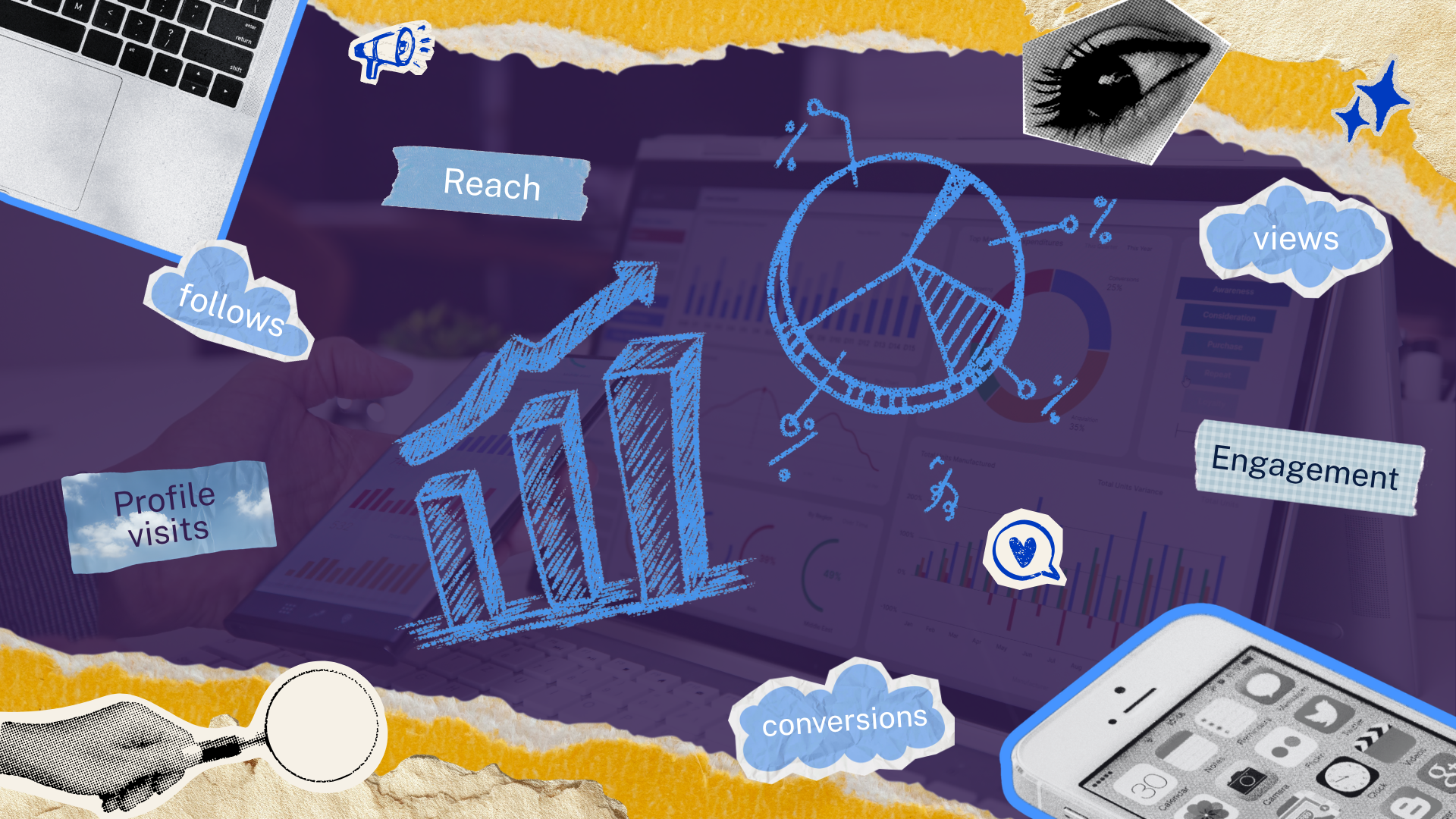
Social media results are easier to understand when you look at several metrics together. In this BSD client example, reach, interactions, profile visits, follows, and views all increased. Together, they show stronger visibility, audience response, and interest in the account.
One number rarely tells the whole story. These client results show why it helps to read social media metrics together.
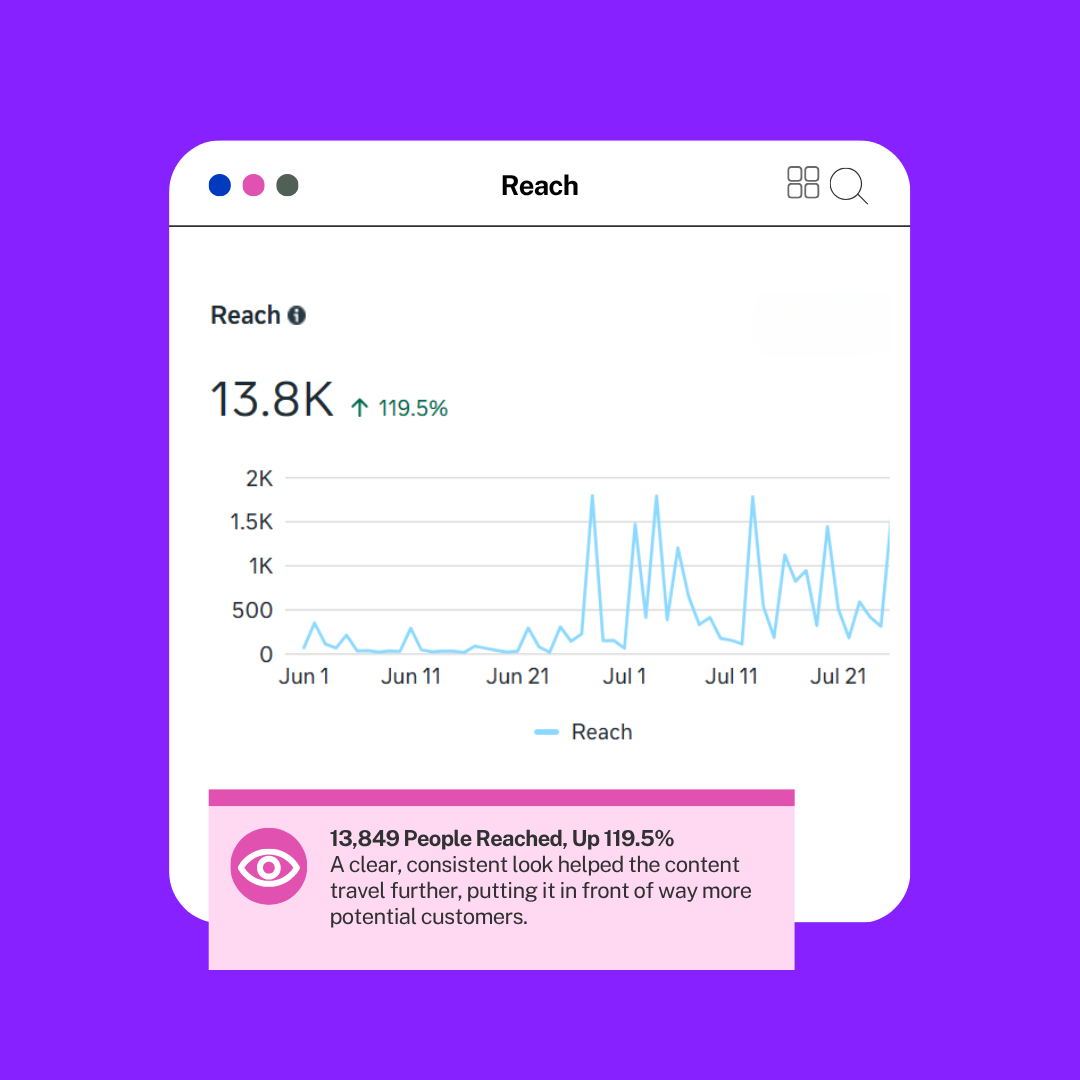
Reach answers a simple question: how many unique people saw the content? Here, reach grew by 119.5%. That is a strong sign of visibility. The next question is what those people did after they saw the content.
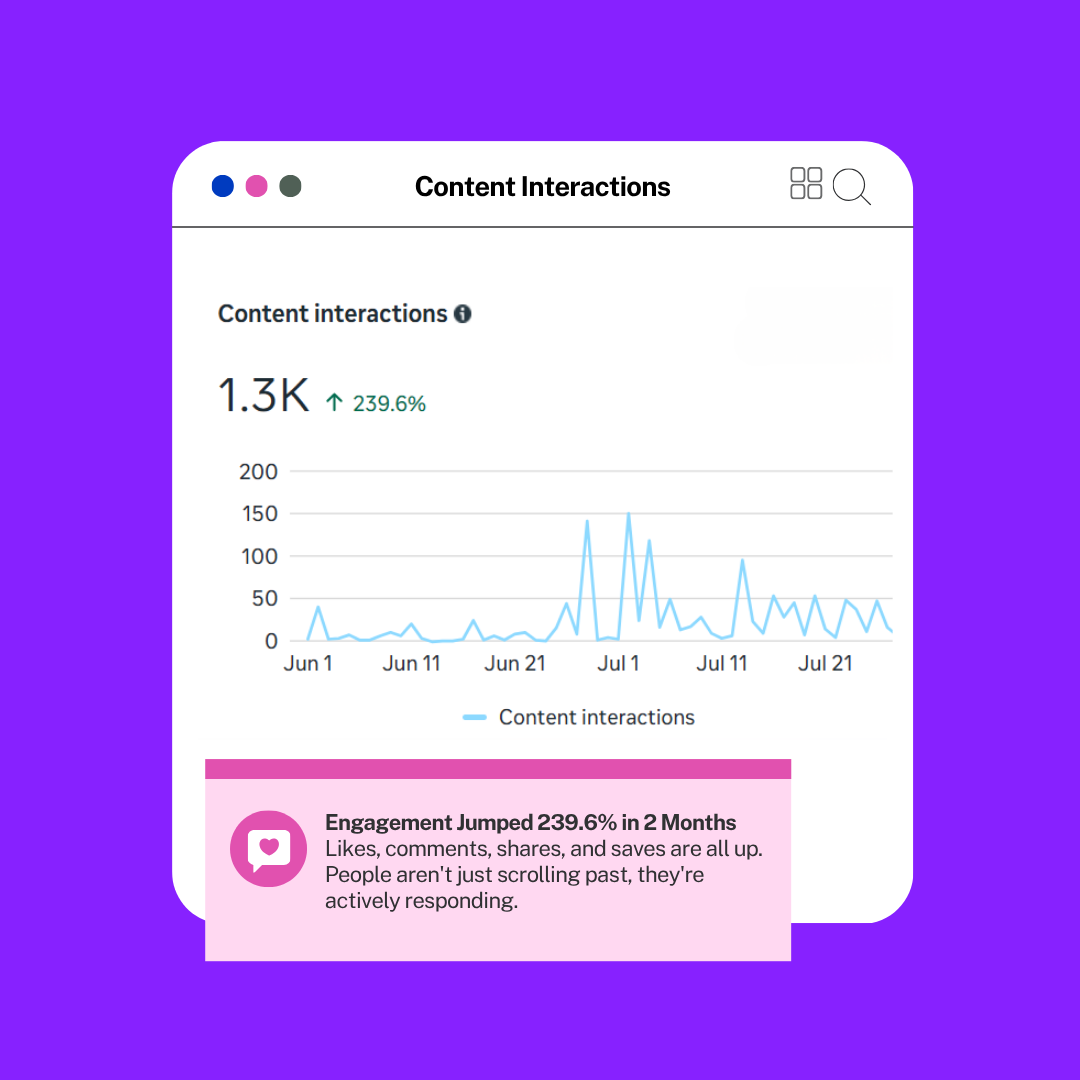
Content interactions add another layer. Here, interactions rose by 239.6%. The growth was not only about more people seeing the content. People also responded through likes, comments, shares, and saves.
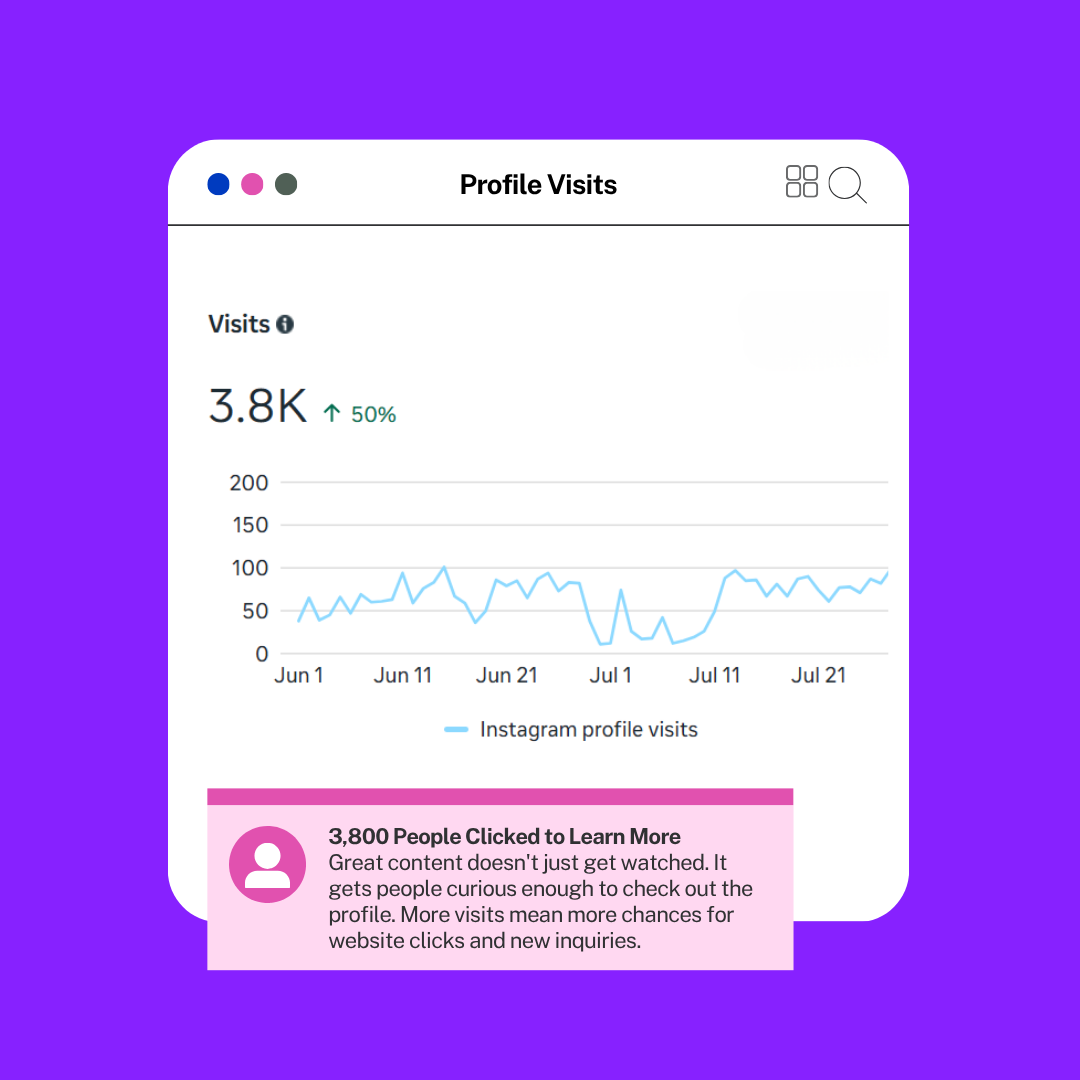
Profile visits can show curiosity. They are not the same as website visits, leads, or enquiries. Still, they show that people moved from seeing one post to checking the account itself.
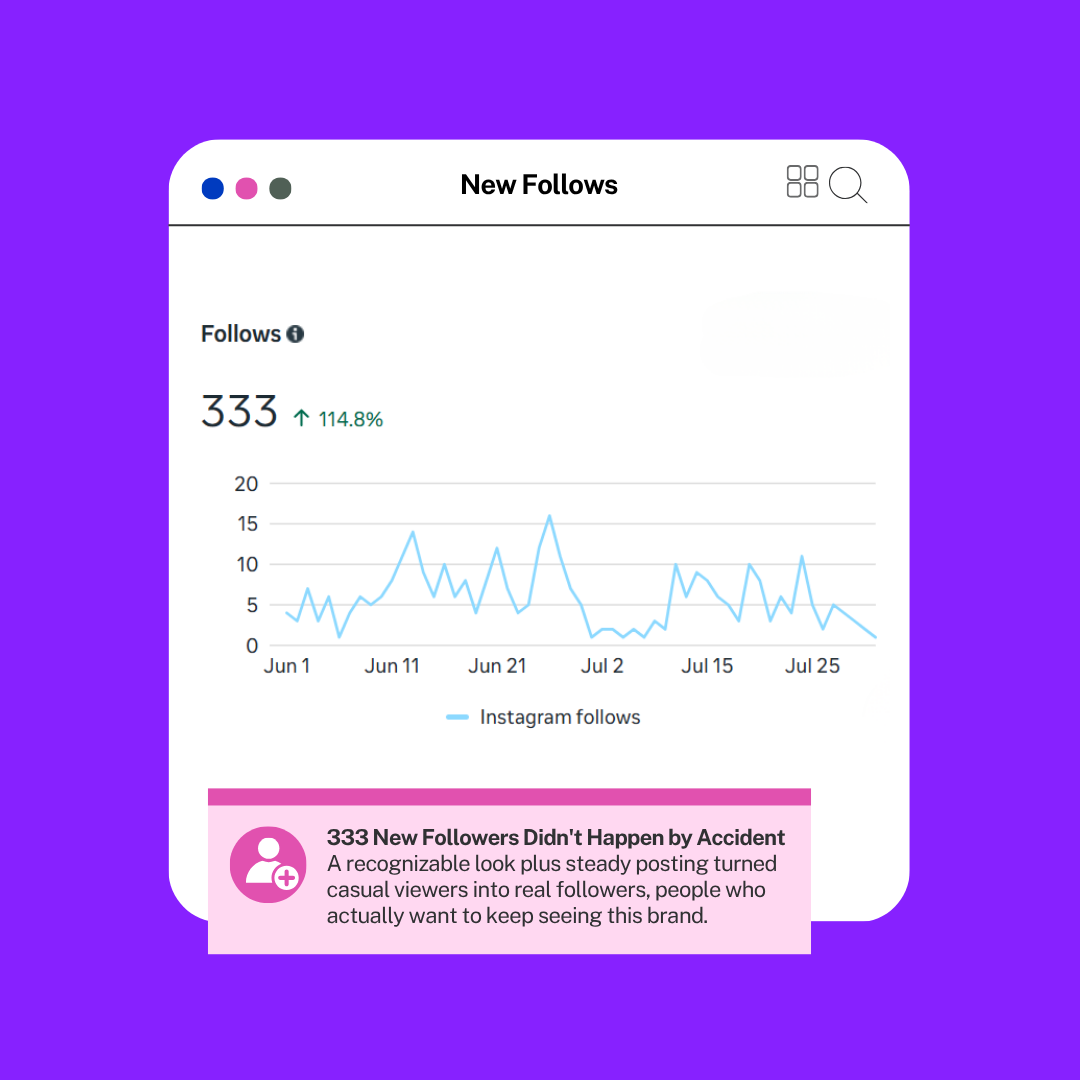
Follower growth is often called a vanity metric, but context matters. Here, new follows rose along with reach, interactions, and profile visits. That makes follower growth part of a wider story about audience interest.
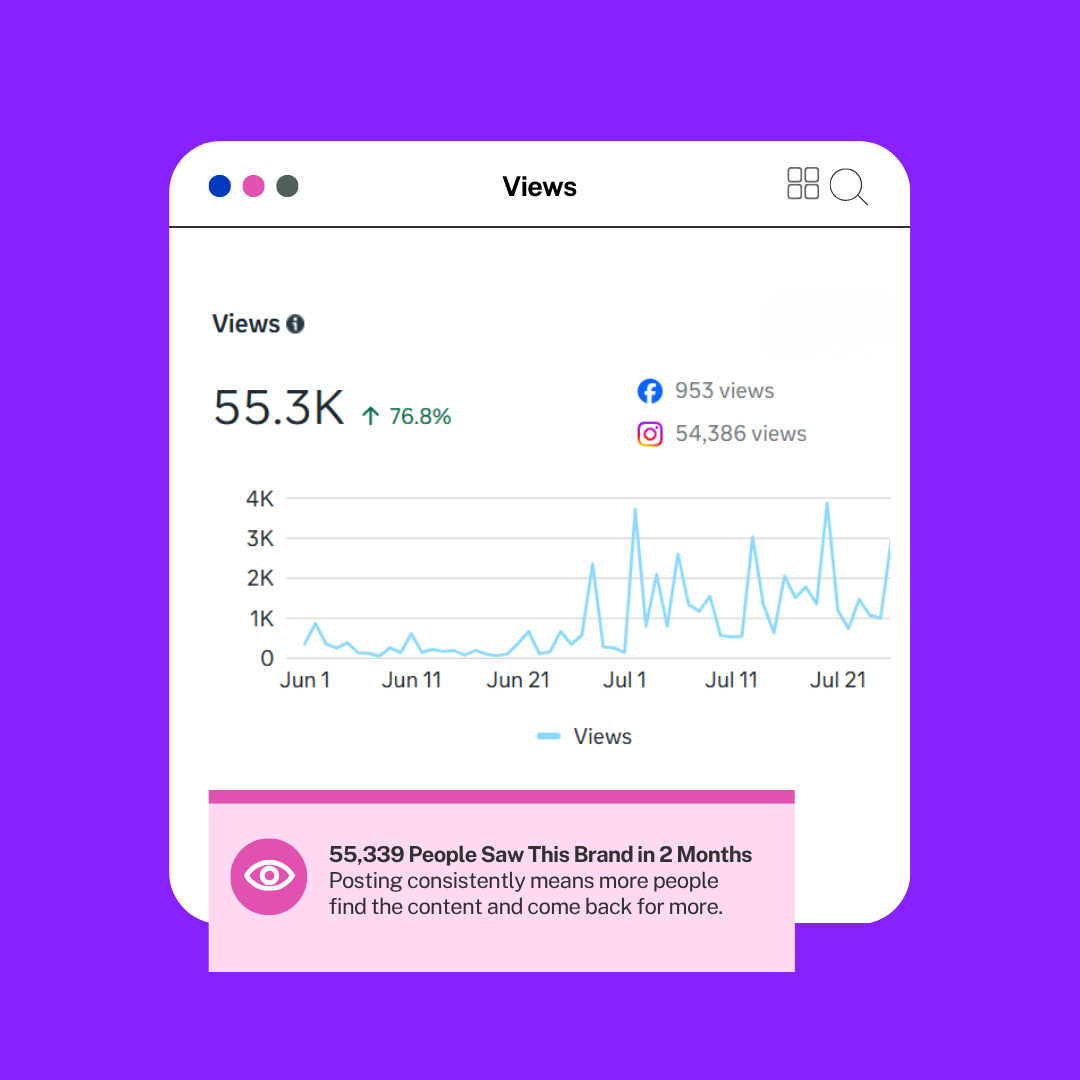
Views show how much content people consumed. They can also show where attention is strongest. In this report, most views came from Instagram. That gives the team a reason to look closer at which Instagram topics and formats worked best.
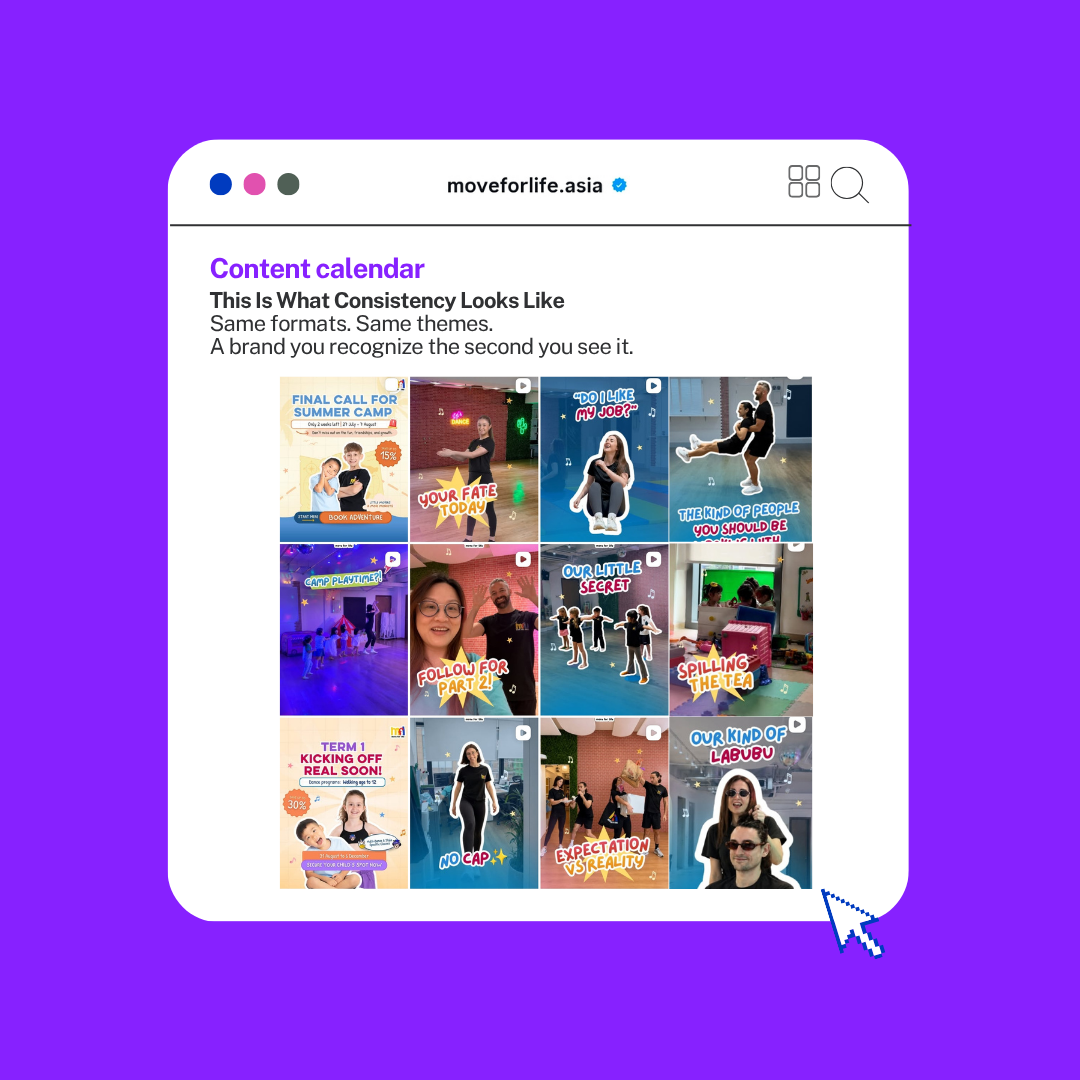
The content calendar adds useful context.
Repeated themes and familiar formats make it easier to compare results over time.
Consistency does not prove that one factor caused every increase. It does, however, give marketers more data to spot patterns and test new ideas.
Rev Up and Refine Your Social Media Analytics
Analytics tools can collect data, track conversations, and show trends. But the tool itself is not the strategy. The best setup helps your team focus on the numbers that match its goals. Then you can use them to make clearer content, campaign, and budget choices.
Different tools can help businesses track social media data.
Qualtrics and Meltwater can support research, listening, monitoring, and analysis. Social platforms also have their own dashboards. These give teams direct performance data for regular reports.
With social media analytics tools, agencies and internal teams can report on key metrics like:
Audience Demographics: Who is engaging with your brand?
Post Reach: How many unique people are seeing your content?
Engagement Rates: How is your audience interacting with your posts?
Posting Patterns: When does your audience tend to be active, and how does performance vary by timing?
Brand Mentions: How often and where is your brand being discussed?
These metrics still matter, but add one question to each one: what decision will this number help us make?
Do not stop at 'reach increased.' Ask whether you should repeat a format, change the message, test a CTA, focus on a platform, or check website and conversion data.
Mastering Digital Marketing Like a Pro
To do digital marketing like a pro, you need more than numbers. You need to know what they mean and what to do next.
Social media analytics helps you see what is working.
Which posts get noticed? Which ones get people to engage? Which ones make people want to learn more?
The client results above show this clearly.
Reach increased. Engagement grew. More people visited the profile. Views and follows also went up.
One number cannot tell the whole story. But together, these metrics show how people are responding to the content.
They also help you decide what to repeat, improve, or test next.
Social media can also work with your other channels. Our guide to social media and email marketing shows how the two can support each other.
Need help connecting your data with your strategy? BSD’s social media marketing brings content, insights, and execution together.
That is what it means to do digital marketing like a pro. Track what matters. Understand the results. Then use them to make your next move better.

Social Media Content Planning: What Should Your Business Post?
Social Media Content Planning: What Should Your Business Post?
You know you need to post on social media. The harder question is: what should you actually post?
Without a plan, content can quickly become a mix of last-minute graphics, random trends, and promotional posts. You stay active, but the feed does not always move the business forward.
Good social media content planning starts before the calendar. It connects what you post to your audience, your brand, and the goals in your social media strategy.
Start With the Job Your Content Needs to Do
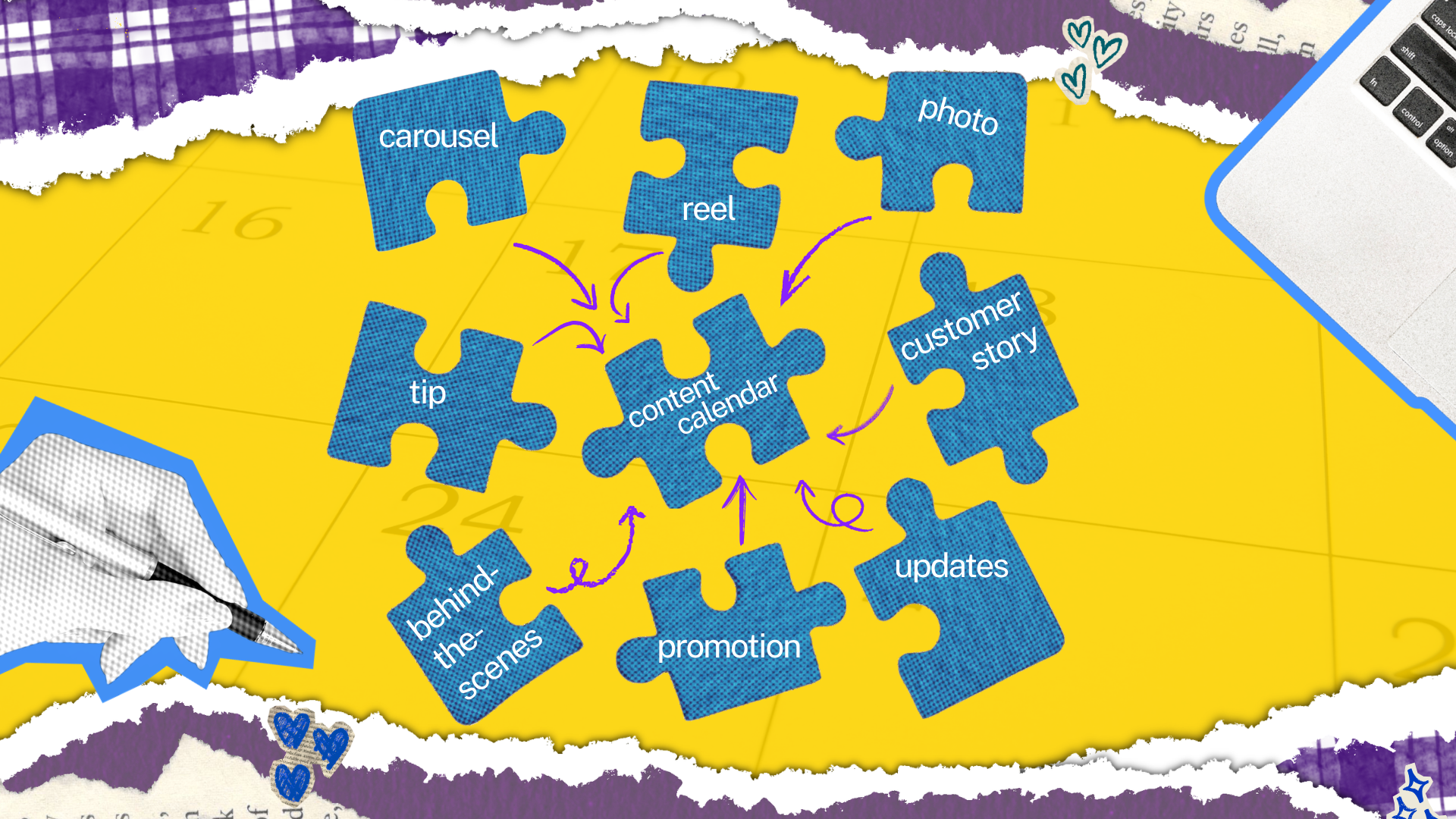
Every post should have a purpose. Your content may need to attract new people, answer a question, build trust, show proof, start a conversation, or encourage a next step. Knowing that purpose first makes social media content planning much easier and keeps your calendar from becoming random.
Before brainstorming topics, ask what the business needs from social media right now.
If the goal is awareness, you may need useful or shareable content. If the goal is trust, show your expertise, process, or results. If the goal is leads, create content that helps the right people understand their problem and what to do next.
Build a Few Content Pillars
Content pillars are the main themes your brand returns to again and again. They give your team enough structure to plan faster without making every post feel the same. For most businesses, three to five clear pillars are enough to keep the feed focused, useful, and recognizable.
A service-based business might use five simple pillars:
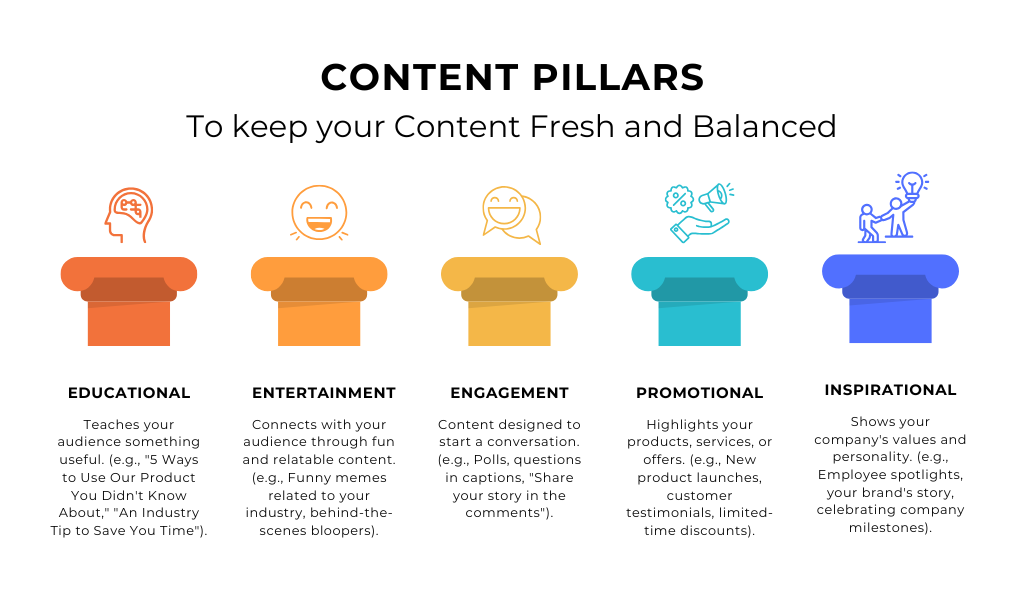
- Educate: Share tips, answer common questions, explain a topic, or help your audience solve a problem.
- Promote: Talk about your products, services, offers, events, or other ways people can work with your business.
- Inspire: Share customer stories, results, ideas, milestones, or messages that encourage your audience.
- Entertain: Create lighter content that catches attention and shows personality. This could include relatable posts, trends, short videos, or humor that fits your brand.
- Behind the Scenes: Show the people and process behind the business. Introduce your team, share how work gets done, or give your audience a look at what happens outside the polished final product.
You do not need to give every pillar the same amount of space.
The right mix depends on your audience and goals. The point is to create enough variety that your feed stays useful and interesting without feeling random.
These pillars can then become the starting point for your social media content calendar. Instead of asking, “What should we post today?” you can ask, “Which pillar have we not covered lately?”
Turn Real Questions Into Post Ideas
You do not need to invent every social media idea from scratch. Some of your best topics already exist in customer questions, sales calls, emails, search queries, reviews, and conversations with your team. These sources reveal what people actually want to understand before they choose a business.
If customers keep asking the same question, that is a post idea. If your sales team explains the same misconception every week, that is another one.
One strong question can also become several formats. A detailed blog can become a carousel, a short video, a quick tip, a poll, or a follow-up email. The idea stays the same, even as the format changes.
Plan a Mix, Not a Feed Full of Sales Posts
A useful content plan balances education, engagement, proof, brand building, and promotion. Not every post needs to sell. Giving people useful reasons to follow and trust your business makes promotional content feel more natural when it appears and creates a stronger journey from discovery to action.
If every post says “buy now” or “book a call,” people have little reason to stay unless they are already ready to buy.
Think about the relationship instead. Social content can help people discover you, learn from you, and decide whether they trust you. From there, channels such as social media and email marketing can keep that relationship moving.
Use a Content Calendar to Make the Plan Real
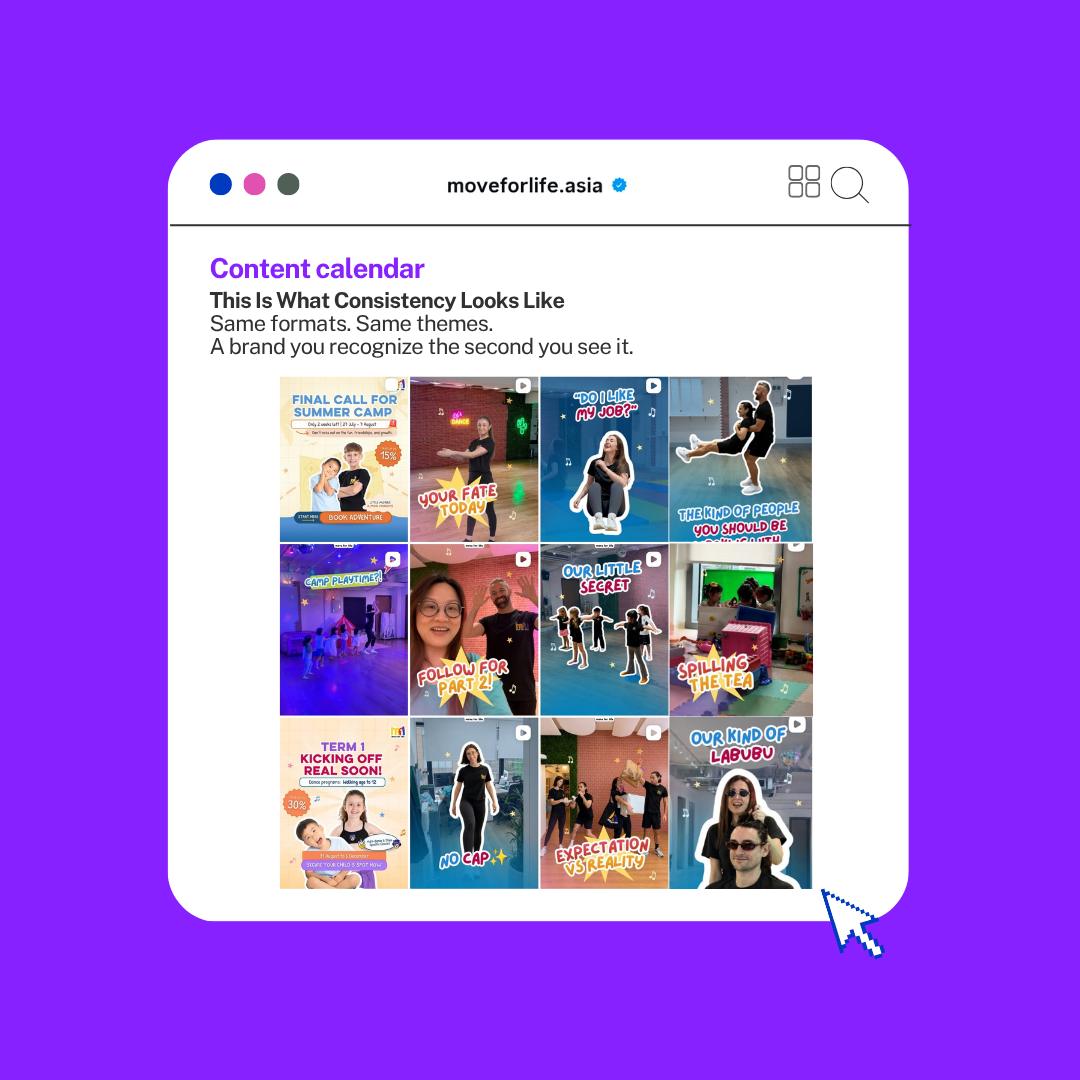
A content calendar turns your ideas into a repeatable publishing plan. It should show more than dates. Add the content pillar, goal, format, platform, CTA, and key metric for each post. This makes it easier to see whether your monthly content has enough variety and a clear purpose.
You do not need a complicated system. A spreadsheet can work.
For each post, record the topic, content pillar, format, platform, goal, CTA, and publish date. Planning these details also makes it easier to batch similar tasks and avoid rushing when posting day arrives.
Let Your Analytics Shape What You Post Next
Your content plan should change as you learn. Review which topics, formats, and calls to action get useful responses from your audience. Reach and views can show visibility, while interactions, profile visits, clicks, enquiries, and conversions can tell you more about what people do after seeing the content.
Do not judge the plan by likes alone. Use your social media analytics to find patterns and decide what deserves another test.
A post that reaches fewer people may still be valuable if it brings qualified website visits. A high-view video may be useful for awareness even if it does not generate leads right away. The goal determines which result matters.
What Should Your Business Post This Week?

When you are stuck, return to four simple sources: what your audience asks, what your business knows, what proof you can show, and what you need people to understand next. That gives you a practical mix of useful content without relying on trends or posting simply to fill the calendar.
For example, your week could include one educational post, one proof-based post, and one brand or service post. The exact mix depends on your goals, team capacity, and platform.
Consistency matters, but that does not mean posting every day. A realistic plan you can maintain is more useful than an ambitious calendar your team cannot sustain.
Plan With Purpose, Then Create
Social media content planning should make posting easier, not add another layer of work. Start with your goals, choose a few repeatable content pillars, build ideas from real audience needs, and use performance data to improve the plan. You will spend less time guessing and more time creating with direction.
If your team needs support turning strategy into a practical content calendar, BSD's social media marketing service connects planning, content creation, publishing, and reporting around the same goals.
Social Media and Email Marketing: Why You Need Both
Social Media and Email Marketing: Why Your Brand Needs Both
Social media is one of the best tools for getting discovered.
A useful post can introduce your brand to new people. A Reel can increase your reach. A strong carousel can turn a casual viewer into a follower.
But social media was never meant to be your only database.
Your followers still live on a platform you do not control. An algorithm change can affect your reach overnight.
That is why social media and email marketing work better together.
Social media gets attention. Email gives you a direct way to continue the relationship.
Social Media Is for Discovery
 Think of social media as a busy storefront.
People pass by, discover your business, explore your content, and learn what you offer.
That makes social media valuable for:
- brand awareness
- audience growth
- engagement
- community building
- driving traffic
But you are still operating on rented land.
You do not control the algorithm. You cannot guarantee that every follower will see your next post. Your audience may grow while your organic reach changes.
This does not make social media less useful.
It simply means your social media strategy should give people somewhere to go after they discover you.
Instead of treating follower growth as the finish line, use social media to start the relationship.
Followers Are Not Customers
A large follower count can look impressive, but followers alone do not build a business.
Someone can follow your account today and rarely see your content again.
Email creates a different kind of connection.
When someone joins your email list, they are giving your brand permission to communicate with them more directly.
That is why we like to think of the two channels differently:
Social media is the storefront. Email is the asset.
Social introduces your business.
Email gives interested people a way to stay connected beyond the feed.
Your social content can encourage people to visit your website, download a resource, subscribe for useful insights, or take another relevant step.
That creates a stronger path than simply asking people to follow you and hoping the algorithm keeps showing them your content.
Use Actions to Make Email More Relevant
Building an email list is only part of the strategy.
What you send matters too.
Traditional email marketing often treats every subscriber the same. One newsletter goes to everyone, regardless of their interests.
A better email marketing strategy pays attention to behaviour.
Imagine two subscribers.
One joined your list today after reading a beginner's guide.
The other has visited your service or pricing page three times.
They probably do not need the same message.
The new subscriber may need helpful content that introduces your brand.
The second person may benefit from service details, case studies, or answers to common questions.
Pay attention to what people do, not just who they are.
Clicks, downloads, page visits, and other actions can help you send more useful messages.
Build Emails People Actually Want to Open

Email marketing does not have to mean sending crowded newsletters filled with promotions.
Keep it simple.
One email can answer one question, share one idea, or direct someone to one useful resource.
Clear copy often does more work than an overdesigned email.
The same goes for your brand experience.
Your emails should feel connected to the social content that brought someone to you in the first place. Your voice, message, and visual identity should feel familiar across both channels.
That consistency helps people recognize and trust your brand as they move from one platform to another.
Give People One Clear Next Step
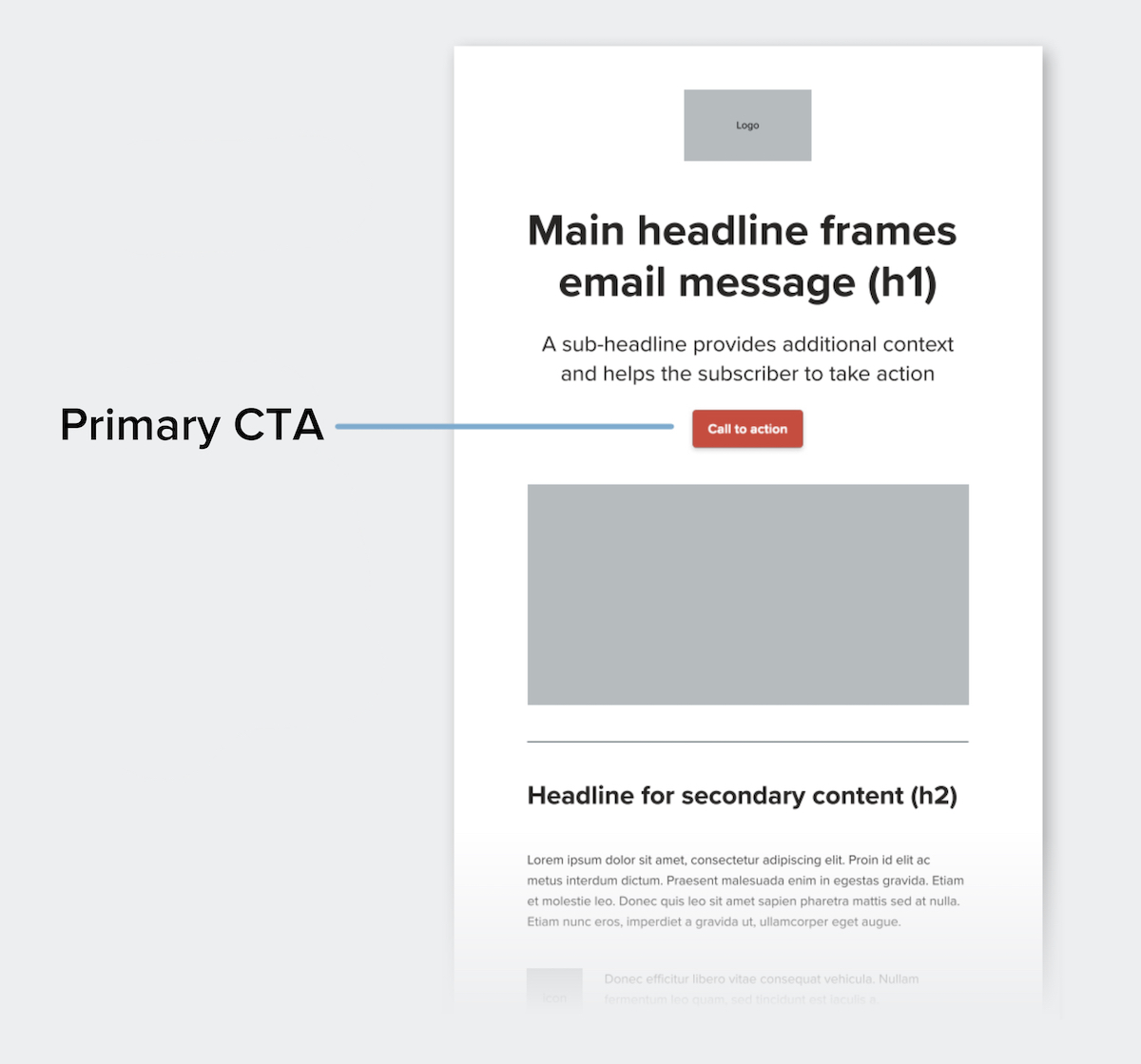
Every email should answer a simple question:
What should the reader do next?
Maybe you want them to:
- read an article
- view a case study
- explore a service
- download a resource
- book a conversation
Choose one main action.
Too many options can make the next step unclear.
The right CTA also depends on where someone is in their relationship with your brand.
A new subscriber may be ready to read another article. Someone who keeps returning to your service page may be ready to talk.
Your marketing should help both people move forward without forcing them into the same journey.
Social Media and Email Work Better Together
You do not need to choose between social media and email.
Give each one a clear job.
Social media creates discovery. Email builds a direct connection.
A person might discover your brand through Instagram, visit your website, join your email list, receive useful content, and eventually explore your services.
Each channel supports the next.
At Brightsand Designs, this is how we think about digital marketing. Social media, email, content, and your website should not feel like separate projects. They should support the same business goals and create a clear journey for your audience.
So, use social media for what it does best: getting noticed.
Then invite interested people into a channel where you can continue the conversation.
Because followers are valuable.
But the real opportunity is turning attention into a relationship — and giving that relationship somewhere to grow.
Social Media Strategy: How to Support Business Goals
How to Build a Social Media Strategy That Supports Business Goals
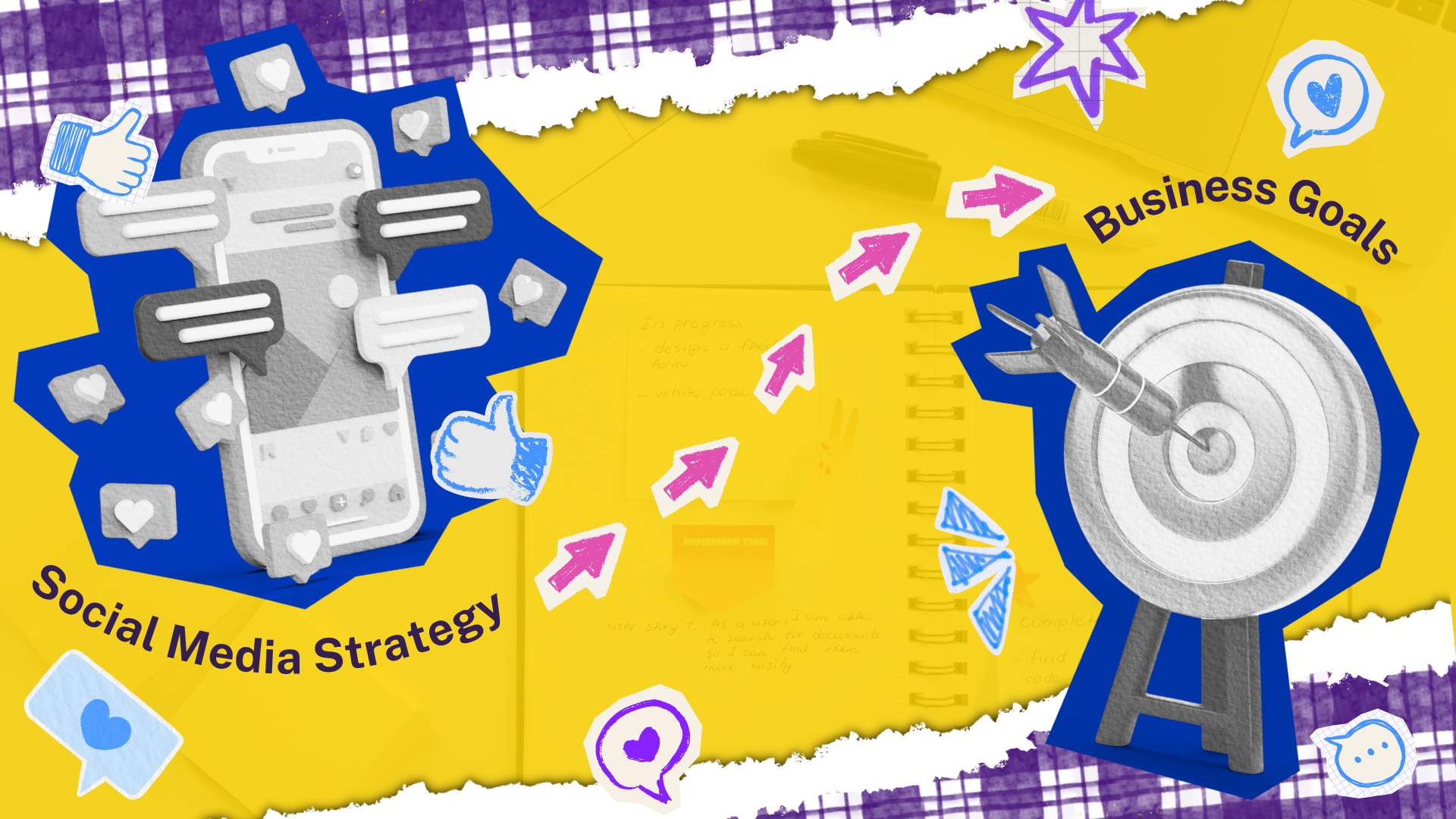
Posting on social media is easy. Posting with a clear purpose is harder.
Many businesses share content several times a week. They follow trends, create graphics, post videos, and track likes. Their reach may even grow.
But there is a bigger question to ask:
What is social media actually doing for the business?
A strong social media strategy connects your content to clear business goals. Every post should have a reason for being there. Every platform should serve a purpose. And every metric should help you understand whether your efforts are working.
Instead of starting with, “What should we post this week?” start with a better question:
“What does the business need to achieve?”
Then decide how social media can help you get there.
What Is a Social Media Strategy?

A social media strategy is a clear plan for how your business will use social platforms to reach its marketing goals.
It helps answer a few basic questions:
- Who are you trying to reach?
- What do you want them to do?
- Which platforms should you use?
- What type of content should you create?
- How often should you post?
- What results should you measure?
Without a strategy, social media can quickly become a cycle of creating content just to stay active.
You post because Tuesday is approaching. You make a Reel because everyone else is making Reels. You join a new platform because it seems popular.
There may be plenty of activity, but no clear direction.
A strategy changes that. It gives your social media a job to do.
1. Start With Your Business Goals

Before thinking about platforms or content, look at what the business needs.
This is where many social media plans go wrong.
Businesses often start with goals such as:
“We need more followers.”
“We should post more often.”
“We need to make more videos.”
“We should be on TikTok.”
These are social media activities. They are not business goals.
Your actual business goal may be to:
- generate more qualified leads
- increase sales
- enter a new market
- build brand awareness
- attract a certain type of client
- increase website traffic
- build customer loyalty
- become a trusted name in your industry
Once the business goal is clear, you can decide how social media will support it.
For example, imagine a consulting firm wants more qualified enquiries.
Its strategy should not simply aim to “grow Instagram.”
Instead, the plan might look like this:
Business goal: Generate more qualified enquiries.
Social media goal: Encourage potential clients to move from social content to the company's website.
Content: Expert advice, common client problems, FAQs, case studies, and industry insights.
CTA: Visit a service page or book a consultation.
Measurement: Website visits, enquiries, leads, and conversions from social media.
Now the content has a destination.
That is the difference between simply being active and using social media as part of a wider marketing strategy.
2. Focus on a Few Clear Social Media Goals
It is tempting to make social media responsible for everything.
You want more followers. More comments. More website traffic. More leads. More sales. More views. More shares.
When everything becomes a priority, it becomes harder to know what is working.
Start with two or three main goals instead.
For example:
| Business Need | Social Media Goal | What to Measure |
| More visibility | Increase brand awareness | Reach, impressions, mentions |
| More website traffic | Send people to the website | Link clicks, sessions, CTR |
| More leads | Generate enquiries | Leads, forms, bookings |
| More authority | Build trust | Saves, shares, profile visits |
| Better relationships | Build a community | Comments, replies, DMs |
| More sales | Support conversions | Sales, conversions, revenue |
This also helps you avoid focusing too much on vanity metrics.
Likes and views can tell you whether people notice your content. Follower growth can show that your audience is expanding.
But those numbers need context.
A post with 50,000 views may look successful. Yet if your goal is to attract qualified clients and none of those viewers take the next step, the view count does not tell the whole story.
Ask what each metric means for the goal you are trying to reach.
3. Make Your Goals Specific
“Get more leads” sounds like a goal, but it is still too broad.
How many leads?
From which platform?
Over what period?
A useful social media goal should be clear enough to measure.
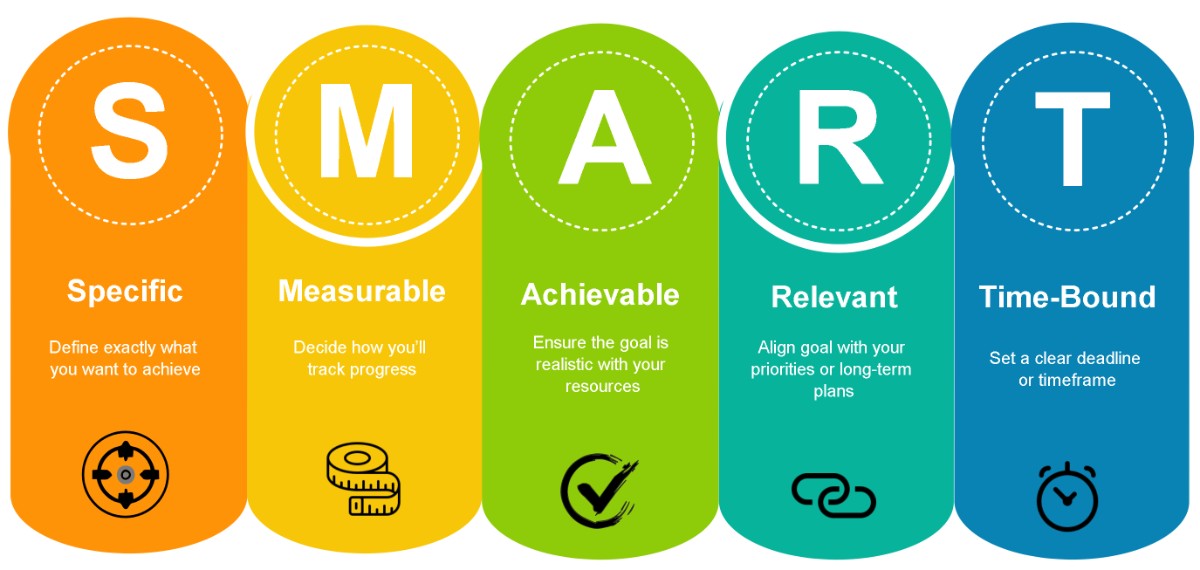
The SMART framework can help. A goal should be:
Specific: What do you want to achieve?
Measurable: How will you track it?
Achievable: Is the target realistic?
Relevant: Does it support a real business need?
Time-bound: When should you achieve it?
Instead of saying:
Get more leads from social media.
You might say:
Increase qualified website enquiries from LinkedIn by 20% over the next three months.
Now your team knows what success looks like.
It also becomes easier to decide where to spend time and budget.
4. Understand Who You Need to Reach
Your audience should shape your social media strategy.
Think beyond age, location, and job title.
You also need to understand what your ideal customers care about. Social media listening can help you understand what your audience is saying, asking, and responding to online.
Ask:
- What problems are they trying to solve?
- What questions do they ask before buying?
- What makes them hesitate?
- What information helps them make a decision?
- Where do they spend time online?
- What would make them trust a business like yours?
- What action do you want them to take next?
The answers should influence your content.
For example, a potential client who is still learning about a problem may need simple educational content.
Someone comparing service providers may want case studies, examples, testimonials, or a clear explanation of your process.
Someone ready to buy may need a strong service page and an easy way to get in touch.
Your goal is not to attract everyone who could engage with a post.
You want to attract the people who matter to your business.
5. Choose the Right Social Media Platforms
Your business does not need to be everywhere.
Trying to maintain five platforms can spread a small marketing team too thin. The result is often rushed content and inconsistent posting.
Instead, choose platforms based on your audience and goals.
Ask:
Is our target audience here?
What are they doing on this platform?
What type of content performs well here?
Can our team create that content consistently?
What role will this platform play in our marketing?
One platform may be useful for reaching new audiences.
Another may help you build authority.
Another may be better for conversations with your existing community.
A platform can also help move interested prospects to your website or landing page.
The key is to give each platform a purpose.
Do not use a platform simply because other businesses are there.
6. Create Content Pillars That Support Your Goals
Once you know your goals, audience, and platforms, you can decide what to post.
Content pillars help keep your social media focused.
These are the main themes your brand talks about regularly.
For example, a service-based business could use five pillars:
Education
Answer questions and explain problems your audience faces.
Expertise
Share useful opinions, advice, and insights from your team.
Proof
Show case studies, testimonials, results, examples, and past work.
Brand
Show what your company believes, how you work, and what makes your approach different.
Conversion
Talk about your services and give interested people a clear next step.
Each pillar has a purpose.
That means you are no longer creating content because you simply need “something to post.”
Your content starts supporting a wider goal.
7. Give Every Post a Job
Not every social media post needs to make a sale.
In fact, constantly asking people to buy can make a brand feel too promotional.
Different posts can support different parts of the customer journey.
Think of it like this:
Attract → Educate → Build Trust → Convert → Retain
A short video might introduce someone to your brand.
An educational carousel can help them understand a problem.
A case study can show that your team knows how to solve it.
A service-focused post can give them a reason to contact you.
Customer-focused content can help maintain the relationship after the sale.
Each post has a different role. But all of them support the same wider strategy.
This is also where brand consistency matters.
Your social media should feel connected to your website, emails, ads, proposals, and other marketing materials.
Imagine seeing a polished, professional company on LinkedIn. You click through to its website, and suddenly the messaging, visuals, and tone feel completely different.
That gap can create doubt.
Your social media should not feel like a separate version of your company. It should strengthen the brand people see everywhere else.
8. Build Your Content Calendar Around the Strategy
A content calendar is useful, but it should not come first.
Start with the strategy. Then build the calendar.
Otherwise, you may end up with a well-organised schedule full of content that has no clear purpose.
Your content calendar can include:
- topic
- content pillar
- platform
- format
- audience
- goal
- CTA
- publish date
- campaign
- KPI
For example:
| Content | Goal | CTA | Main KPI |
| Educational carousel | Awareness | Save or share | Reach and saves |
| Expert insight | Authority | Follow or learn more | Shares and profile visits |
| Case study | Consideration | Read the case study | Website visits |
| Service post | Lead generation | Book a call | Enquiries |
Adding these details changes how you plan content.
Instead of asking only:
“What are we posting?”
You also ask:
“Why are we posting it?”
That simple question can make your content calendar much more useful.
9. Use Clear Calls to Action
If people engage with your content, what should they do next?
Sometimes the answer is nothing. A post may exist mainly to educate or build awareness.
But when there is a logical next step, make it clear.
Your CTA might ask people to:
- visit your website
- read another article
- download a guide
- view a service
- send a message
- book a consultation
- subscribe to an email list
- save or share the post
The CTA should match the content.
Someone discovering your brand for the first time may not be ready to book a call.
They may be more likely to read an article or follow your account.
Someone reading a detailed case study may be much closer to making a decision.
Do not force every person toward the same action.
Give them a next step that makes sense.
10. Measure the Results That Matter
Once your strategy is running, you need to know whether it is working.
This is where your original business goal becomes important again.
If your goal is awareness, look at awareness metrics.
If your goal is website traffic, measure traffic.
If your goal is lead generation, measure leads.
This sounds obvious, but social media reports often focus on whatever numbers are easiest to find.
A report might say:
Instagram reach increased by 32%.
That sounds positive. But it leaves an important question unanswered:
What happened because of that reach?
A more useful report might say:
Instagram reach increased by 32%. This led to more profile visits and more traffic to the campaign landing page. Four qualified enquiries came from that traffic.
Now the numbers tell a story.
Likes, followers, views, and impressions still matter. They can help you understand how people respond to your content. Looking at your social media analytics can also show which content is helping you move closer to your business goals.
They simply should not exist without context.
The best metric is the one that helps you understand whether you are getting closer to your goal.
11. Connect Social Media With the Rest of Your Marketing
Social media works better when it is part of a larger system.
A potential customer may first discover you on Instagram.
Later, they may visit your website.
A few days after that, they may read one of your blogs.
Then they may join your email list, see an ad, read a case study, or return to your social media page.
The final enquiry may happen weeks later.
This is why social media should not work on its own.
Your social content, website, SEO, email marketing, paid campaigns, and sales materials should support one another.
They should also communicate the same core message.
When these channels work together, customers get a clearer picture of who you are and what you offer.
That makes your marketing easier to understand and easier to trust.
12. Review and Improve Your Strategy

A social media strategy is not something you create once and forget.
Your audience changes. Platforms change. Business goals change. Some content will perform better than expected. Other content will fall flat.
Review your strategy regularly.
Ask:
- Which posts support our business goals?
- Which topics attract the right audience?
- Which platforms bring useful results?
- Which content drives website visits?
- Which posts generate enquiries?
- Where are potential customers dropping off?
- What should we stop doing?
- What should we do more often?
Do not be afraid to change the plan.
More content is not always the answer.
Sometimes your business needs fewer platforms.
Sometimes you need clearer messaging.
Sometimes you need better calls to action.
And sometimes you need to stop chasing numbers that have little connection to your goals.
The purpose of reviewing your strategy is not simply to improve your social media performance.
It is to make social media more useful to the business.
Your Social Media Needs a Destination
A busy social media account can look successful.
Posts are going out. Reach is increasing. Followers are growing. Reports are full of numbers.
But being busy does not always mean you are making progress.
A good social media strategy gives all that activity a clear destination.
Start with four questions:
What does the business need to achieve?
Who do we need to reach?
How can social media help?
How will we know if it worked?
Once you can answer those questions, the rest becomes much easier.
You can choose platforms with more confidence. You can create stronger content pillars. Your calendar becomes easier to plan. Your reports become more useful.
Most of all, social media stops being something your business does because it feels necessary.
It becomes part of a marketing system built around real business goals.
If your team is posting consistently but struggling to connect social media activity with business results, Brightsand Designs can help bring the pieces together. We work alongside existing teams to strengthen strategy, content, and execution. The goal is not to replace what is already working. It is to help your marketing work together with a clearer direction.

Don’t Ignore These Social Media Trends for 2025
Are you ready to take your social media game to the next level in 2025? As platforms evolve and user expectations rise, knowing the right metrics to track can be the secret sauce to your brand’s success. Dive into this guide to discover the essential social media metrics to help you measure your impact and transform your engagement, visibility, and growth in the coming year!
1. Engagement Rate
Why It Matters: Engagement rate is one of the most crucial metrics for gauging how well your content resonates with your audience. As part of your digital marketing strategy, tracking engagement rates can reveal how well your social media strategies connect with your audience. It measures interactions (likes, shares, comments) relative to your total followers or reach, providing a clear picture of your audience's interest and loyalty.
How to Track: To calculate your engagement rate, use the formula:
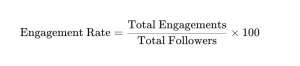
Keep an eye on this metric to refine your content strategy, focusing on what captivates your audience.
2. Reach and Impressions
Why It Matters: While engagement tells you how many people interact with your content, reach, and impressions reveal how many people see it. Reach indicates the number of unique users who visit your content, while impressions count how many times it appears, regardless of whether users interacted with it.
How to Track: Most social media platforms provide these analytics in their insights or analytics sections. Use them to assess your posts' visibility and determine whether your reach aligns with your goals.
3. Follower Growth Rate
Why It Matters: Tracking your follower growth rate gives insight into how well your brand attracts and retains an audience. A steady increase indicates that your content strategy works and that users find value in your offer.
How to Track: Measure your follower count at the beginning and end of a specific period. Calculate the growth rate using:

This metric helps you adapt your strategy based on trends in your audience growth. If follower growth rates align with your digital marketing goals, you’re likely seeing successful results from your social media strategies.
4. Click-Through Rate (CTR)
Why It Matters: CTR measures the effectiveness of your calls to action. It tells you how many people clicked on a link in your post compared to how many saw it. A higher CTR indicates that your content is compelling and encourages action.
How to Track: Use URL tracking tools (like UTM parameters) to monitor how many clicks your links receive across different platforms. This insight helps you refine your content and CTAs to maximize conversions.
5. Conversion Rate
Why It Matters: Ultimately, social media is about driving actions that matter to your business, whether purchasing, signing up for a newsletter, or downloading an eBook. The conversion rate shows how effectively your social media campaigns lead to these desired actions.
How to Track: To calculate your conversion rate:

Use this metric to assess your social media efforts' ROI and refine your campaigns for better results.
6. Audience Demographics
Why It Matters: Understanding your audience allows you to tailor your content to their interests and needs. Tracking demographics like age, gender, location, and interests helps ensure you reach the right people with the right message.
How to Track: Social media analytics tools provide insights into your audience demographics. Use this data to guide your content strategy, ensuring it aligns with the preferences of your target audience.
7. Share of Voice
Why It Matters: Share of voice measures how much of the conversation about your industry or brand is happening around you compared to competitors. It indicates your brand’s presence and reputation within your niche.
How to Track: Use social listening tools to monitor mentions of your brand versus competitors. This metric helps you understand your position in the market and informs your reputation management strategies.
8. Customer Satisfaction Score (CSAT)
Why It Matters: Measuring customer satisfaction on social media helps you gauge how well your audience perceives your brand and its services. High satisfaction rates often lead to increased loyalty and word-of-mouth referrals.
How to Track: Use surveys and polls on social media to ask your audience about their experiences. Analyzing their feedback can reveal valuable insights for improving your products or services.
Conclusion
The right social media metrics can transform your brand’s digital marketing approach. By refining your social media strategies with a data-driven focus on these metrics, you can build strong connections and achieve new success in 2025.
By focusing on engagement rates, reach, follower growth, click-through rates, conversion rates, audience demographics, share of voice, and customer satisfaction, you can create a data-driven strategy that enhances your brand’s visibility and fosters genuine connections with your audience.
So, gear up for the coming year, refine your metrics, and watch your social media success soar!
