
Holiday Marketing for Small Businesses: How to Prepare for the 2026 Season
Holiday Marketing for Small Businesses: How to Prepare for the 2026 Season

Holiday marketing has changed. Black Friday is no longer the true start of the season.
Many people plan gifts weeks before the big sale days. They compare prices. They watch creator posts. They send DMs. Some also use AI tools before they choose what to buy.
For a small business, that can sound like a lot to manage. It does not have to be.
The best advantage is simple: prepare early. Get your offer, product details, content, replies, and tracking ready before the rush. Then your team can spend less time fixing problems during the busiest weeks.
Meta’s 2026 Holiday Insights Center shows how social media, DMs, creators, AI, and shopping now connect. Many of its figures refer to people who use Meta platforms. Keep that in mind when reading the numbers.
Start Early and Build an Offer Worth Noticing
Holiday marketing for small businesses should start before the busiest sales days. Early planning gives you time to shape the offer and prepare your content. You can also test the buying process before feeds, inboxes, and ad space get crowded.
Attentive’s 2026 Consumer Pulse research found that 83% of consumers start planning holiday purchases before Black Friday. It also found that 71% expect to shop before Black Friday.
Basis found a similar pattern. Its 2026 Holiday Shopping and Advertising Trends report says 68% of consumers shop early to avoid delays. It also found that 57% look for deals throughout the year.
This does not mean you need Christmas posts in August. It means the plan should be ready early.
Start with one clear offer. What do customers get? Why does it matter? How long does it last? What should they do next?
You also do not need a huge discount. Small businesses can compete through ease and value. Try gift bundles, free local delivery, gift wrapping, seasonal packages, early booking perks, or simple pickup options.
Then test the message. Could a new customer understand the offer in a few seconds? If not, make it simpler.
Turn Social Media and DMs Into Your Holiday Storefront

Facebook, Instagram, and DMs can shape what customers do next. The final sale may still happen somewhere else. Keep your profiles current, make products easy to find, and plan for fast replies so shoppers can move forward with less effort.
Meta reports that 85% of shoppers who use its platforms have bought something in a physical store after seeing it on social media.
That means your profile is part of the shopping trip. It is not just a place to post.
Before the rush, check the basics. Are your holiday hours right? Does the bio link work? Can people find your address, products, booking page, or current offer quickly?
Your posts also need different jobs. A clear social media strategy can help you mix tips, product details, proof, reminders, and sales posts. This keeps the feed useful without making every post feel like an ad.
DMs matter too. Meta says 59% of shoppers who use its platforms message businesses during the holidays. It also says 33% use messages to find products. Another 26% use them to make payments.
A DM may come from someone who is already close to buying.
Prepare simple answers for common questions. Cover stock, sizing, shipping, pickup, hours, booking slots, payment methods, and return rules.
Meta Business Agent can answer some business questions and suggest products from a catalog. It may help with the first reply. Still, give customers a clear way to reach a person when they need more help.
Use Creators and AI to Help Shoppers Decide
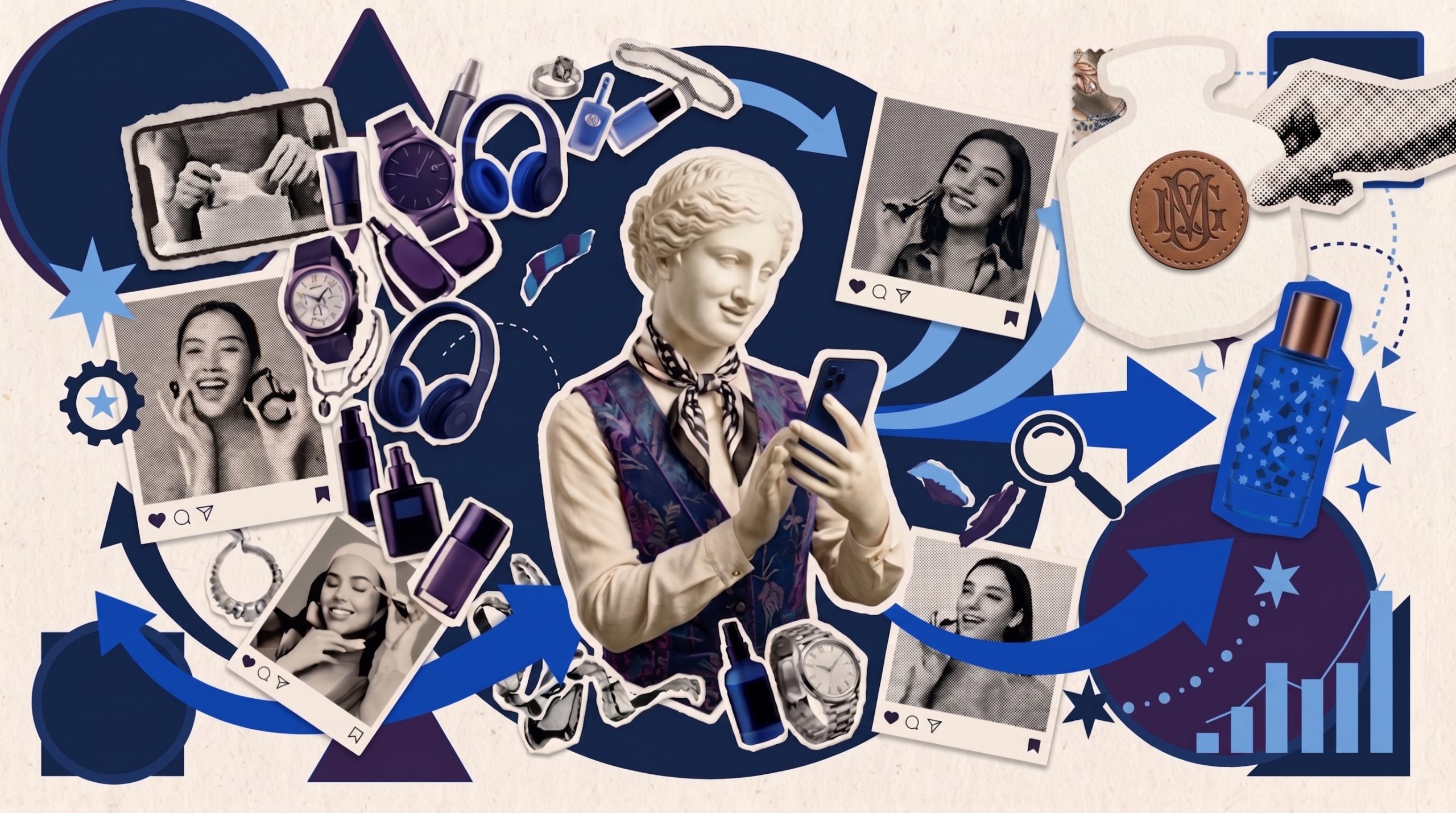
Holiday shopping does not follow one straight path. A shopper may see a creator post, ask AI for ideas, compare options on social media, and visit your site before buying. Clear product details help your business stay useful at each step.
Meta says 94% of shoppers who use its platforms look to creators for holiday shopping ideas. For a small business, that does not mean hiring a famous influencer.
A smaller creator may be a better fit. A local food creator can suit a nearby restaurant. A fitness creator may fit a wellness brand. A loyal customer with a trusted voice can also be useful.
AI is now part of gift research too. Meta says almost one in four global shoppers used AI during the last holiday season.
Google’s 2026 holiday shopping research adds more context. It found that shoppers who use AI notice more steps and sources during the buying process than shoppers who do not use AI.
The lesson is simple. Your product details need to be clear wherever people find them.
Use exact product names. Keep prices and stock up to date. Write plain descriptions. Add strong photos. Make shipping, booking, and return details easy to see.
AI may help a shopper find your business. Clear details can help them trust it.
Make Every Click Easier to Convert
Holiday marketing does not end when someone clicks a post or ad. Your website, mobile pages, checkout, booking flow, and tracking still need to work. Fixing small problems can be more useful than paying for more traffic.
Salesforce’s 2026 holiday retail outlook shows why. In Q2 2026, mobile made up about three-quarters of global online traffic. Social also sent more visits to online stores. Yet many shoppers still left without buying.
More traffic does not always mean more sales.
Test the full path on your own phone. Start with a social post. Open the link. Find the item. Add it to the cart or try to book. Check if delivery, pickup, fees, and deadlines are easy to understand.
Each unclear step gives the shopper one more reason to leave.
Paid ads need the same care. Meta’s holiday materials cite an average return of more than $4 for every $1 spent by advertisers. That is a broad platform average. It is not a promise for every business.
If your budget is small, good tracking matters even more. Check Meta Pixel and Conversions API before you raise spend. Decide which actions matter. Then make sure those actions can be tracked.
Once the campaign is live, use social media analytics to connect attention with results. Look at site visits, enquiries, bookings, and sales. The goal is not to spend more because it is the holidays. The goal is to see what is worth more budget.
Connect the Campaign, Measure What Matters, and Stay Flexible
Your holiday campaign should feel connected across social media, email, your website, ads, DMs, and the store. Keep the offer and key dates the same. Then use customer actions to adjust the plan while there is still time.
Each channel has a different job. Social media can introduce the offer. Creator content can build trust. DMs can answer questions. Your website can give full details. Email can bring people back before a deadline.
This is why social media and email marketing can work well together. One helps people find you. The other helps you stay in touch after they show interest.
September: Set the main goal. Choose the offer, key products, dates, stock limits, and what your team can handle.
October: Prepare the main creative, landing pages, emails, product details, auto replies, creator briefs, and tracking. Test them before demand rises.
November: Increase visibility. Watch the data. See which posts, products, emails, and ads lead to useful actions.
December: Make key details easy to find. Show shipping cutoffs, pickup options, stock, booking deadlines, and last-minute choices.
January: Review the campaign while it is still fresh. Save the best creative, common questions, sales patterns, and channel results for next year.
Do not track every number just because it is there. Focus on the numbers that help you make a choice.
If reach is high but profile visits are low, the content may not give people a reason to learn more. If product views are high but sales are weak, check price, shipping, trust, and checkout. If the same question keeps coming through DMs, add that answer to your public content.
The goal is not to be everywhere at once. It is to make the places where customers already find you work better together.
If you need help linking content, messages, ads, and tracking, BSD’s social media marketing can help turn those parts into one clear plan.
Start before the rush. Keep the message simple. Watch what customers do. Then improve the campaign while there is still time.

Social Media Content Planning: What Should Your Business Post?
Social Media Content Planning: What Should Your Business Post?
You know you need to post on social media. The harder question is: what should you actually post?
Without a plan, content can quickly become a mix of last-minute graphics, random trends, and promotional posts. You stay active, but the feed does not always move the business forward.
Good social media content planning starts before the calendar. It connects what you post to your audience, your brand, and the goals in your social media strategy.
Start With the Job Your Content Needs to Do
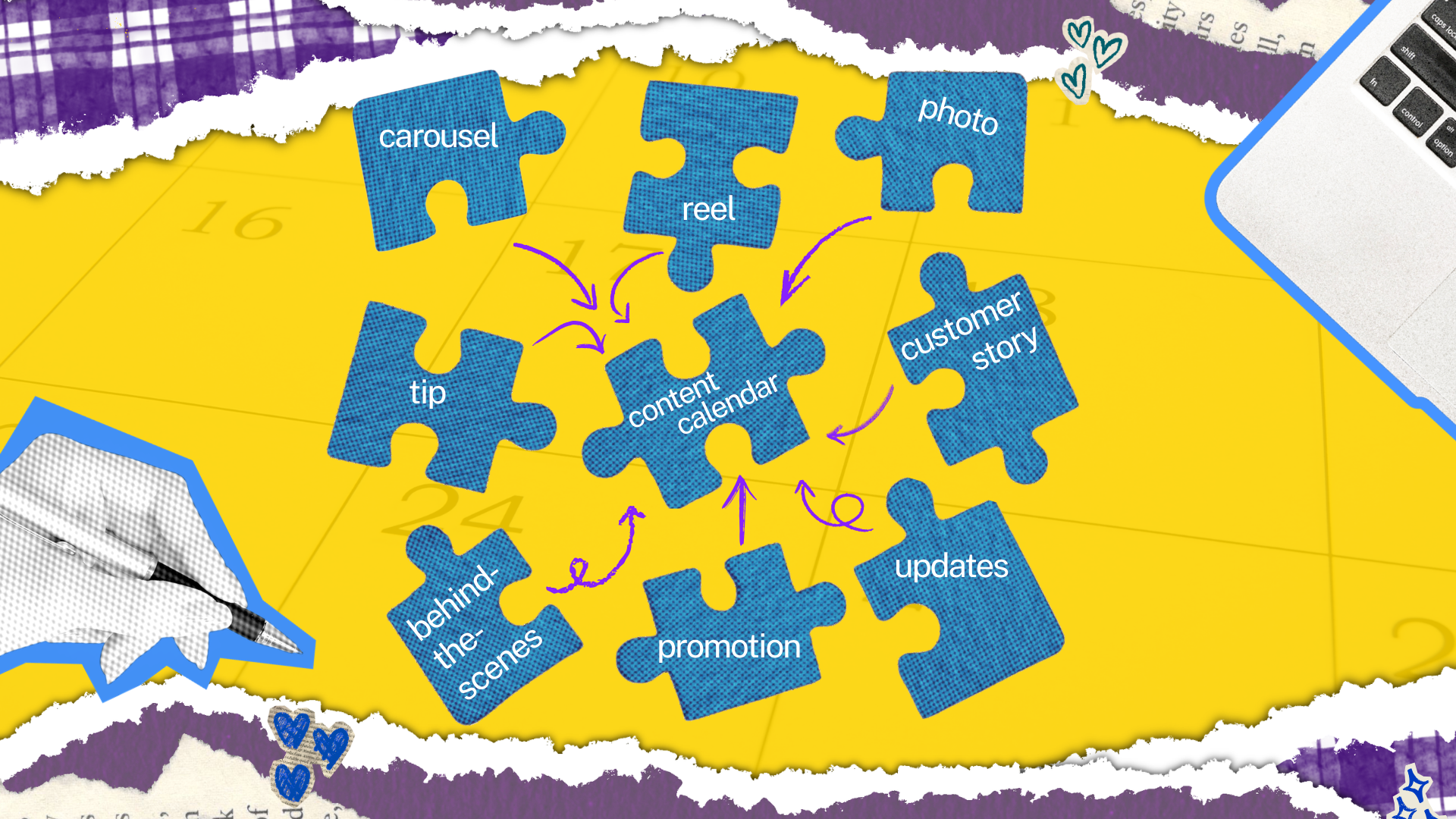
Every post should have a purpose. Your content may need to attract new people, answer a question, build trust, show proof, start a conversation, or encourage a next step. Knowing that purpose first makes social media content planning much easier and keeps your calendar from becoming random.
Before brainstorming topics, ask what the business needs from social media right now.
If the goal is awareness, you may need useful or shareable content. If the goal is trust, show your expertise, process, or results. If the goal is leads, create content that helps the right people understand their problem and what to do next.
Build a Few Content Pillars
Content pillars are the main themes your brand returns to again and again. They give your team enough structure to plan faster without making every post feel the same. For most businesses, three to five clear pillars are enough to keep the feed focused, useful, and recognizable.
A service-based business might use five simple pillars:
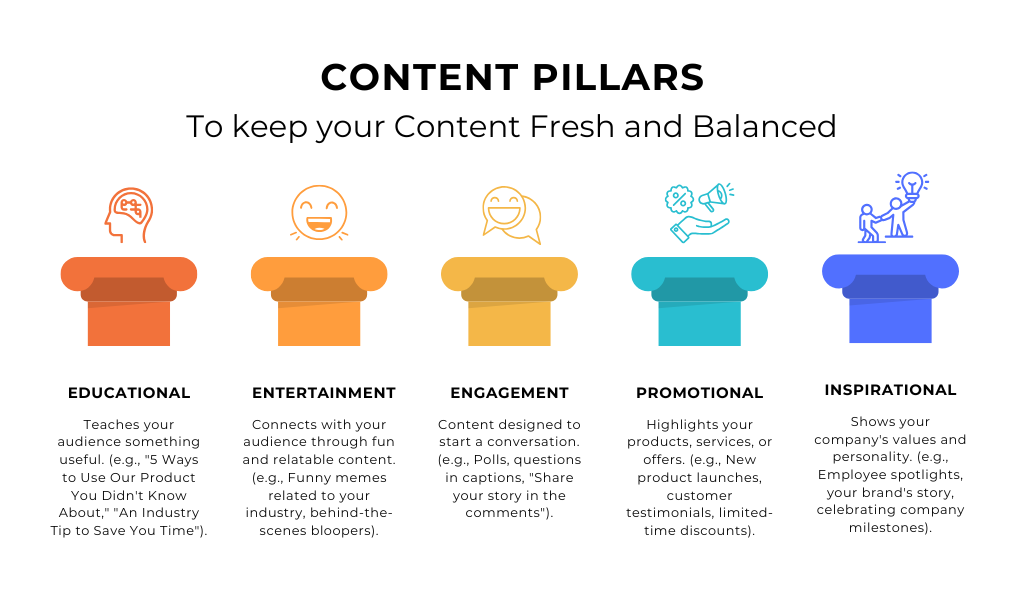
- Educate: Share tips, answer common questions, explain a topic, or help your audience solve a problem.
- Promote: Talk about your products, services, offers, events, or other ways people can work with your business.
- Inspire: Share customer stories, results, ideas, milestones, or messages that encourage your audience.
- Entertain: Create lighter content that catches attention and shows personality. This could include relatable posts, trends, short videos, or humor that fits your brand.
- Behind the Scenes: Show the people and process behind the business. Introduce your team, share how work gets done, or give your audience a look at what happens outside the polished final product.
You do not need to give every pillar the same amount of space.
The right mix depends on your audience and goals. The point is to create enough variety that your feed stays useful and interesting without feeling random.
These pillars can then become the starting point for your social media content calendar. Instead of asking, “What should we post today?” you can ask, “Which pillar have we not covered lately?”
Turn Real Questions Into Post Ideas
You do not need to invent every social media idea from scratch. Some of your best topics already exist in customer questions, sales calls, emails, search queries, reviews, and conversations with your team. These sources reveal what people actually want to understand before they choose a business.
If customers keep asking the same question, that is a post idea. If your sales team explains the same misconception every week, that is another one.
One strong question can also become several formats. A detailed blog can become a carousel, a short video, a quick tip, a poll, or a follow-up email. The idea stays the same, even as the format changes.
Plan a Mix, Not a Feed Full of Sales Posts
A useful content plan balances education, engagement, proof, brand building, and promotion. Not every post needs to sell. Giving people useful reasons to follow and trust your business makes promotional content feel more natural when it appears and creates a stronger journey from discovery to action.
If every post says “buy now” or “book a call,” people have little reason to stay unless they are already ready to buy.
Think about the relationship instead. Social content can help people discover you, learn from you, and decide whether they trust you. From there, channels such as social media and email marketing can keep that relationship moving.
Use a Content Calendar to Make the Plan Real
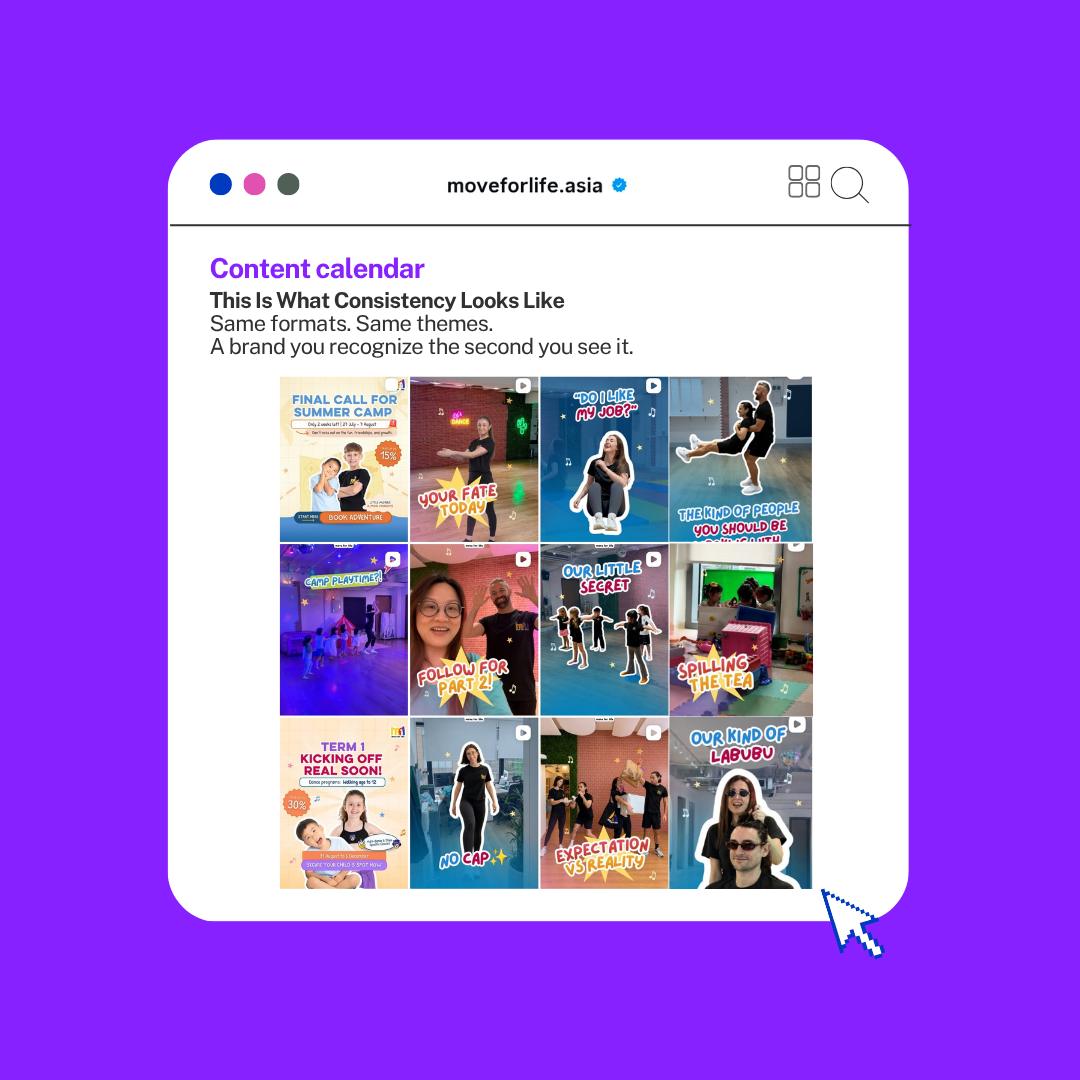
A content calendar turns your ideas into a repeatable publishing plan. It should show more than dates. Add the content pillar, goal, format, platform, CTA, and key metric for each post. This makes it easier to see whether your monthly content has enough variety and a clear purpose.
You do not need a complicated system. A spreadsheet can work.
For each post, record the topic, content pillar, format, platform, goal, CTA, and publish date. Planning these details also makes it easier to batch similar tasks and avoid rushing when posting day arrives.
Let Your Analytics Shape What You Post Next
Your content plan should change as you learn. Review which topics, formats, and calls to action get useful responses from your audience. Reach and views can show visibility, while interactions, profile visits, clicks, enquiries, and conversions can tell you more about what people do after seeing the content.
Do not judge the plan by likes alone. Use your social media analytics to find patterns and decide what deserves another test.
A post that reaches fewer people may still be valuable if it brings qualified website visits. A high-view video may be useful for awareness even if it does not generate leads right away. The goal determines which result matters.
What Should Your Business Post This Week?

When you are stuck, return to four simple sources: what your audience asks, what your business knows, what proof you can show, and what you need people to understand next. That gives you a practical mix of useful content without relying on trends or posting simply to fill the calendar.
For example, your week could include one educational post, one proof-based post, and one brand or service post. The exact mix depends on your goals, team capacity, and platform.
Consistency matters, but that does not mean posting every day. A realistic plan you can maintain is more useful than an ambitious calendar your team cannot sustain.
Plan With Purpose, Then Create
Social media content planning should make posting easier, not add another layer of work. Start with your goals, choose a few repeatable content pillars, build ideas from real audience needs, and use performance data to improve the plan. You will spend less time guessing and more time creating with direction.
If your team needs support turning strategy into a practical content calendar, BSD's social media marketing service connects planning, content creation, publishing, and reporting around the same goals.
Social Media and Email Marketing: Why You Need Both
Social Media and Email Marketing: Why Your Brand Needs Both
Social media is one of the best tools for getting discovered.
A useful post can introduce your brand to new people. A Reel can increase your reach. A strong carousel can turn a casual viewer into a follower.
But social media was never meant to be your only database.
Your followers still live on a platform you do not control. An algorithm change can affect your reach overnight.
That is why social media and email marketing work better together.
Social media gets attention. Email gives you a direct way to continue the relationship.
Social Media Is for Discovery
 Think of social media as a busy storefront.
People pass by, discover your business, explore your content, and learn what you offer.
That makes social media valuable for:
- brand awareness
- audience growth
- engagement
- community building
- driving traffic
But you are still operating on rented land.
You do not control the algorithm. You cannot guarantee that every follower will see your next post. Your audience may grow while your organic reach changes.
This does not make social media less useful.
It simply means your social media strategy should give people somewhere to go after they discover you.
Instead of treating follower growth as the finish line, use social media to start the relationship.
Followers Are Not Customers
A large follower count can look impressive, but followers alone do not build a business.
Someone can follow your account today and rarely see your content again.
Email creates a different kind of connection.
When someone joins your email list, they are giving your brand permission to communicate with them more directly.
That is why we like to think of the two channels differently:
Social media is the storefront. Email is the asset.
Social introduces your business.
Email gives interested people a way to stay connected beyond the feed.
Your social content can encourage people to visit your website, download a resource, subscribe for useful insights, or take another relevant step.
That creates a stronger path than simply asking people to follow you and hoping the algorithm keeps showing them your content.
Use Actions to Make Email More Relevant
Building an email list is only part of the strategy.
What you send matters too.
Traditional email marketing often treats every subscriber the same. One newsletter goes to everyone, regardless of their interests.
A better email marketing strategy pays attention to behaviour.
Imagine two subscribers.
One joined your list today after reading a beginner's guide.
The other has visited your service or pricing page three times.
They probably do not need the same message.
The new subscriber may need helpful content that introduces your brand.
The second person may benefit from service details, case studies, or answers to common questions.
Pay attention to what people do, not just who they are.
Clicks, downloads, page visits, and other actions can help you send more useful messages.
Build Emails People Actually Want to Open

Email marketing does not have to mean sending crowded newsletters filled with promotions.
Keep it simple.
One email can answer one question, share one idea, or direct someone to one useful resource.
Clear copy often does more work than an overdesigned email.
The same goes for your brand experience.
Your emails should feel connected to the social content that brought someone to you in the first place. Your voice, message, and visual identity should feel familiar across both channels.
That consistency helps people recognize and trust your brand as they move from one platform to another.
Give People One Clear Next Step
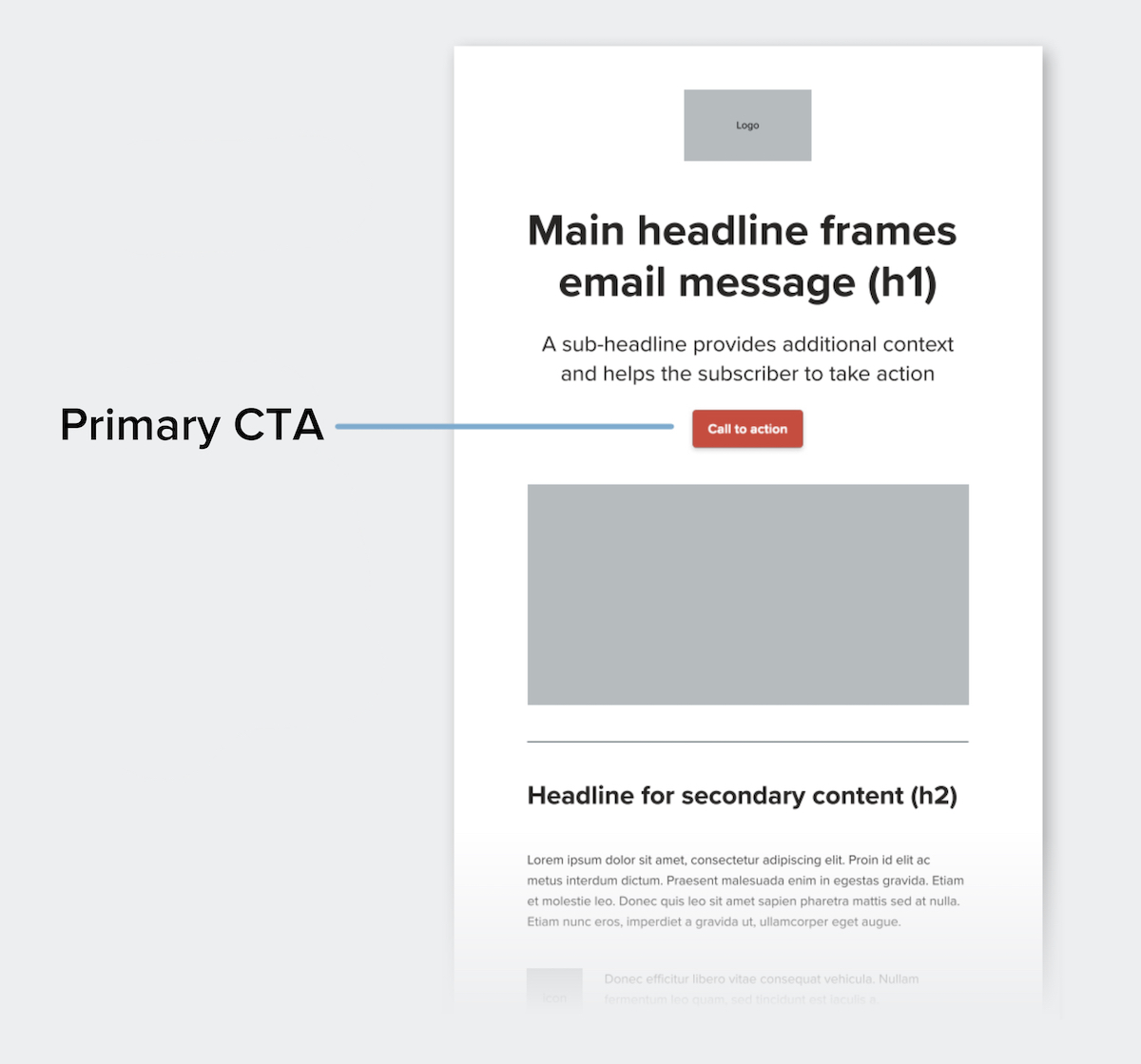
Every email should answer a simple question:
What should the reader do next?
Maybe you want them to:
- read an article
- view a case study
- explore a service
- download a resource
- book a conversation
Choose one main action.
Too many options can make the next step unclear.
The right CTA also depends on where someone is in their relationship with your brand.
A new subscriber may be ready to read another article. Someone who keeps returning to your service page may be ready to talk.
Your marketing should help both people move forward without forcing them into the same journey.
Social Media and Email Work Better Together
You do not need to choose between social media and email.
Give each one a clear job.
Social media creates discovery. Email builds a direct connection.
A person might discover your brand through Instagram, visit your website, join your email list, receive useful content, and eventually explore your services.
Each channel supports the next.
At Brightsand Designs, this is how we think about digital marketing. Social media, email, content, and your website should not feel like separate projects. They should support the same business goals and create a clear journey for your audience.
So, use social media for what it does best: getting noticed.
Then invite interested people into a channel where you can continue the conversation.
Because followers are valuable.
But the real opportunity is turning attention into a relationship — and giving that relationship somewhere to grow.

How Listening to Social Media Can Turn Customers into Fans
Ever wondered what your followers really think about your brand or how that one Instagram story made someone become your number-one fan? 🤔 Explore how brands transform casual followers into devoted advocates, all by genuinely listening to what they’re saying online.
In today’s digital-first world, customer advocacy is gold for any brand, especially if you’re trying to stand out in a space where every other brand is hustling for attention. Customer advocacy isn’t just getting people to like your product; it’s when customers become your biggest supporters, telling the world about your brand because they genuinely love it. And, with the rise of social media, companies have an easy (and excellent) way to make this happen: social media listening. This means tapping into honest, raw conversations to understand what makes customers tick, what they love, and what they wish your brand would change.
So let’s break it down. Here’s how social media listening transforms how brands connect with consumers and turns regular customers into raving advocates.
Social Media Listening 101: What’s It All About?
Social media listening is exactly what it sounds like—paying attention to what people say about your brand across social platforms. But it’s more than just keeping track of mentions or counting likes. It’s about digging deeper into those conversations to see what matters to your audience: What’s exciting them? What’s bugging them? What are they really looking for?
When you listen to your audience this way, you get the scoop on their opinions, preferences, and even the trends they’re vibing with right now. Social media listening is a game-changer for digital marketers, offering valuable data to boost your strategy, improve your products, and respond to customer needs like a pro. And the best part? It can make your customers feel seen, which is what turns casual fans into hardcore advocates.

Why Customer Advocacy is Your New BFF in Digital Marketing
Imagine this: Your customers love your product so much that they’re talking about it to their friends, family, and followers—without you even asking. That’s customer advocacy in action. It’s like word-of-mouth marketing but way more powerful because it’s coming from real people with honest opinions, not just a scripted ad. And here’s the kicker: Studies show that people trust personal recommendations more than brand ads. This is why customer advocacy is the ultimate goal in digital marketing—it’s authentic, organic, and works.
When customers turn into advocates, they’re not just buying your product but repping your brand because they believe in it. And thanks to social media, brands can create that kind of loyalty by actively listening and responding to their followers in real-time.
How Social Media Listening Supercharges Customer Advocacy
So, how does social media listening help turn followers into advocates? Let’s check out some ways brands are using it to create connections that count:
Quick Reactions Are Everything
Responding quickly to customer comments or concerns shows your audience that you care and that you’re not just watching. Whether it’s a quick “Thanks for the love!” or a thoughtful reply to a complaint, being responsive is a huge part of making people feel valued. This simple act can turn even a slightly annoyed customer into a fan for life.
Spotting Trends for Hyper-Relevant Content
By tuning in to trends, brands can create content that resonates deeply with their audience. Imagine catching a TikTok trend as it’s blowing up or noticing that your followers are all talking about the same new movie. Using these insights for your next campaign helps you stay relevant and build that connection with your audience, making them feel like, “Wow, they really get me!”
Learning from Your Competition
It’s not just about tracking your mentions. Social listening lets you watch what people say about your competitors, too. If you see customers griping about an issue with another brand, that’s your chance to swoop in and do it better. It’s all about turning insights into an advantage.
A Step-by-Step Guide to Social Listening Like a Pro
If you’re ready to get serious about social media listening, here’s a basic roadmap to get you started:
- Choose the Right Tool for Your Brand: Tools like Hootsuite, Sprout Social, or BuzzSumo are designed to make social listening a breeze. These tools let you track keyword mentions and analyze how people feel about your brand (positive, negative, or neutral).
- Track Keywords and Hashtags That Matter: Start with the essentials like your brand name, product names, and popular hashtags. Then, branch out into industry-related terms and trends. The more specific you get, the better you’ll understand the needs and preferences of your audience.
- Analyze the Mood: This is where sentiment analysis comes in. Pay attention to how people feel about what they’re saying, not just what they’re saying. If there’s a ton of negative feedback, look for patterns. Maybe there’s a quick fix you haven’t thought of. If it’s positive, give your team a high-five and keep that momentum going.
- Show Up and Engage: Don’t just watch from the sidelines. Get in there! Respond to comments, like posts, share user-generated content. This helps build that all-important trust factor.
- Rinse and Repeat: Social media listening isn’t a one-time thing. Keep tweaking, learning, and adapting your strategy to stay in tune with your audience.
5 Super Effective Ways Social Media Listening Builds Customer Advocacy
- Respond to Followers, Fast: People want to feel seen, and responding quickly makes them feel like their voice matters. A simple reply to a tweet or a “thanks for the mention” can make someone’s day, turning a regular follower into a full-on brand advocate.
- Identify and Follow Trends: Find out what’s trending in your industry, and you’ll never run out of relevant content ideas. Not only does this keep you relevant, it also shows your audience you’re in tune with what’s hot right now.
- Encourage Honest Reviews: Social media listening helps you catch customer reviews and testimonials. Share positive feedback to your advantage, and invite more people to review your products. Word-of-mouth is still one of the most trusted forms of marketing out there.
- Build Relationships with Influencers and Brand Ambassadors: By monitoring social media, you can identify influencers or customers who already love your brand. This is your chance to turn them into official advocates through partnerships, collaborations, or simply featuring them on your channels.
- Outshine Competitors: Social listening lets you track competitors’ conversations, giving insight into where they’re winning and falling short. Use this info to offer what they’re missing and win over new customers.
Conclusion
Social media listening is like having a backstage pass to what your audience thinks about you. By truly listening, and not just watching, you can turn insights into actions that resonate with your followers. In a world where attention spans are short, and loyalty is hard to earn, listening to social media can be the secret weapon that turns your fans into genuine advocates.
So, are you ready to find out what your audience is saying? Start listening, connecting, and watching how quickly your brand reputation skyrockets.

Startup Marketing Essentials: From Idea to Market Success
The journey of launching a startup is an exhilarating ride filled with boundless creativity, unwavering determination, and the promise of transforming a groundbreaking idea into a thriving reality. However, the path from concept to market success is an intricate maze, and effective marketing serves as a critical compass. In this comprehensive guide, we will embark on a voyage to explore the startup marketing essentials, unveiling innovative strategies to navigate the early stages of your startup journey successfully.
Crafting a Unique Value Proposition: Your North Star
Before diving headfirst into marketing strategies, it is imperative to carve out what sets your startup apart from the rest. Your unique value proposition (UVP) serves as the bedrock of your brand and marketing endeavors. It answers the pivotal question: Why should customers choose your product or service?
Your UVP should distinctly communicate the unparalleled benefits your startup offers in solving a specific problem or fulfilling a particular need.
Get Acquainted with Your Target Audience: The Magic Elixir
Comprehensive knowledge of your target audience is the cornerstone of success. Conduct thorough market research to decode the demographics, preferences, pain points, and behaviors of your ideal customers.
Create vivid buyer personas, embodying the essence of your ideal customers. These personas will empower you to tailor your marketing endeavors to cater to their unique needs.
Establish a Robust Online Presence: Your Digital Realm
In this digital age, cultivating a robust online presence is not optional; it is a necessity. Start by crafting a professional website that showcases your product or service, embodies your brand identity, and serves as a wellspring of valuable information for visitors.
Allocate resources to construct a user-friendly website, maintain active and engaging social media profiles, and generate content that educates, entertains, or inspires your audience.
Cultivate a Cohesive Brand Identity: The Art of Recognition
Your brand identity encompasses elements such as your startup's name, logo, colors, and messaging. Consistency in branding is the elixir that bestows recognition and trust on your audience.
Engrave your brand guidelines in stone, dictating the unvarying presentation of your brand across all channels. This meticulous consistency will forge a memorable and unified brand experience.
Content Marketing: The Kingdom of Authority
Content marketing stands as a potent instrument for establishing authority and nurturing relationships with your audience. Generate high-quality, enlightening content that addresses the pain points of your audience while positioning your startup as an industry luminary.
Concoct a content strategy encompassing an array of mediums such as blog posts, articles, videos, and more. These resources will be the palette through which you paint your expertise and deliver value to your audience.
Social Media Alchemy: Engaging the Masses
Harness the captivating power of social media platforms to connect with your audience, disseminate your content, and cultivate a vibrant community around your brand. Choose platforms that seamlessly align with the preferences of your target demographic and engage with them in a manner that feels authentic.
Nurture your social media presence by devising a content calendar, interacting earnestly with your audience, and promptly responding to comments and messages. Establish a sense of community to fortify your brand's presence.
Email Marketing: The Art of Building Relationships
The cultivation and sustenance of customer relationships are the bedrock of enduring success. Email marketing serves as the conduit through which you remain connected with your audience, impart updates, share valuable content, and promote your offerings.
Erect an email marketing strategy that includes segmented email lists, personalized content, and the judicious employment of automation to nurture relationships.
SEO: Ascending the Ranks
Search engine optimization (SEO) is the linchpin to augmenting your startup's online visibility. Optimize your website and content for relevant keywords, ascending the rankings on search engine results pages (SERPs).
Undertake comprehensive keyword research, fine-tune your website for search engine algorithms, and craft content that is not only search engine-friendly but also resonates with your target audience.
Paid Advertising: Turbocharge Your Growth
Paid advertising can act as an accelerant for your startup's growth, extending your reach to a broader audience. Consider pay-per-click (PPC) advertising, social media ads, and other paid channels to drive traffic and conversions.
Draft a meticulously calculated paid advertising strategy that aligns seamlessly with your objectives, targets your ideal audience, and manages your budget judiciously. Be vigilant in monitoring performance metrics.
Data-Driven Evolution: The Key to Excellence
The trajectory of successful startup marketing is a continuous evolution sculpted by meticulous analysis, tracking of key performance indicators (KPIs), and adaptability rooted in data-driven insights.
Implement robust analytics tools to vigilantly monitor your marketing endeavors, pinpoint areas of optimization, and make informed, data-backed decisions.
Conclusion
The odyssey of marketing a startup from concept to market success is a multifaceted expedition demanding meticulous planning, boundless creativity, and the dexterity to pivot when needed. By diligently adhering to these startup marketing essentials, you will not only chart a course toward a successful launch but also set the stage for a remarkable and enduring journey in the business landscape.
By partnering with Brightsand Designs, you can navigate the intricate landscape of startup marketing with confidence. Our tailored solutions and experienced team will support you at every step of your journey, from concept to market success. Let's embark on this remarkable expedition together and shape a prosperous future for your startup in the business landscape.


Does My Small Business Need a Marketing Team?
…and how we can help you succeed
DO SMALL BUSINESSES NEED MARKETING TEAMS?
The simple answer to that is ABSOLUTELY. But don't just take our word for it. Let us explain why investing in a marketing team is a smart move for your business.
Welcome to the Information Age, where the online world is a vast realm of opportunities. Whether people are searching for new restaurants, travel destinations, or solutions to their problems, they turn to the internet for answers. Your potential customers are out there seeking information, and your company needs to be readily available to provide the solutions they're looking for. After all, a staggering 97% of people search online for local businesses.
Having an impactful online presence isn't just a luxury; it's a necessity. In a world where digital interactions are becoming the norm, businesses that fail to establish themselves online risk falling behind. But you might be wondering, "Does my small business really need a marketing team?" The answer is a resounding yes. Small businesses must leverage the power of the digital space to connect with customers and prospects. It might seem tempting to wait until your business has grown, but consider this: can your company afford to remain invisible in today's competitive landscape?
By establishing an online presence early on, you're not just participating; you're taking control of your narrative. In a digital era where competition is fierce, social media platforms like Facebook and Instagram play a crucial role in your marketing strategy. Studies by Hubspot have shown a surge in local searches, highlighting how consumers now rely on online information to make informed decisions about businesses.
Benefits of Marketing
✅ Forge personal customer relationships
✅ Level the playing field against larger companies
✅ Target your desired audience effectively
✅ Gain insights into your customer base
✅ Customize prices and operating hours to fit your customers' lives
✅ Offer convenient communication channels for customers
✅ Expand your reach even on a tight budget
One of the most significant benefits of digital marketing for small businesses is the availability of free platforms like Facebook and Instagram. However, investing in a dedicated website remains a superior investment. As we discussed in our previous blog, there's a distinct difference between having a social media page and establishing a full-fledged website.
In the current times, where the digital sphere has become essential for businesses of all sizes, partnering with a team of experts can help you not just survive but thrive. A digital marketing team can align your business with your long-term goals and help you connect with your target audience effectively.
Investing in digital marketing doesn't have to break the bank. Small businesses can benefit from scalable plans offered by agencies like BRIGHTSAND Designs. By collaborating with professionals who understand your budget and goals, you'll receive tailored strategies and creative solutions to reach your audience.
In an insightful article by Entrepreneur, the value of a well-executed marketing strategy for guiding businesses toward long-term success is emphasized. While some expenses may be incurred, remember that the cost of digital marketing is often far less than traditional advertising methods.
An Outsider's Perspective
Digital marketing isn't just about utilizing platforms; it's about achieving significant results online. To effectively engage your audience, you must meet them where they are, and today, that's online. Partnering with a marketing team offers a fresh perspective—an outsider's view—that can be incredibly valuable. As a business owner, your energy should be directed toward running your company, not juggling complex marketing strategies.
According to Neil Patel, a renowned marketing expert, hiring a dedicated team can transform your marketing efforts. At BRIGHTSAND Designs, we offer tailored solutions for small and new businesses. We understand that every business is unique, and our dedicated team can provide insights, guidance, and solutions across various areas, including social media, project management, and SEO optimization. Our goal is to enhance your online visibility and market presence.
But How Can Start-Ups Afford This?
The journey to establishing a strong online presence doesn't require an all-in approach. Just as you build a house, you start with a strong foundation, reliable materials, a plan, and a team. Similarly, there are four essential pillars you need to start your digital journey:
✅ Logo and Branding
✅ Brand Guide
✅ Website
✅ Editable Templates
These pillars form the basis of your digital marketing strategy. They represent your identity, voice, and platform for engaging with your audience. Your logo, branding, brand guide, website, and templates collectively contribute to your brand's recognition and success.
Logo and Branding
A logo is the visual representation of your company, and branding is the story that accompanies it. Think of brands like Coca-Cola—its logo and branding go hand in hand, forming an iconic identity.
Brand Guide
Your brand guide is your playbook, defining everything from your mission and vision to your photography style and color palette. It ensures consistency in your messaging across all channels.
Website
A website is your online storefront, providing visitors with insights into your offerings, values, and solutions. It's the place where visitors can become customers, making it an indispensable tool for businesses.
Editable Templates
Editable templates provide consistency to your messaging and branding. They help maintain a cohesive look across different communications, contributing to a professional image.
While having all four pillars is ideal, you can start by focusing on two and gradually build up your digital presence. As your business grows, you can then partner with a digital marketing team to optimize your foundation. Marketing is an investment that yields returns, and with the right strategies in place, you can kick-start your business's journey toward success.
Ready to take your small business to the next level? BRIGHTSAND Designs specializes in helping businesses like yours establish a powerful online presence. Explore our services and discover how we can work together to achieve your business goals. What are you waiting for? Let's embark on this exciting digital journey together!

The Impact of AI-Generated Content on Social Media SEO: A Brave New Frontier
In today's fast-paced digital marketing landscape, we are witnessing the rise of Artificial Intelligence (AI) and its influence on content creation. AI-generated content has become increasingly prevalent, especially on social media platforms. As a business owner, I find myself pondering the implications of AI-generated content on social media SEO and its potential impact on my marketing strategies. In this article, let's delve into this fascinating topic and explore how AI-generated content is reshaping social media marketing.
The Rise of AI-Generated Content
AI-generated content is an innovative approach to content creation, where advanced machine learning algorithms analyze vast datasets to produce coherent and contextually relevant content. Social media platforms have quickly embraced this technology to automate content creation, reduce costs, and enhance user experiences. As I navigate the dynamic world of social media marketing, I am intrigued by the potential benefits AI-generated content can bring to my brand.
The Influence on Social Media SEO
One aspect that caught my attention is the potential impact of AI-generated content on keyword optimization. AI algorithms can analyze user behavior, search patterns, and content preferences, leading to the generation of content that aligns better with user queries. This could impact the selection and utilization of relevant keywords in my social media posts to improve search visibility and attract my target audience.
Ensuring Authenticity and User Engagement
While AI-generated content presents exciting opportunities, it is essential to maintain authenticity and human engagement. As I reflect on this, I am reminded of a recent advisory from a prominent AI platform, META, shared on LinkedIn. They emphasized the importance of using AI-generated content while preserving human creativity and authentic storytelling to foster meaningful connections with our audience. As I explore AI-generated content possibilities, I am determined to strike the right balance to ensure a genuine user experience.
Enhancing Personalization
AI-generated content also holds promise for enhancing personalization on social media. By analyzing user data, AI algorithms can deliver tailored content to specific audience segments, creating a more engaging user experience. I believe that personalized content can lead to higher interaction rates, increased shares, and improved social signals, contributing to enhanced SEO rankings for my brand.
Adapting SEO Strategies
As AI-generated content continues to evolve, I understand the need to adapt my social media SEO strategies. By staying updated on the latest AI advancements and incorporating them thoughtfully with authentic storytelling, I can optimize my social media content to achieve higher visibility and better user engagement.
The integration of AI-generated content into social media marketing marks a significant and transformative development. As a business owner, I recognize the potential benefits of AI-generated content while remaining committed to preserving authenticity and user engagement. By embracing AI-generated content responsibly and strategically, I am excited to unlock new opportunities for success in this brave new frontier of social media SEO.
References:
- LinkedIn Advisory from META AI Platform
- The Role of AI in Content Creation, Social Media Today
- AI-Generated Content and Its Impact on SEO, Search Engine Journal
- The Power of Personalization in Social Media Marketing, HubSpot