

Evergreen Content: Why It Matters for SEO and Traffic
Evergreen Content: Why It Matters
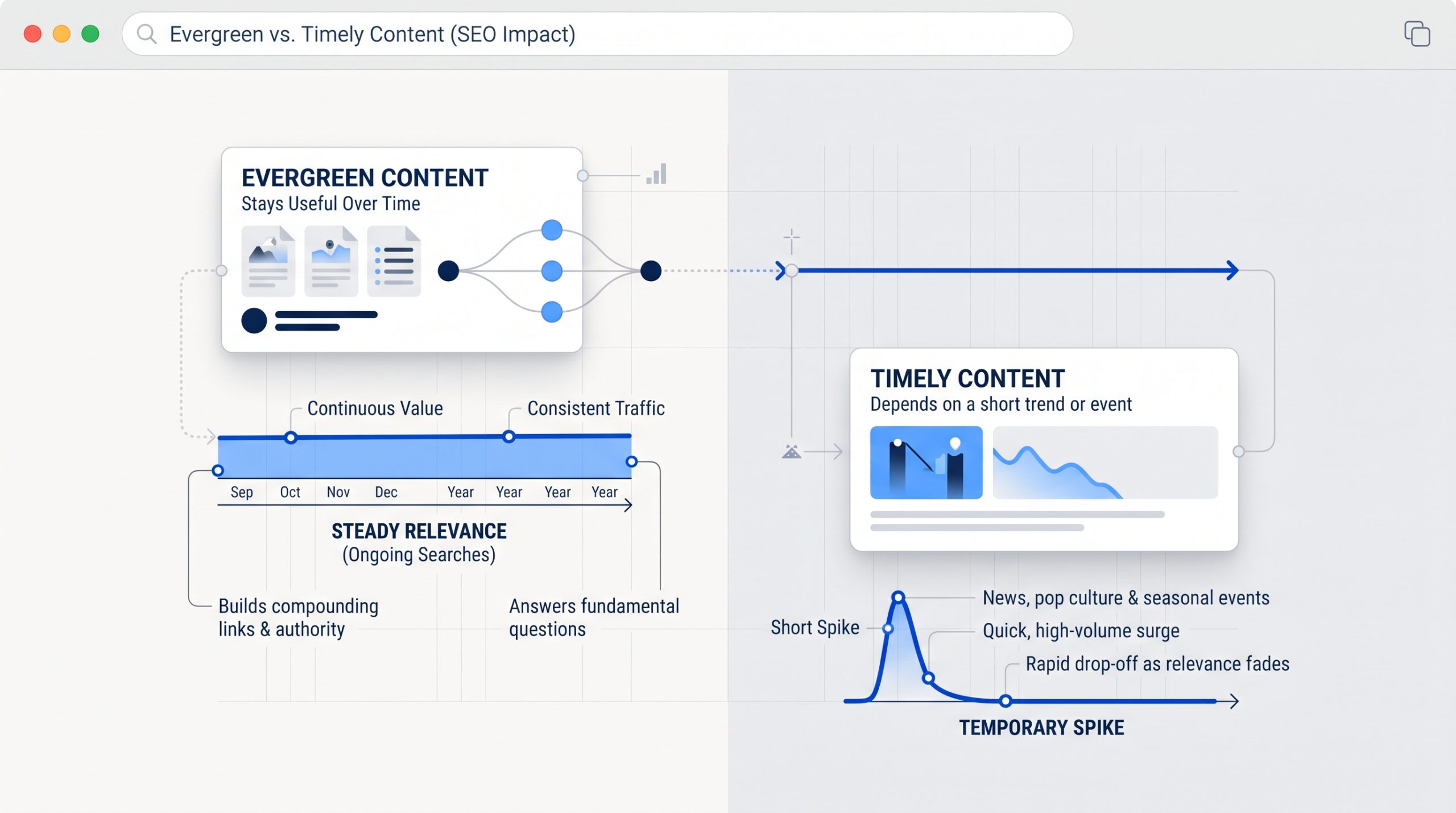
 Some content gets attention for a few days. Other content can stay useful for months or even years.
That second type is evergreen content.
Evergreen content focuses on questions and topics that people continue to search for over time. It does not depend on one short trend, event, or news cycle.
If you are still building your SEO foundation, What Is SEO? A Beginner's Guide to Search Engine Optimization explains how useful content, search intent, keywords, links, and technical setup work together to improve search visibility.
Evergreen content supports that foundation by giving your website useful pages that can keep answering the same important questions over time.
What Is Evergreen Content?
Evergreen content is useful information that stays relevant after the publish date. It usually answers recurring questions, explains a lasting topic, or helps people solve a problem that does not disappear when a trend ends.
Examples can include how-to guides, beginner explainers, checklists, definitions, tutorials, FAQs, and resource pages.
A guide to understanding SEO basics can stay useful for a long time. A post about a one-day platform update probably will not.
Evergreen does not mean the page should never change. Good evergreen content still needs reviews and updates when facts, tools, examples, or best practices change.
 Why Evergreen Content Matters for SEO
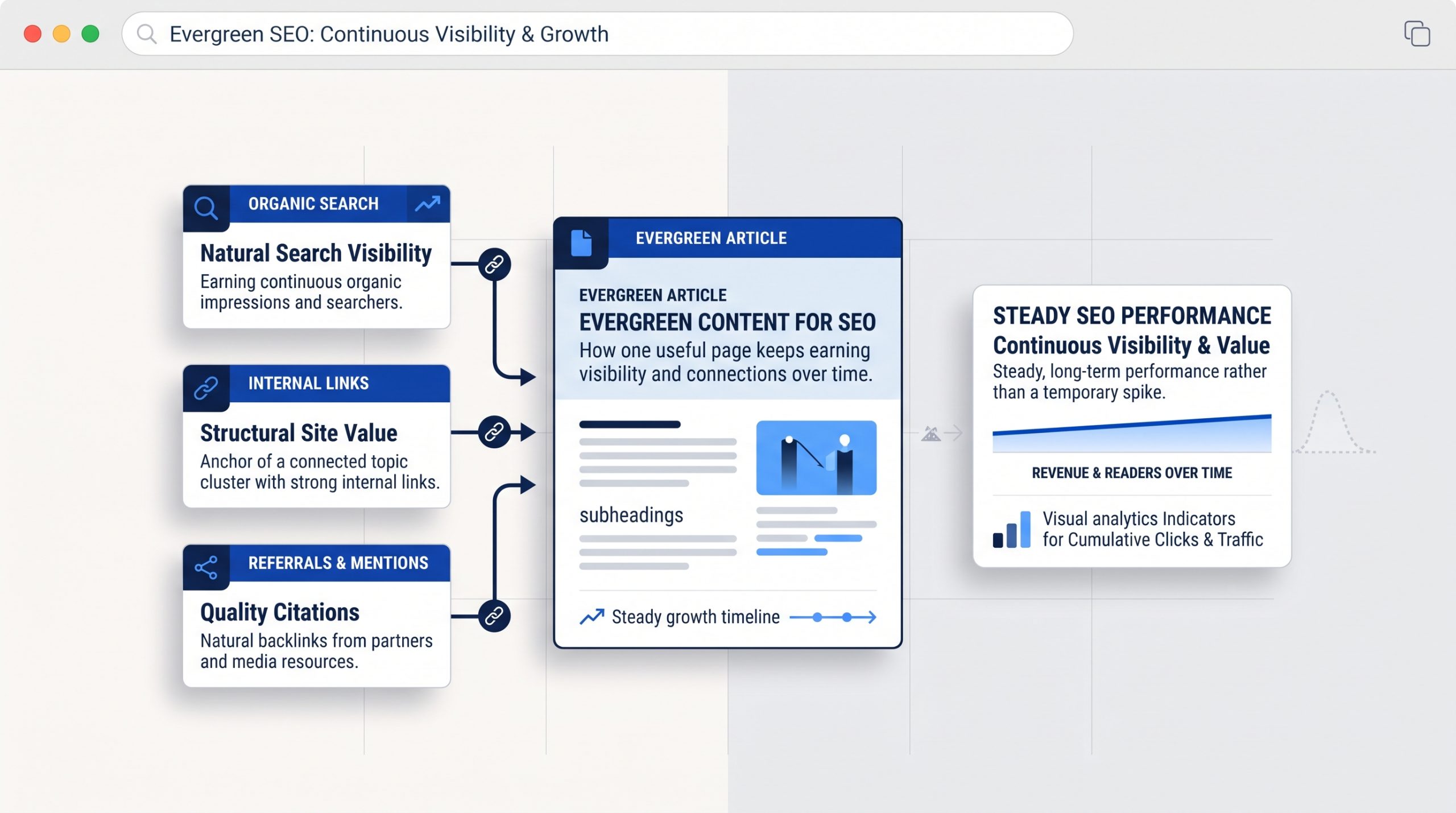
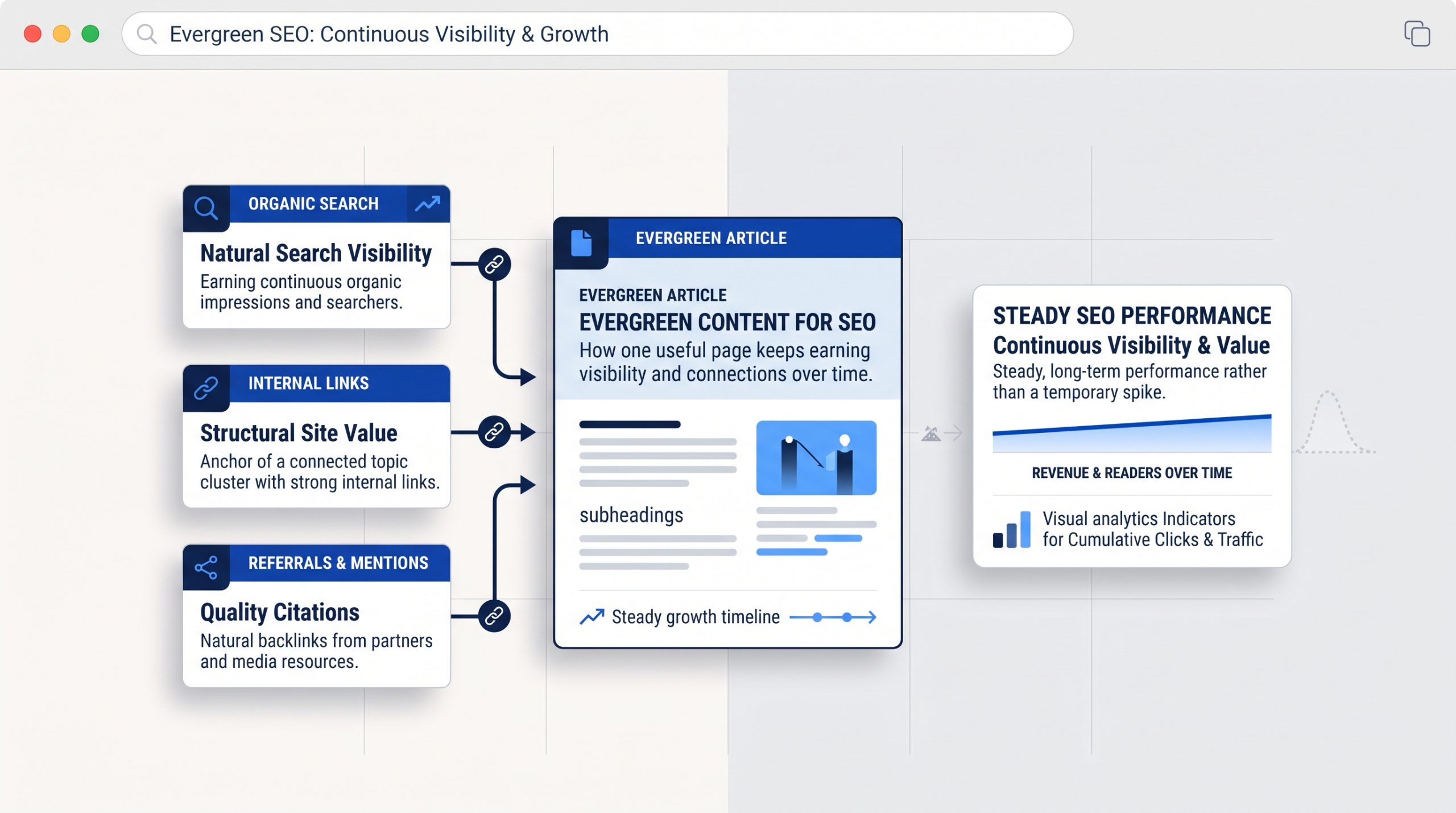
Evergreen content gives a website more chances to earn search visibility over time because the topic continues to matter. When a useful page stays relevant, it can keep attracting searches, internal links, referrals, and returning readers long after the first promotion ends.
 That makes evergreen content different from short-lived content.
A trend post may create a quick spike. An evergreen guide can keep working in the background.
It can also support other pages on your site. A strong evergreen article can become a useful place to link from newer posts, service pages, and related guides.
This works especially well when the website has a clear content and page structure, so readers can move naturally from one useful topic to the next.
Google also advises site owners to focus on helpful, reliable, people-first content rather than publishing pages mainly to chase rankings. That is a useful rule for evergreen content too.
Evergreen Content Can Support Steady Website Traffic
One useful evergreen page can keep bringing in visitors from search, internal links, social shares, email, and referrals. The traffic may grow slowly, but the page can continue contributing after the launch period has ended.
This is why evergreen content is valuable for a long-term content strategy.
You are building an asset, not only filling a content calendar.
For example, a business may publish a guide answering a common customer question. That guide can appear in search, be shared by the sales team, be linked from future blogs, and be reused in social or email content.
The same page supports several channels without needing to be recreated every week.
What Makes a Good Evergreen Topic?
A good evergreen topic solves a recurring problem. It should still be useful after the current month, campaign, or trend has passed. The best topics often come from questions customers ask again and again.
Start with your audience rather than a list of popular keywords.
What do people need to understand before they buy?
What mistakes do they keep making?
What process needs a simple explanation?
What question does your team answer every week?
Those are often stronger evergreen ideas than topics chosen only because they are trending.
Your broader SEO content planning can then help you connect those lasting questions to search intent and related topics.
Evergreen Does Not Mean Publish It and Forget It
Evergreen content still needs maintenance. Review important pages from time to time and update anything that has become inaccurate, incomplete, or less useful. The goal is to keep the information reliable, not to change the publish date just to make the page look newer.
Check links, examples, screenshots, statistics, product names, tools, and steps.
You may also discover new questions that deserve a short section.
If the page still answers the search well, do not rewrite it just because it is old.
Google specifically warns against changing dates or adding content only to make a site appear fresh. Update the page when the update improves the information.
 How to Create Evergreen Content That Stays Useful
Strong evergreen content begins with a lasting question, gives a complete answer, uses a clear structure, and leaves room for future updates. Keep the topic focused enough to be useful but broad enough to stay relevant beyond one short campaign.
Choose one clear search need.
Answer the main question early.
Use headings that make the page easy to scan.
Add examples that clarify the idea without tying the entire article to one short-lived trend.
Link to deeper pages where readers may need more detail.
Then review the page periodically and improve it when the topic changes.
BSD Perspective
At BSD, we see evergreen content as the foundation of a useful content library. Trend-based posts can add timely interest, but evergreen pages give a website stable topics that customers can return to and that future content can build around.
A strong content plan usually needs both.
Timely content can respond to what is happening now.
Evergreen content explains what people will still need to know later.
When the two work together, a website can stay current without rebuilding its content strategy every month.
Build Content That Keeps Doing a Job
Evergreen content matters because it gives useful information a longer life. A strong page can support SEO, website traffic, internal linking, customer education, and future marketing long after the first day it is published.
Start with one question your audience asks often.
Create the best clear answer you can.
Keep it easy to find.
Then update it when the information truly needs to change.
That is how content becomes more than a post. It becomes part of the website's long-term value.

5 Practical Methods of Increasing Website Traffic
5 Practical Methods of Increasing Website Traffic
More website traffic can create more chances for people to discover your business, learn what you offer, and take the next step.
But traffic on its own is not the goal. The better goal is to attract people who are genuinely interested in your content, products, or services.
If you are still learning how organic search works, start with What Is SEO? A Beginner's Guide to Search Engine Optimization. It explains the SEO basics behind search visibility, keywords, content, technical setup, and links.
Once that foundation is clear, these five methods can help you turn it into steady website growth.
1. Improve Pages That Already Have Search Potential
One of the fastest ways to grow organic traffic is to improve pages that already appear in search. Instead of always starting from zero, look for existing pages that earn impressions or visits but could perform better.
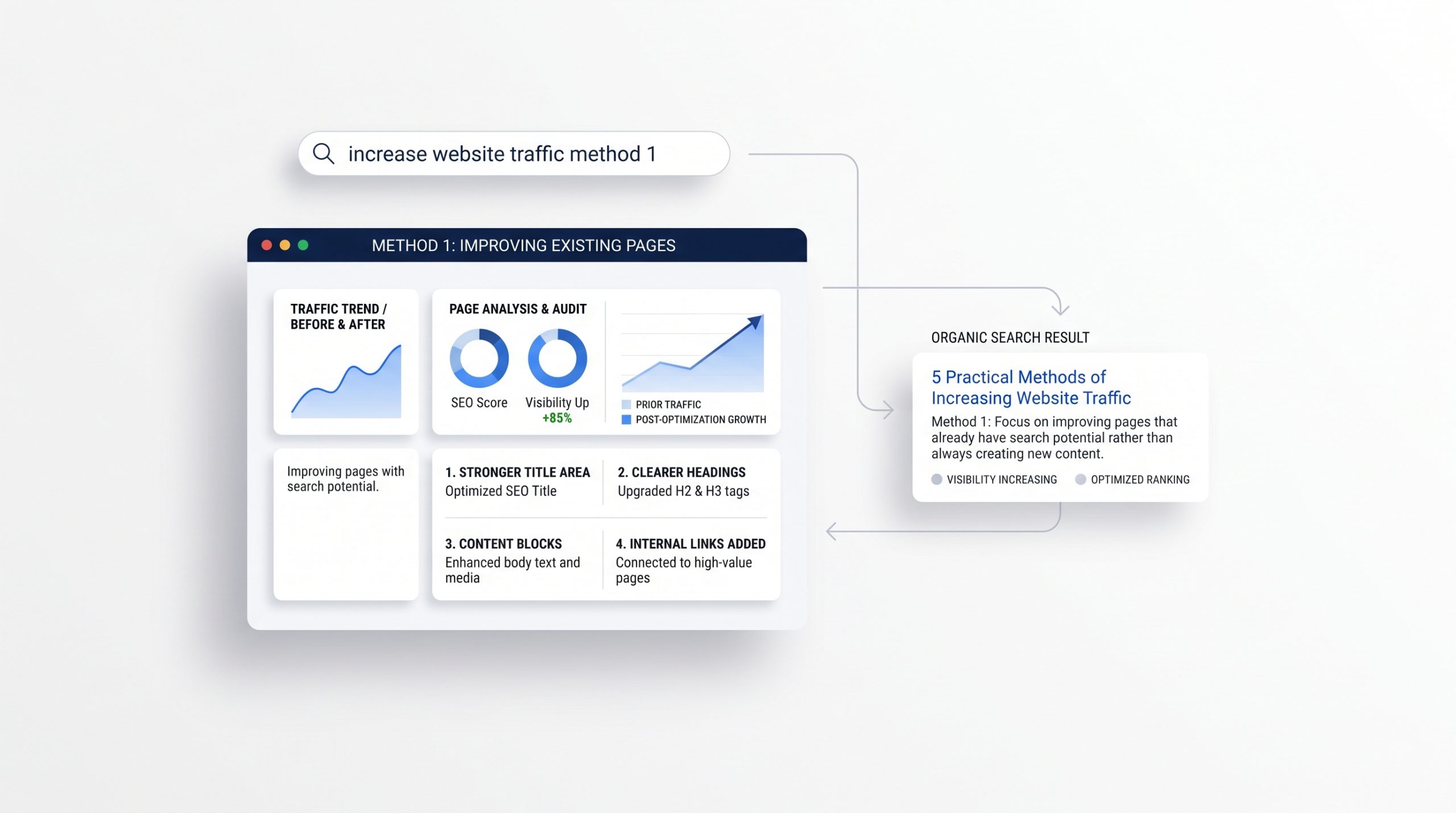 Review your most important pages in Google Search Console. Look for pages that are already being shown for useful searches.
Then check whether the page fully answers what people are looking for. A stronger title, clearer headings, better examples, updated information, or a more useful introduction can make the page easier to understand.
Internal links can help too. Link related pages together so visitors can keep exploring the topic.
A clear website structure also makes it easier for both visitors and search engines to move through your content.
Small improvements to pages that already have visibility can often be more useful than publishing another page with no clear purpose.
2. Create Content Around Real Search Questions
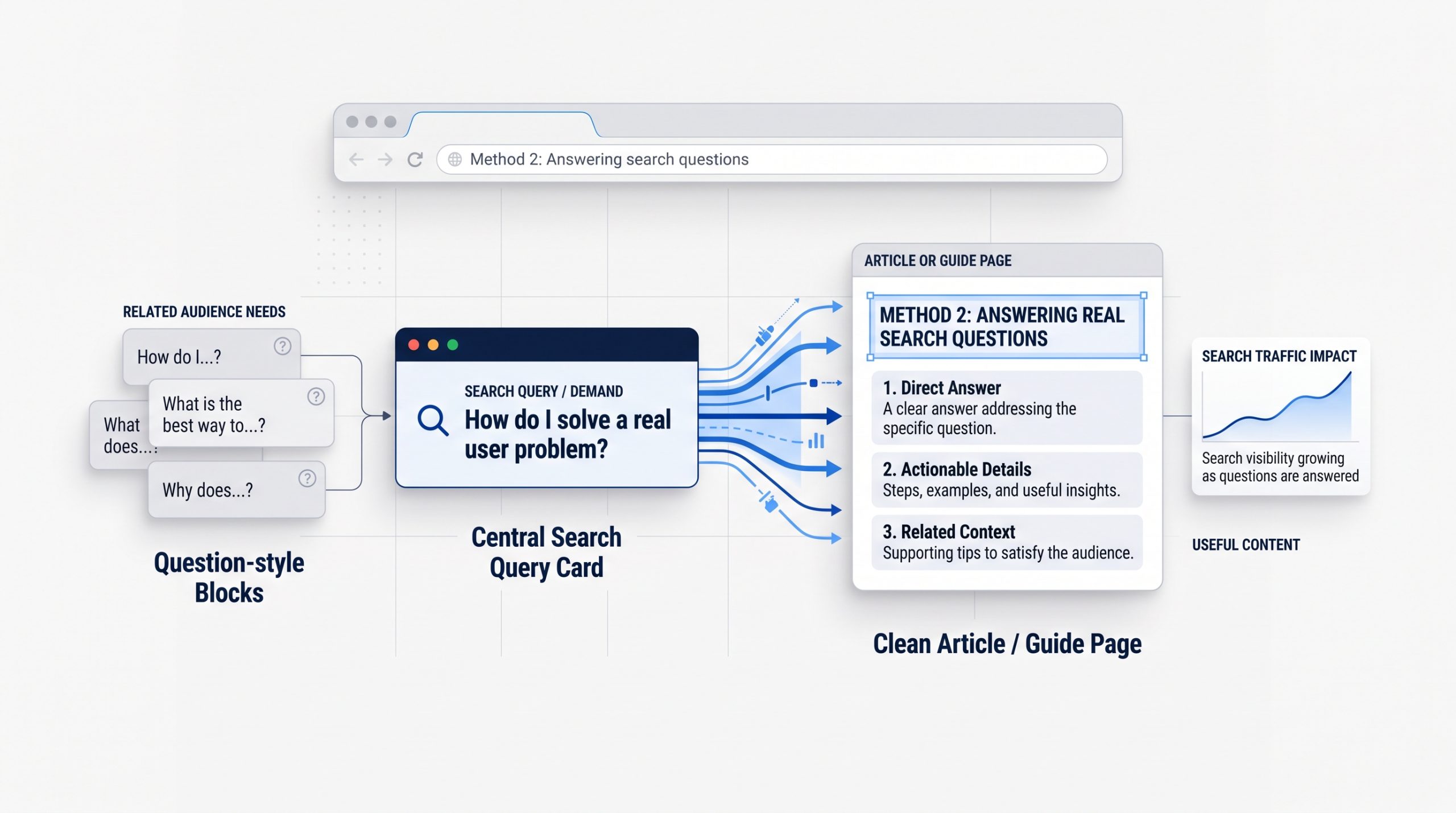
Useful content can bring new visitors to your site when it answers questions people are already searching for. Focus on problems, comparisons, how-to questions, and topics that connect naturally to what your business knows or offers.
Start with the questions customers ask before they buy.
Those questions can become blog posts, FAQs, guides, checklists, or comparison pages.
For example, a service business may answer questions about cost, process, timelines, common mistakes, or how to choose the right provider.
The goal is not to publish as much as possible. It is to create content with a clear reason to exist.
Your SEO foundation matters here. The beginner's guide to SEO explains how search intent and keyword research can help you choose topics that match what people actually need.
3. Promote Useful Content Through Social Media and Email
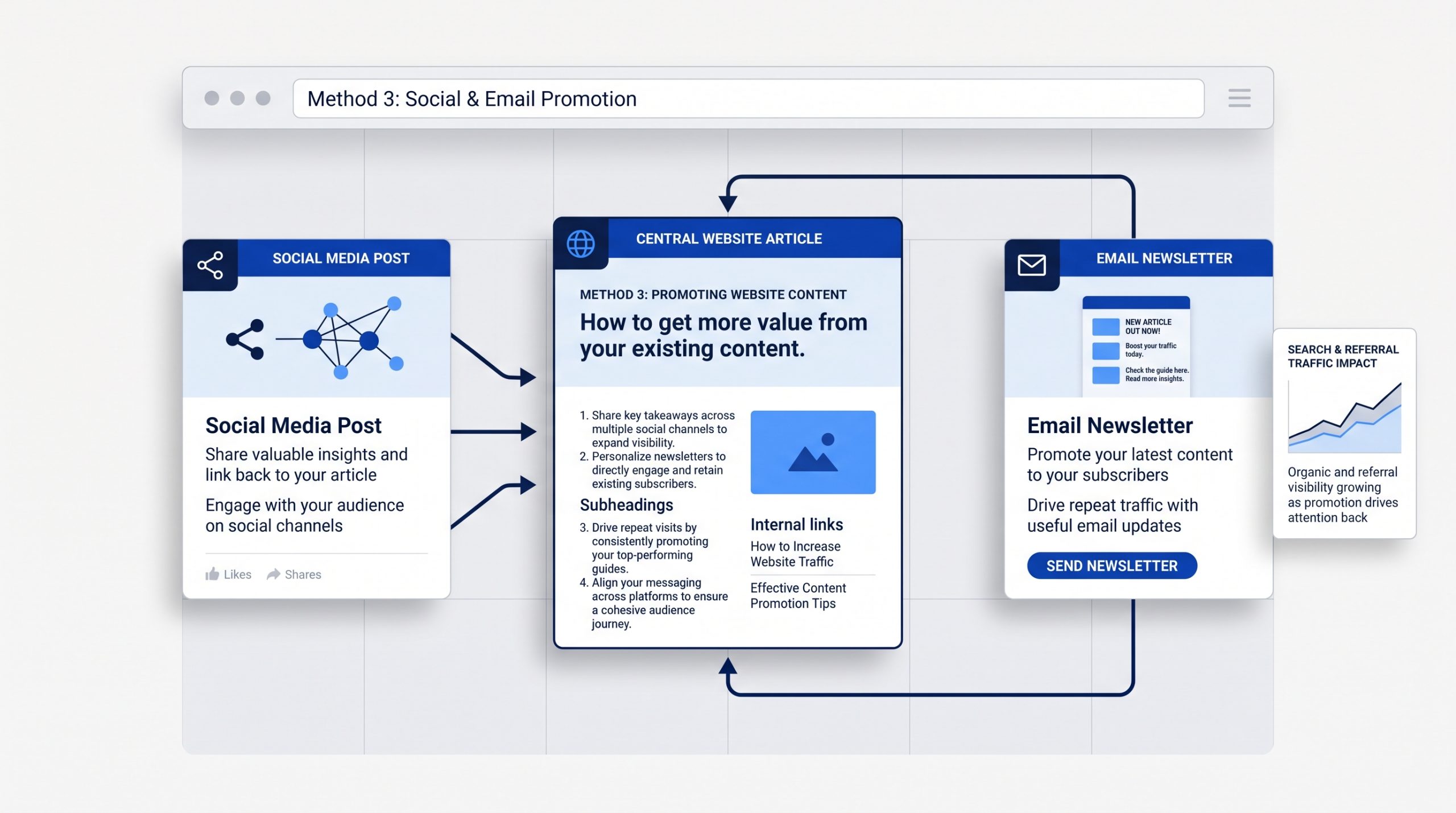
Publishing a useful page does not mean people will automatically find it. Social media and email can give new content an early push while also bringing existing followers, subscribers, and customers back to your website.
 Do not copy the whole article into a social post.
Pull out one useful point, question, example, or takeaway. Then give people a reason to visit the full page.
The same approach works with email. A short introduction can highlight why the article matters and direct readers to the website for the full answer.
A focused social media strategy helps connect each post to a wider business goal instead of treating social content as a separate activity.
The key is to promote pages that are genuinely worth the click.
4. Build Referral Traffic Through Relevant Mentions and Links
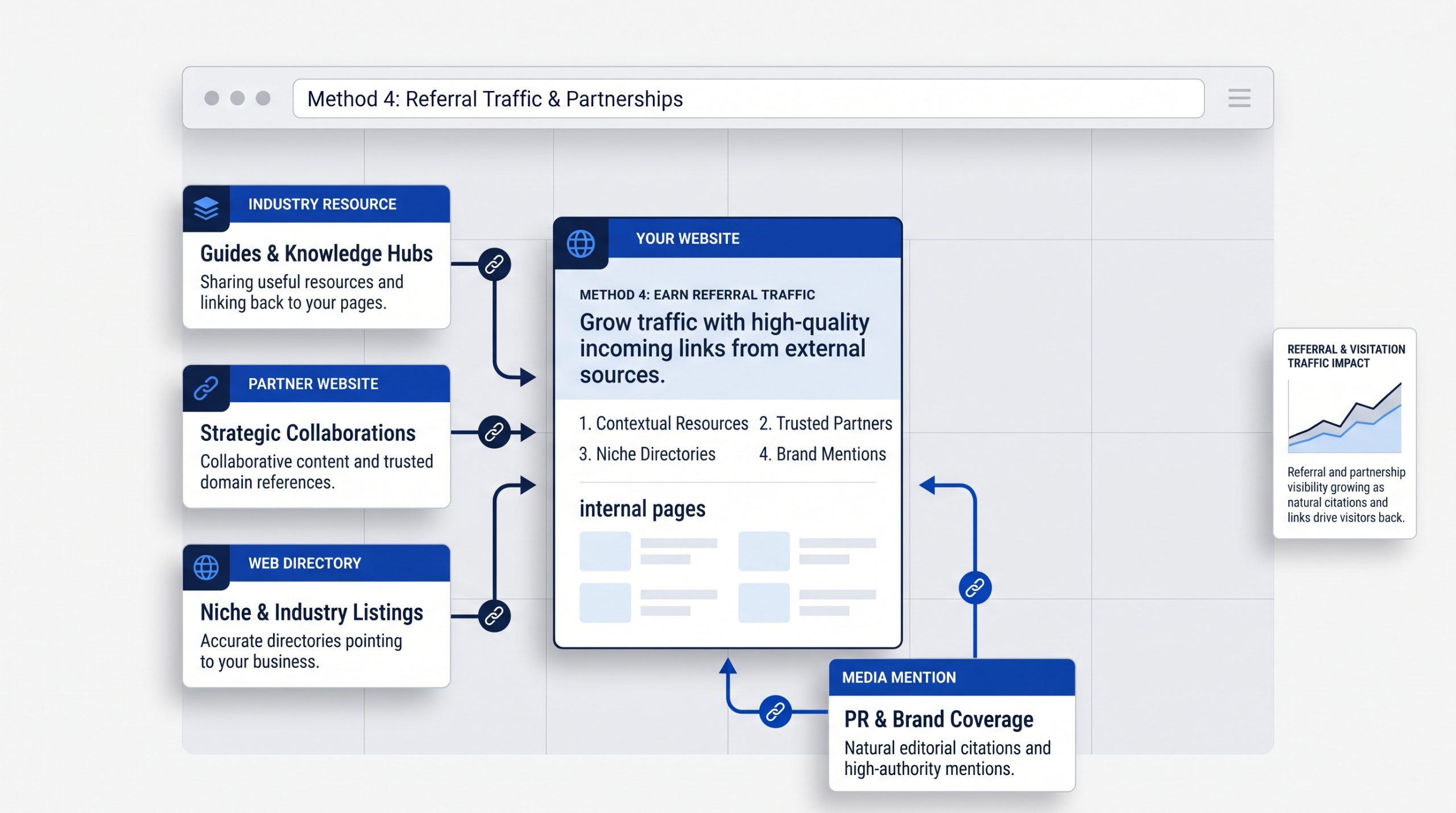
Referral traffic comes from people clicking to your website from another site. Relevant links, partnerships, directories, media mentions, and industry resources can introduce your business to audiences that may not find you through search or social media first.
 Look for places where your website genuinely belongs.
That may include industry associations, partner websites, supplier pages, local directories, guest features, podcasts, or useful resource lists.
Avoid chasing links only for the number.
A relevant mention on a trusted site can be more useful than many low-quality listings.
For local businesses in the Philippines, a carefully chosen business directory listing can also make the business easier to discover.
5. Measure What Brings the Right Visitors
Traffic growth becomes easier to improve when you know where visitors come from and what they do after they arrive. Measure the channels, pages, and topics that bring useful visitors instead of focusing only on the total traffic number.
 Google Search Console can show how your pages perform in organic search. Analytics can help you understand what visitors do once they reach the site.
Look at questions such as:
Which pages bring the most relevant traffic?
Which search topics are growing?
Which social or referral sources send engaged visitors?
Which pages lead to inquiries, sign-ups, sales, or another useful action?
Use those answers to decide what to improve next.
If one topic consistently brings the right visitors, build on it. If a page receives traffic but leads nowhere, improve the page or the next step.
A Simple Website Traffic Plan
You do not need to use every traffic tactic at once. Start with a strong SEO foundation, improve the pages you already have, publish useful content, promote it through the channels you use, and measure which efforts bring the right people back.
A simple monthly routine can be enough:
Review search performance.
Improve one existing page.
Publish one useful new piece of content.
Promote it through social media or email.
Look for one relevant referral or partnership opportunity.
Then use the results to decide what deserves more attention next month.
BSD Perspective
At BSD, we see website traffic as part of a wider digital system. SEO, content, social media, email, website design, and referrals work better when they support the same audience and business goal.
More traffic is useful only when the website gives those visitors a clear reason to stay.
That means the page needs a clear message, useful information, an easy experience, and a logical next step.
Instead of chasing traffic from every channel, focus on building a smaller number of reliable paths that bring the right people to the right pages.
Build Traffic Around What Your Audience Actually Needs
Increasing website traffic is not about finding one perfect channel. It comes from making your website easier to discover, creating content worth visiting, promoting that content in the right places, earning relevant mentions, and learning from the results.
Start with the method that fits your biggest gap.
If search visibility is weak, improve SEO.
If useful pages exist but few people see them, improve promotion.
If visitors arrive but do not take action, improve the website experience.
The strongest traffic strategy is the one you can keep improving over time.