

Social Media and Email Marketing: Why You Need Both
Social Media and Email Marketing: Why Your Brand Needs Both
Social media is one of the best tools for getting discovered.
A useful post can introduce your brand to new people. A Reel can increase your reach. A strong carousel can turn a casual viewer into a follower.
But social media was never meant to be your only database.
Your followers still live on a platform you do not control. An algorithm change can affect your reach overnight.
That is why social media and email marketing work better together.
Social media gets attention. Email gives you a direct way to continue the relationship.
Social Media Is for Discovery

Think of social media as a busy storefront.
People pass by, discover your business, explore your content, and learn what you offer.
That makes social media valuable for:
- brand awareness
- audience growth
- engagement
- community building
- driving traffic
But you are still operating on rented land.
You do not control the algorithm. You cannot guarantee that every follower will see your next post. Your audience may grow while your organic reach changes.
This does not make social media less useful.
It simply means your social media strategy should give people somewhere to go after they discover you.
Instead of treating follower growth as the finish line, use social media to start the relationship.
Followers Are Not Customers
A large follower count can look impressive, but followers alone do not build a business.
Someone can follow your account today and rarely see your content again.
Email creates a different kind of connection.
When someone joins your email list, they are giving your brand permission to communicate with them more directly.
That is why we like to think of the two channels differently:
Social media is the storefront. Email is the asset.
Social introduces your business.
Email gives interested people a way to stay connected beyond the feed.
Your social content can encourage people to visit your website, download a resource, subscribe for useful insights, or take another relevant step.
That creates a stronger path than simply asking people to follow you and hoping the algorithm keeps showing them your content.
Use Actions to Make Email More Relevant
Building an email list is only part of the strategy.
What you send matters too.
Traditional email marketing often treats every subscriber the same. One newsletter goes to everyone, regardless of their interests.
A better email marketing strategy pays attention to behaviour.
Imagine two subscribers.
One joined your list today after reading a beginner's guide.
The other has visited your service or pricing page three times.
They probably do not need the same message.
The new subscriber may need helpful content that introduces your brand.
The second person may benefit from service details, case studies, or answers to common questions.
Pay attention to what people do, not just who they are.
Clicks, downloads, page visits, and other actions can help you send more useful messages.
Build Emails People Actually Want to Open

Email marketing does not have to mean sending crowded newsletters filled with promotions.
Keep it simple.
One email can answer one question, share one idea, or direct someone to one useful resource.
Clear copy often does more work than an overdesigned email.
The same goes for your brand experience.
Your emails should feel connected to the social content that brought someone to you in the first place. Your voice, message, and visual identity should feel familiar across both channels.
That consistency helps people recognize and trust your brand as they move from one platform to another.
Give People One Clear Next Step
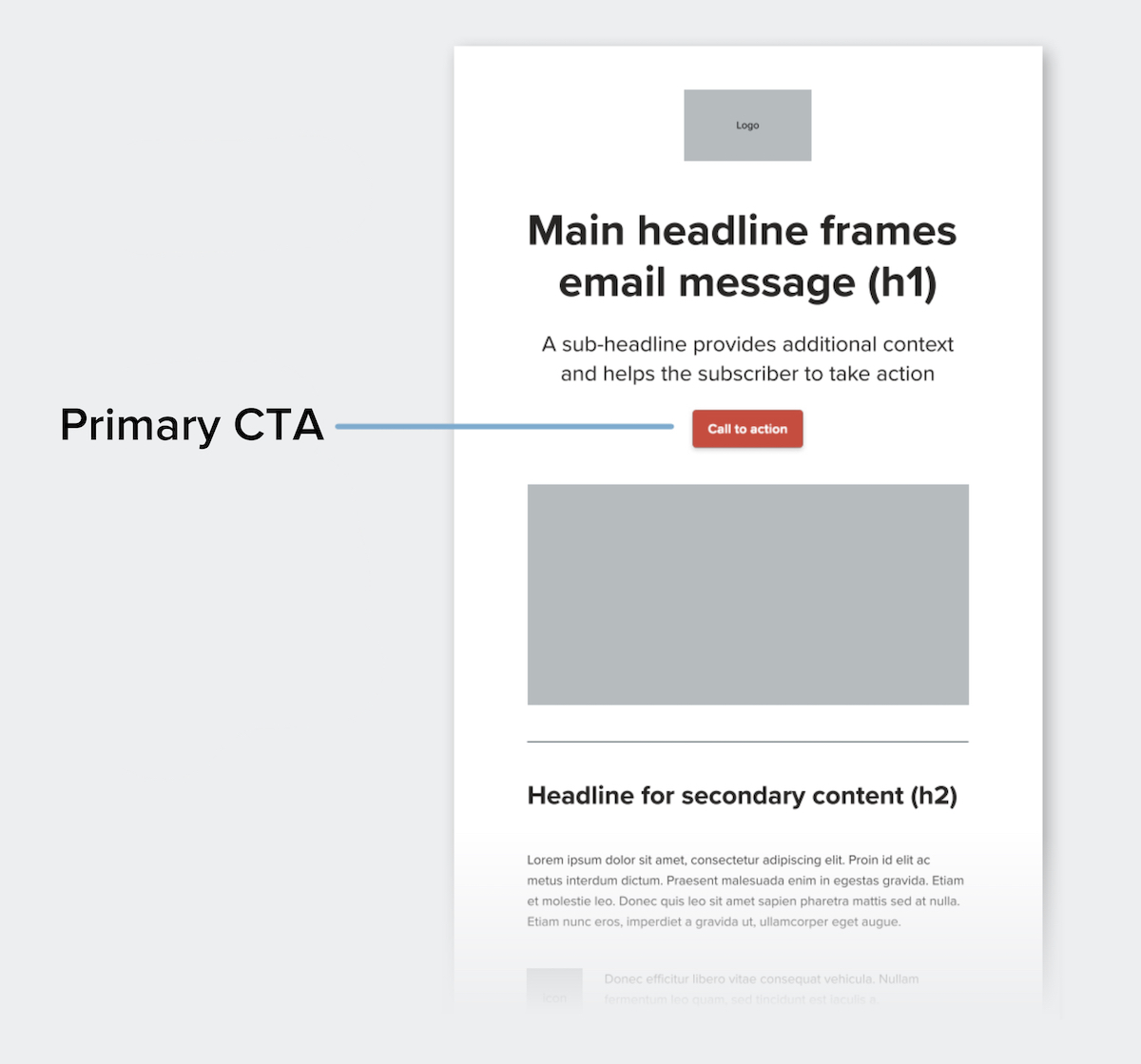
Every email should answer a simple question:
What should the reader do next?
Maybe you want them to:
- read an article
- view a case study
- explore a service
- download a resource
- book a conversation
Choose one main action.
Too many options can make the next step unclear.
The right CTA also depends on where someone is in their relationship with your brand.
A new subscriber may be ready to read another article. Someone who keeps returning to your service page may be ready to talk.
Your marketing should help both people move forward without forcing them into the same journey.
Social Media and Email Work Better Together
You do not need to choose between social media and email.
Give each one a clear job.
Social media creates discovery. Email builds a direct connection.
A person might discover your brand through Instagram, visit your website, join your email list, receive useful content, and eventually explore your services.
Each channel supports the next.
At Brightsand Designs, this is how we think about digital marketing. Social media, email, content, and your website should not feel like separate projects. They should support the same business goals and create a clear journey for your audience.
So, use social media for what it does best: getting noticed.
Then invite interested people into a channel where you can continue the conversation.
Because followers are valuable.
But the real opportunity is turning attention into a relationship — and giving that relationship somewhere to grow.


Marketing vs. Sales: Separate in Traditional Business, Unified in E-Commerce?
For decades, businesses have operated under the clear assumption that marketing and sales are two distinct functions—each with its own role in the customer journey. Marketing focuses on building awareness and generating leads, while sales converts that interest into paying customers. This separation has worked well for traditional businesses where human interaction is a key part of closing deals. But is this same distinction as relevant in the world of e-commerce?
The rapid rise of online stores and digital sales channels has changed the way businesses operate. The line between marketing and sales has become increasingly blurred. In e-commerce, many tasks traditionally handled by salespeople are now managed by marketing teams through digital tools and automation. But does this mean marketing has effectively become sales in e-commerce?
Let’s explore the differences and why the traditional separation may no longer apply in the world of e-commerce.
Traditional Business: The Clear Divide Between Marketing and Sales
In a traditional business model, such as brick-and-mortar retail stores, professional services like real estate, law firms or consultancies, and B2B companies in manufacturing or distribution, marketing and sales have always been seen as separate but complementary functions, each responsible for different stages of the customer journey.
-
Marketing's Role is focused on the top of the funnel creating awareness, generating interest, and nurturing leads. It uses channels like advertising, social media, content marketing, and events to attract potential customers.
-
Sales' Role works the bottom of the funnel converting interested leads into actual customers. Sales teams use direct interaction whether it's face-to-face, phone calls, or emails to address customer concerns, negotiate deals, and close sales.
In this model, the handoff from marketing to sales is clearly defined. Marketing warms up the leads, and when a prospect is ready to make a decision, they are handed over to the sales team to close the deal. Both functions play critical but distinct roles and rely on smooth collaboration to convert interest into revenue.

E-Commerce: Where Marketing and Sales Blur Together
In the world of e-commerce, the situation is different. Many businesses operate without a traditional sales team, relying on automated processes, data, and digital experiences to drive purchases. This shifts a significant portion of the customer journey into the hands of the marketing team. So, is marketing effectively taking over the sales role in e-commerce? In many ways, the answer is yes.
Here’s why:
1. Digital Customer Journey
In e-commerce, customers don’t need a salesperson to guide them through the buying process. Instead, they interact with your website, product descriptions, and automated tools like chatbots and email follow-ups. The entire buying journey can happen without any human sales interaction, and marketing handles most of this journey.
2. Conversion Optimization
Marketing is no longer just about creating awareness and driving traffic to a site. In e-commerce, marketing teams are also responsible for optimizing the user experience ensuring that visitors move seamlessly from browsing to buying. This includes everything from website design to checkout flow and even abandoned cart reminders. These are traditionally sales-oriented tasks that have now shifted into marketing’s domain.
3. Customer Support and Objection Handling
In traditional businesses, a salesperson would handle customer objections, answer questions, and build trust. In e-commerce, live chat, FAQs, return policies, and customer reviews—all managed by marketing—serve the same purpose. Marketing ensures customers have all the information they need to feel confident about making a purchase.
4. Automated Sales Processes
Many e-commerce businesses use email marketing automation and retargeting ads to re-engage potential buyers who didn’t complete a purchase. These tools effectively take on the role of a salesperson by following up with a lead. The goal is to remind customers of their interest, address concerns, and incentivize them to complete their purchase.
Has Marketing Become Sales in E-Commerce?
In e-commerce, the line between marketing and sales is indeed blurred, if not entirely erased. In traditional business, the handoff between marketing and sales is essential to move a lead from interest to purchase. But in e-commerce, marketing often handles the entire journey, from attracting visitors to converting them into buyers.
-
- Does this mean sales no longer exists in e-commerce? Not exactly. Instead of a traditional salesperson, conversion-focused strategies and data-driven insights take on the role of sales. This includes:
- Personalized product recommendations ("You might also like…")
- Upselling and cross-selling at checkout
- Time-limited offers or discounts to incentivize immediate purchase
- Cart abandonment strategies to encourage customers to return and finish their purchase
In essence, e-commerce sales is still happening but it’s carried out by marketing efforts through automation, UX, and data analysis rather than human interaction. Marketing is performing a dual function generating interest and ensuring conversion.
Why the Blurring of Lines Matters for E-Commerce Success
For e-commerce businesses, understanding that marketing is also driving sales is crucial. Treating marketing and sales as separate functions might work in traditional settings, but in e-commerce, an integrated approach is key to success.
1. Faster Customer Journeys
In e-commerce, customers move quickly from discovering a brand to making a purchase. By managing both marketing and sales efforts, the customer journey is more streamlined resulting in fewer barriers to purchase.
2. Data-Driven Decisions
Marketing teams in e-commerce have access to detailed customer data, from browsing behavior to purchasing habits. This data allows marketing to act like sales by personalizing offers and driving conversions at the right moment.
3. Consistent Messaging
When marketing controls the entire journey, from awareness to sale, customers experience a consistent, personalized message throughout. This helps build trust and leads to higher conversion rates.
Conclusion: Marketing and Sales—Separate for Traditional Businesses, Unified in E-Commerce
If you have a traditional business—such as a retail store, a service company, or a B2B operation—marketing and sales remain distinct functions. Marketing focuses on generating awareness and leads, while sales takes over when it’s time to close the deal. Each team plays a separate but vital role in moving customers through the buying process.
However, in e-commerce, these roles blend together. Marketing teams handle the entire customer journey, from attracting visitors to converting them into buyers, without a traditional sales team. Marketing becomes responsible for both generating interest and driving conversions, using automation, data, and digital tools.
Do you agree that marketing and sales have become one in the world of e-commerce? Let’s discuss how your e-commerce business can optimize this integration to boost conversions!


Winning Hearts and Minds: The Role of Emotional Branding in Your Marketing Plan
Hello there, fellow marketers and business owners! Today, I want to dive into a fascinating aspect of marketing that has the potential to elevate our brands to new heights - emotional branding. In this blog post, I'll be sharing insights into how emotional branding can profoundly impact consumer behavior, build brand loyalty, and foster genuine connections with our target audience.
At Brightsand Designs, we understand the power of emotional branding and its potential to transform businesses. We are dedicated to helping our clients craft compelling brand stories that resonate with their audience on a deep, emotional level. Our team of devoted digital architects specializes in tailoring marketing solutions that incorporate emotional appeal, making your brand stand out in the digital landscape.
Crafting a Compelling Brand Story
One exemplary way to achieve emotional branding is by crafting a compelling brand story. At Brightsand Designs, we collaborate closely with our clients to understand their vision, values, and purpose. By weaving these elements into a captivating narrative, we create a brand story that resonates with your audience, fostering a meaningful connection that lasts.
Understanding Consumer Psychology
To embark on emotional branding, we need to understand the psychology behind consumer behavior. At Brightsand Designs, we conduct in-depth research and analysis to identify the emotions that align with your target audience. By knowing what truly moves your customers, we can create messaging that evokes the right emotions, leading to stronger brand engagement and loyalty.
The Power of Authenticity
Authenticity is another crucial factor in emotional branding, and at Brightsand Designs, we value transparency and genuineness in all our marketing efforts. Our team ensures that your brand's values and promises align with your actions, building trust and credibility among your audience.
Leveraging Content Marketing
Incorporating emotional branding into content marketing is one of our specialties. We understand the power of storytelling and how it can engage your audience emotionally. Through blog posts, videos, and social media content, we bring your brand story to life, leaving a lasting impact on your audience.
The Visual Appeal of Your Brand
Our team of skilled designers knows the visual appeal of your brand matters. At Brightsand Designs, we use aesthetically pleasing designs, color choices, and imagery that evoke specific emotions aligned with your brand identity. From your logo to website design, every visual element is carefully crafted to resonate with your audience.
Consistency Throughout the Customer Journey
At Brightsand Designs, we believe that emotional branding should be an integral part of your entire customer journey. From the first touchpoint to post-purchase interactions, our marketing solutions ensure consistent emotional appeal, creating memorable brand experiences.
In conclusion, emotional branding is a potent and indispensable element of a successful marketing plan. By partnering with Brightsand Designs, you gain access to a team of experts who are passionate about crafting emotional connections between your brand and your audience. Together, we can create authentic brand stories, leverage emotions, and deliver consistent experiences that win the hearts and minds of your customers.
Remember, the best marketing doesn't just sell products; it leaves a lasting impact on people's lives. Embrace the power of emotional branding, and let Brightsand Designs help your brand win hearts and minds!
I hope you found this blog post insightful and inspiring. Let's together embark on a journey of emotional branding and take your marketing efforts to new heights!