
Social Media and Email Marketing: Why You Need Both
Social Media and Email Marketing: Why Your Brand Needs Both
Social media is one of the best tools for getting discovered.
A useful post can introduce your brand to new people. A Reel can increase your reach. A strong carousel can turn a casual viewer into a follower.
But social media was never meant to be your only database.
Your followers still live on a platform you do not control. An algorithm change can affect your reach overnight.
That is why social media and email marketing work better together.
Social media gets attention. Email gives you a direct way to continue the relationship.
Social Media Is for Discovery
 Think of social media as a busy storefront.
People pass by, discover your business, explore your content, and learn what you offer.
That makes social media valuable for:
- brand awareness
- audience growth
- engagement
- community building
- driving traffic
But you are still operating on rented land.
You do not control the algorithm. You cannot guarantee that every follower will see your next post. Your audience may grow while your organic reach changes.
This does not make social media less useful.
It simply means your social media strategy should give people somewhere to go after they discover you.
Instead of treating follower growth as the finish line, use social media to start the relationship.
Followers Are Not Customers
A large follower count can look impressive, but followers alone do not build a business.
Someone can follow your account today and rarely see your content again.
Email creates a different kind of connection.
When someone joins your email list, they are giving your brand permission to communicate with them more directly.
That is why we like to think of the two channels differently:
Social media is the storefront. Email is the asset.
Social introduces your business.
Email gives interested people a way to stay connected beyond the feed.
Your social content can encourage people to visit your website, download a resource, subscribe for useful insights, or take another relevant step.
That creates a stronger path than simply asking people to follow you and hoping the algorithm keeps showing them your content.
Use Actions to Make Email More Relevant
Building an email list is only part of the strategy.
What you send matters too.
Traditional email marketing often treats every subscriber the same. One newsletter goes to everyone, regardless of their interests.
A better email marketing strategy pays attention to behaviour.
Imagine two subscribers.
One joined your list today after reading a beginner's guide.
The other has visited your service or pricing page three times.
They probably do not need the same message.
The new subscriber may need helpful content that introduces your brand.
The second person may benefit from service details, case studies, or answers to common questions.
Pay attention to what people do, not just who they are.
Clicks, downloads, page visits, and other actions can help you send more useful messages.
Build Emails People Actually Want to Open

Email marketing does not have to mean sending crowded newsletters filled with promotions.
Keep it simple.
One email can answer one question, share one idea, or direct someone to one useful resource.
Clear copy often does more work than an overdesigned email.
The same goes for your brand experience.
Your emails should feel connected to the social content that brought someone to you in the first place. Your voice, message, and visual identity should feel familiar across both channels.
That consistency helps people recognize and trust your brand as they move from one platform to another.
Give People One Clear Next Step
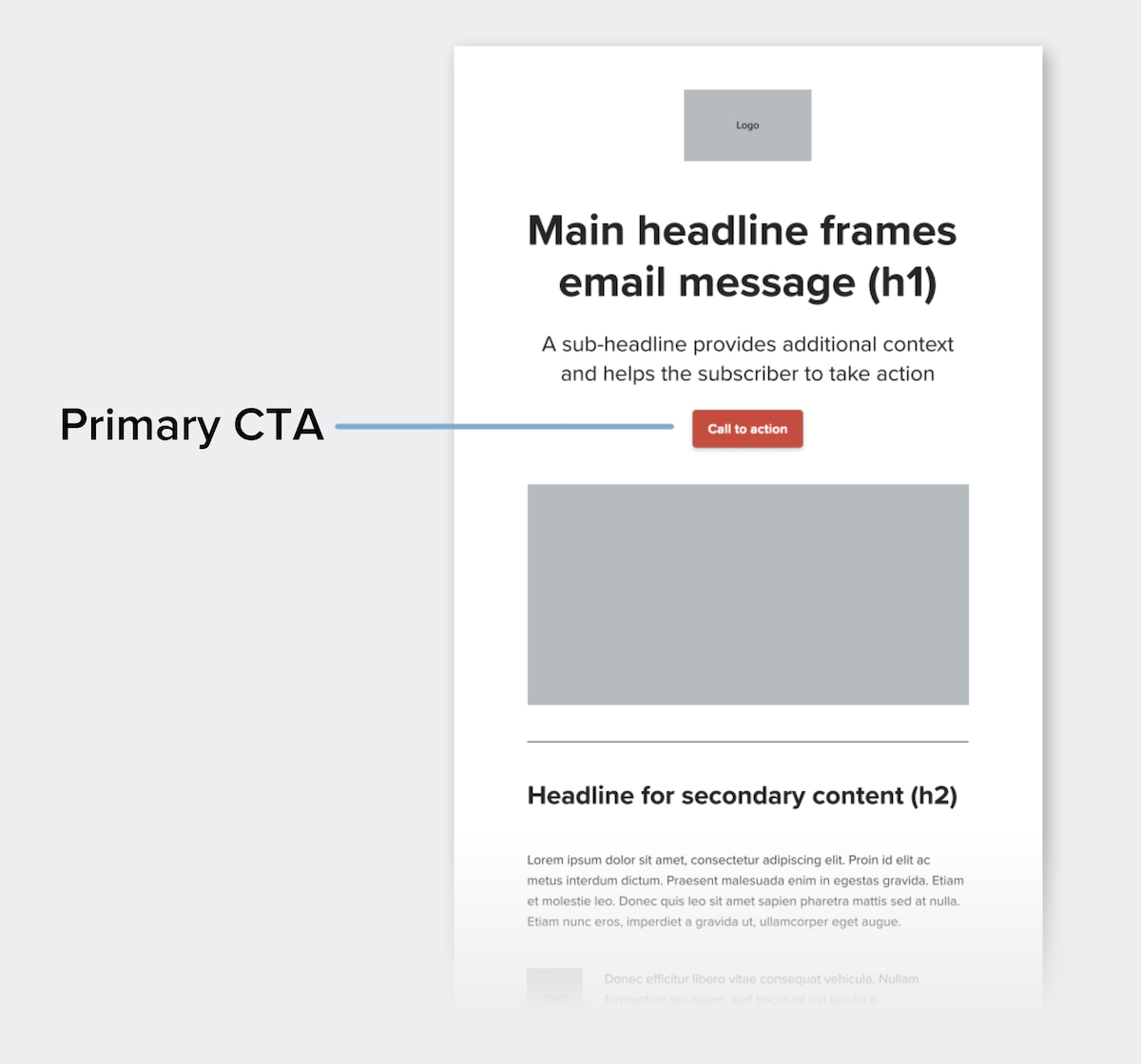
Every email should answer a simple question:
What should the reader do next?
Maybe you want them to:
- read an article
- view a case study
- explore a service
- download a resource
- book a conversation
Choose one main action.
Too many options can make the next step unclear.
The right CTA also depends on where someone is in their relationship with your brand.
A new subscriber may be ready to read another article. Someone who keeps returning to your service page may be ready to talk.
Your marketing should help both people move forward without forcing them into the same journey.
Social Media and Email Work Better Together
You do not need to choose between social media and email.
Give each one a clear job.
Social media creates discovery. Email builds a direct connection.
A person might discover your brand through Instagram, visit your website, join your email list, receive useful content, and eventually explore your services.
Each channel supports the next.
At Brightsand Designs, this is how we think about digital marketing. Social media, email, content, and your website should not feel like separate projects. They should support the same business goals and create a clear journey for your audience.
So, use social media for what it does best: getting noticed.
Then invite interested people into a channel where you can continue the conversation.
Because followers are valuable.
But the real opportunity is turning attention into a relationship — and giving that relationship somewhere to grow.

Social Media Strategy: How to Support Business Goals
How to Build a Social Media Strategy That Supports Business Goals
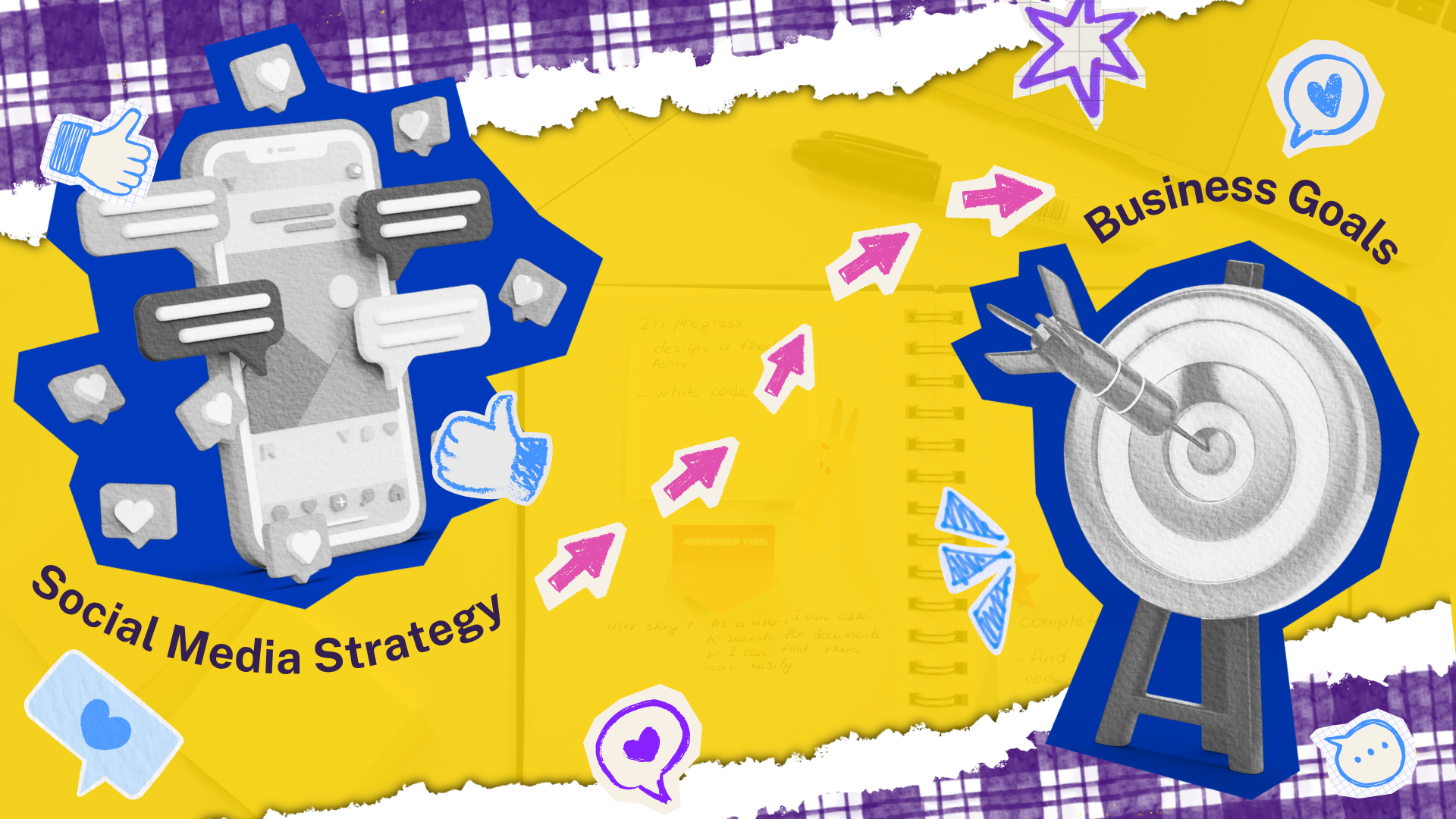
Posting on social media is easy. Posting with a clear purpose is harder.
Many businesses share content several times a week. They follow trends, create graphics, post videos, and track likes. Their reach may even grow.
But there is a bigger question to ask:
What is social media actually doing for the business?
A strong social media strategy connects your content to clear business goals. Every post should have a reason for being there. Every platform should serve a purpose. And every metric should help you understand whether your efforts are working.
Instead of starting with, “What should we post this week?” start with a better question:
“What does the business need to achieve?”
Then decide how social media can help you get there.
What Is a Social Media Strategy?

A social media strategy is a clear plan for how your business will use social platforms to reach its marketing goals.
It helps answer a few basic questions:
- Who are you trying to reach?
- What do you want them to do?
- Which platforms should you use?
- What type of content should you create?
- How often should you post?
- What results should you measure?
Without a strategy, social media can quickly become a cycle of creating content just to stay active.
You post because Tuesday is approaching. You make a Reel because everyone else is making Reels. You join a new platform because it seems popular.
There may be plenty of activity, but no clear direction.
A strategy changes that. It gives your social media a job to do.
1. Start With Your Business Goals

Before thinking about platforms or content, look at what the business needs.
This is where many social media plans go wrong.
Businesses often start with goals such as:
“We need more followers.”
“We should post more often.”
“We need to make more videos.”
“We should be on TikTok.”
These are social media activities. They are not business goals.
Your actual business goal may be to:
- generate more qualified leads
- increase sales
- enter a new market
- build brand awareness
- attract a certain type of client
- increase website traffic
- build customer loyalty
- become a trusted name in your industry
Once the business goal is clear, you can decide how social media will support it.
For example, imagine a consulting firm wants more qualified enquiries.
Its strategy should not simply aim to “grow Instagram.”
Instead, the plan might look like this:
Business goal: Generate more qualified enquiries.
Social media goal: Encourage potential clients to move from social content to the company's website.
Content: Expert advice, common client problems, FAQs, case studies, and industry insights.
CTA: Visit a service page or book a consultation.
Measurement: Website visits, enquiries, leads, and conversions from social media.
Now the content has a destination.
That is the difference between simply being active and using social media as part of a wider marketing strategy.
2. Focus on a Few Clear Social Media Goals
It is tempting to make social media responsible for everything.
You want more followers. More comments. More website traffic. More leads. More sales. More views. More shares.
When everything becomes a priority, it becomes harder to know what is working.
Start with two or three main goals instead.
For example:
| Business Need | Social Media Goal | What to Measure |
| More visibility | Increase brand awareness | Reach, impressions, mentions |
| More website traffic | Send people to the website | Link clicks, sessions, CTR |
| More leads | Generate enquiries | Leads, forms, bookings |
| More authority | Build trust | Saves, shares, profile visits |
| Better relationships | Build a community | Comments, replies, DMs |
| More sales | Support conversions | Sales, conversions, revenue |
This also helps you avoid focusing too much on vanity metrics.
Likes and views can tell you whether people notice your content. Follower growth can show that your audience is expanding.
But those numbers need context.
A post with 50,000 views may look successful. Yet if your goal is to attract qualified clients and none of those viewers take the next step, the view count does not tell the whole story.
Ask what each metric means for the goal you are trying to reach.
3. Make Your Goals Specific
“Get more leads” sounds like a goal, but it is still too broad.
How many leads?
From which platform?
Over what period?
A useful social media goal should be clear enough to measure.
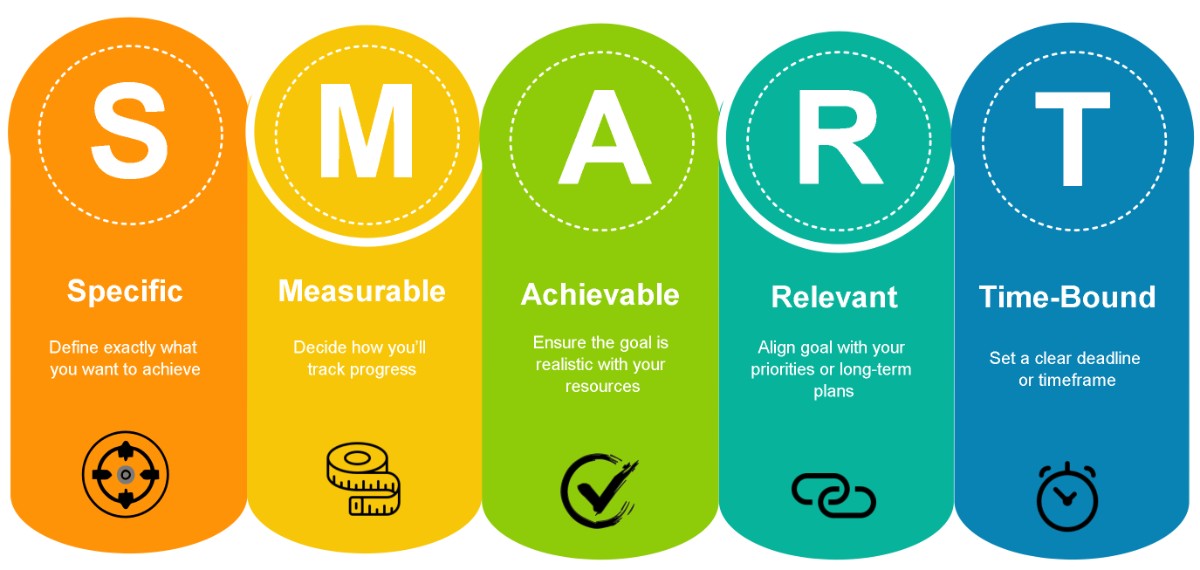
The SMART framework can help. A goal should be:
Specific: What do you want to achieve?
Measurable: How will you track it?
Achievable: Is the target realistic?
Relevant: Does it support a real business need?
Time-bound: When should you achieve it?
Instead of saying:
Get more leads from social media.
You might say:
Increase qualified website enquiries from LinkedIn by 20% over the next three months.
Now your team knows what success looks like.
It also becomes easier to decide where to spend time and budget.
4. Understand Who You Need to Reach
Your audience should shape your social media strategy.
Think beyond age, location, and job title.
You also need to understand what your ideal customers care about. Social media listening can help you understand what your audience is saying, asking, and responding to online.
Ask:
- What problems are they trying to solve?
- What questions do they ask before buying?
- What makes them hesitate?
- What information helps them make a decision?
- Where do they spend time online?
- What would make them trust a business like yours?
- What action do you want them to take next?
The answers should influence your content.
For example, a potential client who is still learning about a problem may need simple educational content.
Someone comparing service providers may want case studies, examples, testimonials, or a clear explanation of your process.
Someone ready to buy may need a strong service page and an easy way to get in touch.
Your goal is not to attract everyone who could engage with a post.
You want to attract the people who matter to your business.
5. Choose the Right Social Media Platforms
Your business does not need to be everywhere.
Trying to maintain five platforms can spread a small marketing team too thin. The result is often rushed content and inconsistent posting.
Instead, choose platforms based on your audience and goals.
Ask:
Is our target audience here?
What are they doing on this platform?
What type of content performs well here?
Can our team create that content consistently?
What role will this platform play in our marketing?
One platform may be useful for reaching new audiences.
Another may help you build authority.
Another may be better for conversations with your existing community.
A platform can also help move interested prospects to your website or landing page.
The key is to give each platform a purpose.
Do not use a platform simply because other businesses are there.
6. Create Content Pillars That Support Your Goals
Once you know your goals, audience, and platforms, you can decide what to post.
Content pillars help keep your social media focused.
These are the main themes your brand talks about regularly.
For example, a service-based business could use five pillars:
Education
Answer questions and explain problems your audience faces.
Expertise
Share useful opinions, advice, and insights from your team.
Proof
Show case studies, testimonials, results, examples, and past work.
Brand
Show what your company believes, how you work, and what makes your approach different.
Conversion
Talk about your services and give interested people a clear next step.
Each pillar has a purpose.
That means you are no longer creating content because you simply need “something to post.”
Your content starts supporting a wider goal.
7. Give Every Post a Job
Not every social media post needs to make a sale.
In fact, constantly asking people to buy can make a brand feel too promotional.
Different posts can support different parts of the customer journey.
Think of it like this:
Attract → Educate → Build Trust → Convert → Retain
A short video might introduce someone to your brand.
An educational carousel can help them understand a problem.
A case study can show that your team knows how to solve it.
A service-focused post can give them a reason to contact you.
Customer-focused content can help maintain the relationship after the sale.
Each post has a different role. But all of them support the same wider strategy.
This is also where brand consistency matters.
Your social media should feel connected to your website, emails, ads, proposals, and other marketing materials.
Imagine seeing a polished, professional company on LinkedIn. You click through to its website, and suddenly the messaging, visuals, and tone feel completely different.
That gap can create doubt.
Your social media should not feel like a separate version of your company. It should strengthen the brand people see everywhere else.
8. Build Your Content Calendar Around the Strategy
A content calendar is useful, but it should not come first.
Start with the strategy. Then build the calendar.
Otherwise, you may end up with a well-organised schedule full of content that has no clear purpose.
Your content calendar can include:
- topic
- content pillar
- platform
- format
- audience
- goal
- CTA
- publish date
- campaign
- KPI
For example:
| Content | Goal | CTA | Main KPI |
| Educational carousel | Awareness | Save or share | Reach and saves |
| Expert insight | Authority | Follow or learn more | Shares and profile visits |
| Case study | Consideration | Read the case study | Website visits |
| Service post | Lead generation | Book a call | Enquiries |
Adding these details changes how you plan content.
Instead of asking only:
“What are we posting?”
You also ask:
“Why are we posting it?”
That simple question can make your content calendar much more useful.
9. Use Clear Calls to Action
If people engage with your content, what should they do next?
Sometimes the answer is nothing. A post may exist mainly to educate or build awareness.
But when there is a logical next step, make it clear.
Your CTA might ask people to:
- visit your website
- read another article
- download a guide
- view a service
- send a message
- book a consultation
- subscribe to an email list
- save or share the post
The CTA should match the content.
Someone discovering your brand for the first time may not be ready to book a call.
They may be more likely to read an article or follow your account.
Someone reading a detailed case study may be much closer to making a decision.
Do not force every person toward the same action.
Give them a next step that makes sense.
10. Measure the Results That Matter
Once your strategy is running, you need to know whether it is working.
This is where your original business goal becomes important again.
If your goal is awareness, look at awareness metrics.
If your goal is website traffic, measure traffic.
If your goal is lead generation, measure leads.
This sounds obvious, but social media reports often focus on whatever numbers are easiest to find.
A report might say:
Instagram reach increased by 32%.
That sounds positive. But it leaves an important question unanswered:
What happened because of that reach?
A more useful report might say:
Instagram reach increased by 32%. This led to more profile visits and more traffic to the campaign landing page. Four qualified enquiries came from that traffic.
Now the numbers tell a story.
Likes, followers, views, and impressions still matter. They can help you understand how people respond to your content. Looking at your social media analytics can also show which content is helping you move closer to your business goals.
They simply should not exist without context.
The best metric is the one that helps you understand whether you are getting closer to your goal.
11. Connect Social Media With the Rest of Your Marketing
Social media works better when it is part of a larger system.
A potential customer may first discover you on Instagram.
Later, they may visit your website.
A few days after that, they may read one of your blogs.
Then they may join your email list, see an ad, read a case study, or return to your social media page.
The final enquiry may happen weeks later.
This is why social media should not work on its own.
Your social content, website, SEO, email marketing, paid campaigns, and sales materials should support one another.
They should also communicate the same core message.
When these channels work together, customers get a clearer picture of who you are and what you offer.
That makes your marketing easier to understand and easier to trust.
12. Review and Improve Your Strategy

A social media strategy is not something you create once and forget.
Your audience changes. Platforms change. Business goals change. Some content will perform better than expected. Other content will fall flat.
Review your strategy regularly.
Ask:
- Which posts support our business goals?
- Which topics attract the right audience?
- Which platforms bring useful results?
- Which content drives website visits?
- Which posts generate enquiries?
- Where are potential customers dropping off?
- What should we stop doing?
- What should we do more often?
Do not be afraid to change the plan.
More content is not always the answer.
Sometimes your business needs fewer platforms.
Sometimes you need clearer messaging.
Sometimes you need better calls to action.
And sometimes you need to stop chasing numbers that have little connection to your goals.
The purpose of reviewing your strategy is not simply to improve your social media performance.
It is to make social media more useful to the business.
Your Social Media Needs a Destination
A busy social media account can look successful.
Posts are going out. Reach is increasing. Followers are growing. Reports are full of numbers.
But being busy does not always mean you are making progress.
A good social media strategy gives all that activity a clear destination.
Start with four questions:
What does the business need to achieve?
Who do we need to reach?
How can social media help?
How will we know if it worked?
Once you can answer those questions, the rest becomes much easier.
You can choose platforms with more confidence. You can create stronger content pillars. Your calendar becomes easier to plan. Your reports become more useful.
Most of all, social media stops being something your business does because it feels necessary.
It becomes part of a marketing system built around real business goals.
If your team is posting consistently but struggling to connect social media activity with business results, Brightsand Designs can help bring the pieces together. We work alongside existing teams to strengthen strategy, content, and execution. The goal is not to replace what is already working. It is to help your marketing work together with a clearer direction.

Federal Reserve Rate Reduction: What It Means for the Real Estate Market
The Federal Reserve began reducing rates by half a percentage point on Wednesday, September 18, marking the first such move since March 2020. Naturally, there were detractors on both sides of the argument, with some calling for a larger percentage cut and others saying they would rather have the assurance of more progressive rate reductions. All American consumers, whose budgets had been stretched by two years of unheard-of inflation, undoubtedly welcomed the news of the long-term rate cut.
What does this ruling actually imply for homeowners? What does it mean for people who have put off buying a property due to the combined challenges of rising property values and historically high loan rates? The majority of economists concur that while it won't have a significant impact right now, it is a much-needed step in the right direction. Indeed, by the end of the fourth quarter, the majority of those experts anticipate one or more further rate cuts. Even though the rates aren't high enough to significantly reduce high-interest debt like credit card debt, it would probably go a long way toward boosting market optimism.
We must not only avoid getting ahead of ourselves but also acknowledge the speed at which progress is being made. Perhaps this is the ideal moment to start establishing the groundwork for your real estate aspirations. It is important to emphasize that there has never been a period in history when everything was ideal. Furthermore, it's likely that no one born after World War II experienced anything like the kind of disruptive, society-altering Covid-19 incident. As the fifth year of the epidemic draws near, it has been repeatedly stated that this is all unfamiliar territory. Like other public and commercial institutions, the Federal Reserve was forced to take actions that were unlikely to have been necessary in the absence of a once in a-century occurrence. The lengthy correction really begins now.
How can you get ready to sell your house? In the immortal words of Sir Winston Churchill, "Remain composed and continue." You're off to a good start if you've already hired a realtor to help you sell your house. A top-notch realtor will design an effective marketing strategy to guarantee your home receives the most attention possible and will help you every step of the listing and sale process. The competition for your house will probably grow as rates slowly decline.
How can one get ready to become a home buyer?
Utilize rate hikes to reduce debt with high interest rates. However, as previously mentioned, rate increases that result in immediately apparent interest savings are still some time off. Establishing a relationship with a certified sales representative can also help you receive the kind of direction, encouragement, and counsel you might require—especially if this is your first time buying or you haven't purchased a property in a long time. Additionally, a realtor will put you in front of more homes, improving your chances of discovering the one that perfectly suits your needs.
We'll try our best to explain the ramifications for the real estate market and offer commentary on any more rate reductions when they occur. As of right now, it's still unclear how substantial the cuts will be in the future or when they might occur. But if the Federal Reserve's action from earlier this week is any guide, it appears that we may soon be returning to a housing market that is more steady and identifiable.


How To Understand Your Customers
It’s 2021: Navigating New Consumer Realities in Digital Marketing
In the wake of 2020, the world underwent a seismic transformation, pushing companies and systems to adapt at an unprecedented pace. Digital marketing, the ever-evolving frontier, faced its own tectonic shifts to accommodate pandemic-induced changes. This transformation birthed a new lexicon of online interactions between companies and consumers, changing the way we communicate and engage.
Is Your Company a Cause Worth Supporting?
The era of the “conscious consumer” is upon us, prompting brands to reconsider their core values and operations. Advocacy against the status quo has prompted consumers to scrutinize brands' alignment with their beliefs. Companies that fail to resonate with their audience's values find themselves at risk of losing customer loyalty.
However, authenticity is key in this new landscape. Attempting to ride trendy waves for superficial gains is transparent to savvy consumers, potentially causing more harm than good. The emphasis now rests on a deeper truth rather than fleeting trends.
Quality of Life Over Mere Transactions
Does your product offer lasting value beyond the fleeting joy of a purchase? In an era of tightened purse strings and widening economic disparities, consumers meticulously research products before buying. They consider whether a purchase truly enhances their lives and if comparable options exist for less.
Your brand's success hinges on its capacity to enrich lives authentically. Consumers seek a genuine connection, believing that your brand genuinely cares for their well-being, not just their wallets.
Speak to the Right Crowd, Not Everyone
At inception, businesses often construct a target audience or buyer persona to focus their marketing efforts. Trying to appeal to everyone dilutes your message and appeal. Remember, not everyone will resonate with your brand, and that's okay.
Creating a well-defined buyer persona provides your company with a clear trajectory. While demographic shifts may occur, nurturing your target audience fosters loyalty and creates brand advocates. Personal connections wield formidable influence.
In a Forbes interview, Mayur Gupta – Chief Marketing & Strategy Officer of Gannett, encapsulates this ethos:
“It’s your Purpose that defines your Why, your soul as a business. And then the Promise you make with your customers, your community which should ladder up to your Purpose. And lastly, the Product you deliver that ladders up to your Promise.” – Mayur Gupta, Forbes 2021 Interview.

Does My Small Business Need a Marketing Team?
…and how we can help you succeed
DO SMALL BUSINESSES NEED MARKETING TEAMS?
The simple answer to that is ABSOLUTELY. But don't just take our word for it. Let us explain why investing in a marketing team is a smart move for your business.
Welcome to the Information Age, where the online world is a vast realm of opportunities. Whether people are searching for new restaurants, travel destinations, or solutions to their problems, they turn to the internet for answers. Your potential customers are out there seeking information, and your company needs to be readily available to provide the solutions they're looking for. After all, a staggering 97% of people search online for local businesses.
Having an impactful online presence isn't just a luxury; it's a necessity. In a world where digital interactions are becoming the norm, businesses that fail to establish themselves online risk falling behind. But you might be wondering, "Does my small business really need a marketing team?" The answer is a resounding yes. Small businesses must leverage the power of the digital space to connect with customers and prospects. It might seem tempting to wait until your business has grown, but consider this: can your company afford to remain invisible in today's competitive landscape?
By establishing an online presence early on, you're not just participating; you're taking control of your narrative. In a digital era where competition is fierce, social media platforms like Facebook and Instagram play a crucial role in your marketing strategy. Studies by Hubspot have shown a surge in local searches, highlighting how consumers now rely on online information to make informed decisions about businesses.
Benefits of Marketing
✅ Forge personal customer relationships
✅ Level the playing field against larger companies
✅ Target your desired audience effectively
✅ Gain insights into your customer base
✅ Customize prices and operating hours to fit your customers' lives
✅ Offer convenient communication channels for customers
✅ Expand your reach even on a tight budget
One of the most significant benefits of digital marketing for small businesses is the availability of free platforms like Facebook and Instagram. However, investing in a dedicated website remains a superior investment. As we discussed in our previous blog, there's a distinct difference between having a social media page and establishing a full-fledged website.
In the current times, where the digital sphere has become essential for businesses of all sizes, partnering with a team of experts can help you not just survive but thrive. A digital marketing team can align your business with your long-term goals and help you connect with your target audience effectively.
Investing in digital marketing doesn't have to break the bank. Small businesses can benefit from scalable plans offered by agencies like BRIGHTSAND Designs. By collaborating with professionals who understand your budget and goals, you'll receive tailored strategies and creative solutions to reach your audience.
In an insightful article by Entrepreneur, the value of a well-executed marketing strategy for guiding businesses toward long-term success is emphasized. While some expenses may be incurred, remember that the cost of digital marketing is often far less than traditional advertising methods.
An Outsider's Perspective
Digital marketing isn't just about utilizing platforms; it's about achieving significant results online. To effectively engage your audience, you must meet them where they are, and today, that's online. Partnering with a marketing team offers a fresh perspective—an outsider's view—that can be incredibly valuable. As a business owner, your energy should be directed toward running your company, not juggling complex marketing strategies.
According to Neil Patel, a renowned marketing expert, hiring a dedicated team can transform your marketing efforts. At BRIGHTSAND Designs, we offer tailored solutions for small and new businesses. We understand that every business is unique, and our dedicated team can provide insights, guidance, and solutions across various areas, including social media, project management, and SEO optimization. Our goal is to enhance your online visibility and market presence.
But How Can Start-Ups Afford This?
The journey to establishing a strong online presence doesn't require an all-in approach. Just as you build a house, you start with a strong foundation, reliable materials, a plan, and a team. Similarly, there are four essential pillars you need to start your digital journey:
✅ Logo and Branding
✅ Brand Guide
✅ Website
✅ Editable Templates
These pillars form the basis of your digital marketing strategy. They represent your identity, voice, and platform for engaging with your audience. Your logo, branding, brand guide, website, and templates collectively contribute to your brand's recognition and success.
Logo and Branding
A logo is the visual representation of your company, and branding is the story that accompanies it. Think of brands like Coca-Cola—its logo and branding go hand in hand, forming an iconic identity.
Brand Guide
Your brand guide is your playbook, defining everything from your mission and vision to your photography style and color palette. It ensures consistency in your messaging across all channels.
Website
A website is your online storefront, providing visitors with insights into your offerings, values, and solutions. It's the place where visitors can become customers, making it an indispensable tool for businesses.
Editable Templates
Editable templates provide consistency to your messaging and branding. They help maintain a cohesive look across different communications, contributing to a professional image.
While having all four pillars is ideal, you can start by focusing on two and gradually build up your digital presence. As your business grows, you can then partner with a digital marketing team to optimize your foundation. Marketing is an investment that yields returns, and with the right strategies in place, you can kick-start your business's journey toward success.
Ready to take your small business to the next level? BRIGHTSAND Designs specializes in helping businesses like yours establish a powerful online presence. Explore our services and discover how we can work together to achieve your business goals. What are you waiting for? Let's embark on this exciting digital journey together!

Why Is It Crucial To Redesign Branding For Your Business
A brand is more than just a logo. Your brand is an outward projection of what your customers think you do and how you make them feel. People tend to view a brand as a stamped design on the side of a product, but it's so much more than that.
Make it Make Sense.
Redesigning your logo is a restructuring of your current brand. The brand should tell a story about your values. If that story has or needs to change, you might want to consider a revamp. This can happen due to companies merging or the current brand no longer retaining the spirit it once had.
By redesigning your brand, you can update how your company looks. It's like holding up a mirror. Your brand is what you want to be reflected in when people see you. That said, is the current mirror image of your brand what you've been wanting to see?
Grow and Glow
Having a solid brand is one of your most significant assets! Your company should constantly be growing and building long-lasting customer relationships. When you redesign your brand, this gives your company a new voice. However, the tone of your brand should remain consistent with your mission and values. You want to bring your company into the future and not stay jaded.
You're redeveloping a strategy to achieve your business goals by updating your branding. When you evaluate where you currently are and where you want to go, working with the right marketing agency can help you reach your destination faster.
Depending on the type of business industry you're in, we recommend that existing businesses consider redesigning their brand should they encounter a gap between what their brand stands for and what their logo represents.
Businesses must be able to not only identify themselves accurately but also be able to significantly put their best foot forward with just the initial contact.
Ch-Ch-Changes
Why is change a good thing? Because it's necessary and one that is inevitable. The current economic shift and people's lives have changed dramatically. Recognizing the changing times, studying new trends, and adjusting your business accordingly is essential. Our goal is not to let your business get left behind during these crucial times.
BRIGHTSAND Designs can help you with this and more to promote your brand at a level that could bring you a new audience and keep your current customers' loyalty through strategic and practical solutions.